
Pular para o conteúdo
Atlas Anatolia
NotíciasIce Age teeth in Sulawesi push betel-nut use back as far as 25,000 yearsRoman mosaic and Eros head uncovered in the basilica at Pompeiopolis, Kastamonu
Vermilion torii gate tunnel at Fushimi Inari-taisha, Kyoto

Wikimedia Commons (CC BY-SA 4.0)

PatrimônioSantuárioDestaque

Fushimi Inari-taisha

Seyfi Cem Baskin

伏見稲荷大社711 d.C. – 2024 d.C.

The head shrine of Inari worship on Mount Inari in Kyoto — famous for thousands of vermilion torii gates lining forest paths — ranks fourth among missing sites in our multilingual pageview audit and is Japan's most photographed Shinto sanctuary.

21
Interesse 79

Localização

Japan

34.97°N · 135.77°E · Ásia

Founded

Tradition dates to 711 CE on Mount Inari

Torii

Thousands of donor gates line mountain paths

Deity

Inari — kami of rice, foxes (kitsune) as messengers

Status

Head shrine (taisha) of Inari worship nationwide

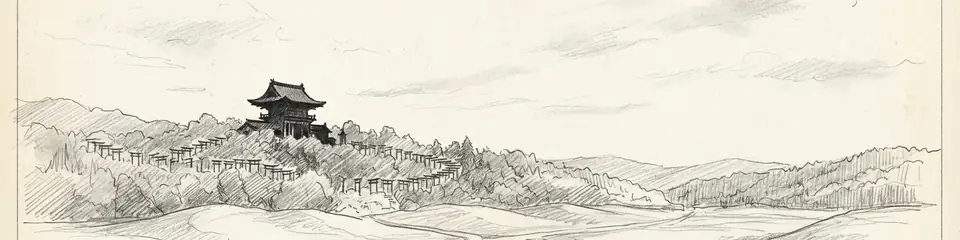
Graphite pencil sketch banner of Fushimi Inari-taisha

“Fushimi Inari documents how Shinto parish networks scaled through merchant patronage — each torii a dated donation record in wood and lacquer.”

Localização

Visão geral

Fushimi Inari-taisha stands at the base of Mount Inari in Fushimi ward, Kyoto, Japan. Tradition credits the Hata clan with founding the shrine in 711 CE on the first day of the horse in the second month — an early date for Inari, kami of rice, sake, and prosperity. The shrine became the principal Inari institution, with tens of thousands of sub-shrines across Japan bearing its name.

Vermilion torii gates donated by merchants and devotees since the Edo period form tunnels along paths ascending the wooded mountain to inner shrines and stone fox (kitsune) statues — Inari's messengers. The main hall (honden) was rebuilt in 1499 and 1589; the Romon gate dates to 1589 patronage. Unlike Buddhist temples on the atlas, Fushimi Inari remains an active Shinto site with daily ritual, New Year pilgrimages, and festival processions.

The shrine is not individually UNESCO-listed but lies within the cultural landscape of Kyoto. Its torii corridors dominate image search and travel media for Japan. Pair with Kiyomizu-dera and Himeji Castle for Kyoto sacred architecture and feudal Japan.

Por que isso importa

Fushimi Inari documents how Shinto parish networks scaled through merchant patronage — each torii a dated donation record in wood and lacquer. Its mountain paths fuse landscape pilgrimage with vernacular economics (rice, trade) in ways Buddhist temple complexes parallel but do not duplicate.

Evidências e interpretação

Distinguir o que está bem estabelecido do que permanece em debate.

Fatos bem estabelecidos

2
  • Medieval and Edo-period donor inscriptions on torii record dates, names, and dedications.
  • Shrine registers and imperial patronage documents name 1499/1589 rebuild phases.

Inferências acadêmicas

1
  • Merchant donations expanded torii corridors as Inari cult spread with urban commerce.

Fotos da comunidade

Compartilhe sua experiência

Você visitou este sítio? Envie suas fotos para ajudar outros a descobri-lo.

Como citar esta página

Atlas Anatolia. (711). Fushimi Inari-taisha. Atlas Anatolia. https://atlasanatolia.com/pt/site/fushimi-inari

Conteúdo licenciado sob CC BY-SA 4.0 — atribuição necessária ao reutilizar.

Fontes

  • A New History of Shinto — Breen, John; Teeuwen, Mark (2010)
  • Fushimi Inari Taisha — official siteLink

Perguntas frequentes

Onde fica Fushimi Inari-taisha?

Fushimi Inari-taisha está localizado em Japan.

Qual é a antiguidade de Fushimi Inari-taisha?

Fushimi Inari-taisha data de aproximadamente 711 d.C. – 2024 d.C..

Quais civilizações estão associadas a Fushimi Inari-taisha?

Fushimi Inari-taisha está associado à civilização Yamato Japan, Tokugawa.

Por que Fushimi Inari-taisha é importante?

Fushimi Inari documents how Shinto parish networks scaled through merchant patronage — each torii a dated donation record in wood and lacquer.

Fushimi Inari-taisha é um Patrimônio Mundial da UNESCO?

Fushimi Inari-taisha não está atualmente inscrito na Lista do Patrimônio Mundial da UNESCO.