
Pular para o conteúdo
Atlas Anatolia
NotíciasIce Age teeth in Sulawesi push betel-nut use back as far as 25,000 yearsRoman mosaic and Eros head uncovered in the basilica at Pompeiopolis, Kastamonu
White main keep of Osaka Castle above stone ramparts and spring foliage

Wikimedia Commons (CC BY-SA 3.0)

PatrimônioFortalezaDestaque

Osaka Castle

Seyfi Cem Baskin

大阪城1583 d.C. – 1868 d.C.

Toyotomi Hideyoshi’s fortress reconstituted as a Tokugawa stronghold — white keep, gold roof ornaments, and stone ramparts above Osaka’s business core — is Japan’s most searched castle after Himeji in our multilingual audit.

21
Interesse 77

Localização

Japan

34.69°N · 135.53°E · Ásia

Founded

1583 by Toyotomi Hideyoshi

Siege

Summer Siege of Osaka, 1615

Present keep

1931 ferroconcrete rebuild; renovated 1997

Surviving fabric

Stone walls, moats, baileys

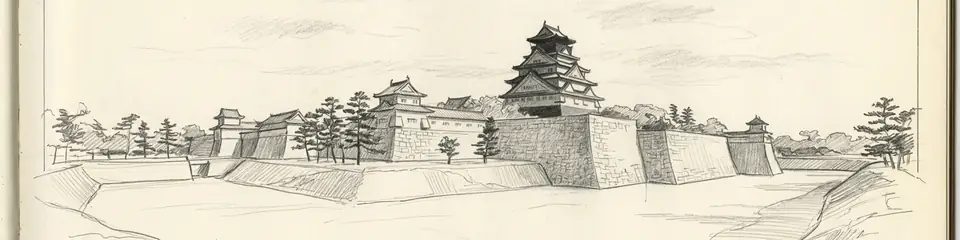
Graphite pencil sketch banner of Osaka Castle

“Osaka Castle concentrates Toyotomi–Tokugawa transition politics in Japan’s commercial capital and remains a primary pilgrimage site for Azuchi–Momoyama history.”

Localização

Visão geral

Osaka Castle was founded by Toyotomi Hideyoshi in 1583 on the site of the Ishiyama Hongan-ji temple-fortress. Its colossal ashlar walls and multi-storey keep projected the unification wars’ climax. After the Summer Siege of 1615 the Tokugawa rebuilt and garrisoned the castle; fires and the 1868 Boshin War damaged successive keeps. The present ferroconcrete main keep (1931), renovated in 1997, is a historicist reconstruction housing a museum inside surviving stone walls and moats.

The Nishinomaru garden, outer baileys, and inscribed megaliths (including stones from Hideyoshi’s vassals) retain Edo-period spatial order. Pair with Himeji Castle for authentic wooden keep architecture versus Osaka’s urban memorial reconstruction.

Por que isso importa

Osaka Castle concentrates Toyotomi–Tokugawa transition politics in Japan’s commercial capital and remains a primary pilgrimage site for Azuchi–Momoyama history. Its stone walls still display named contribution blocks that map late-16th-century warlord networks.

Evidências e interpretação

Distinguir o que está bem estabelecido do que permanece em debate.

Fatos bem estabelecidos

2
  • Chronicle accounts of Hideyoshi’s construction and Tokugawa siege maps document the castle’s late-16th and early-17th-century phases.
  • Inscribed ashlar blocks name daimyo contributors to the stone curtains.

Inferências acadêmicas

1
  • The 1931 keep’s historicist design deliberately revived Toyotomi imagery for modern Osaka civic pride.

Fotos da comunidade

Compartilhe sua experiência

Você visitou este sítio? Envie suas fotos para ajudar outros a descobri-lo.

Como citar esta página

Atlas Anatolia. (1583). Osaka Castle. Atlas Anatolia. https://atlasanatolia.com/pt/site/osaka-castle

Conteúdo licenciado sob CC BY-SA 4.0 — atribuição necessária ao reutilizar.

Fontes

  • Osaka 1615: The Last Battle of the Samurai — Turnbull, Stephen (2006)
  • Architecture and Authority in Japan — Coaldrake, William H. (1996)

Perguntas frequentes

Onde fica Osaka Castle?

Osaka Castle está localizado em Japan.

Qual é a antiguidade de Osaka Castle?

Osaka Castle data de aproximadamente 1583 d.C. – 1868 d.C..

Quais civilizações estão associadas a Osaka Castle?

Osaka Castle está associado à civilização Tokugawa, Toyotomi.

Por que Osaka Castle é importante?

Osaka Castle concentrates Toyotomi–Tokugawa transition politics in Japan’s commercial capital and remains a primary pilgrimage site for Azuchi–Momoyama history.

Osaka Castle é um Patrimônio Mundial da UNESCO?

Osaka Castle não está atualmente inscrito na Lista do Patrimônio Mundial da UNESCO.