


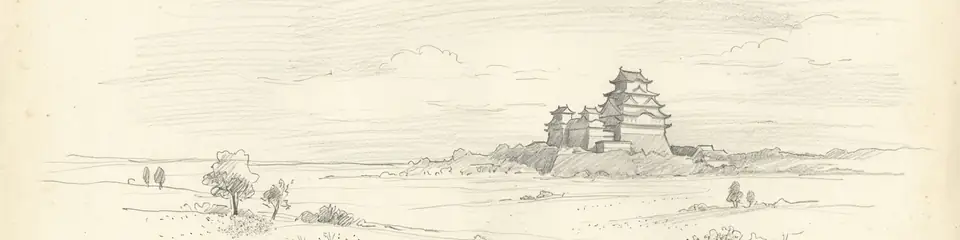
Overview
Himeji Castle crowns Himeyama hill in Himeji City, Hyogo Prefecture, on the inland sea route between Kyoto and western Japan. A fortification existed from the 14th century; the present labyrinthine layout took shape under the warlord Toyotomi Hideyoshi in the 1580s and was completed in its iconic white form by the Tokugawa vassal Ikeda Terumasa in 1609. The main keep (tenshu) rises five storeys externally, seven internally, on a stone base with defensive loopholes, hidden floors, and maze-like passages designed to slow attackers.
The white plastered walls earned the nicknames "White Heron Castle" (Shirasagi-jo). Unlike many Japanese castles rebuilt in concrete after 1945, Himeji's wooden keep survived World War II bombing and a major conservation project (2009–2015) that re-coated plaster and replaced roof tiles without altering the Edo-period silhouette. The castle never saw a major siege; its value is architectural completeness rather than battle scars.
UNESCO inscribed Himeji as Japan's first castle World Heritage Site (1993). The adjacent Koko-en garden is a modern reconstruction of samurai villas. Together with Horyu-ji and Tōdai-ji, it represents a different chapter of Japanese heritage — feudal military architecture rather than Buddhist temples.