
Skip to content
Atlas AnatoliaAtlas Anatolia
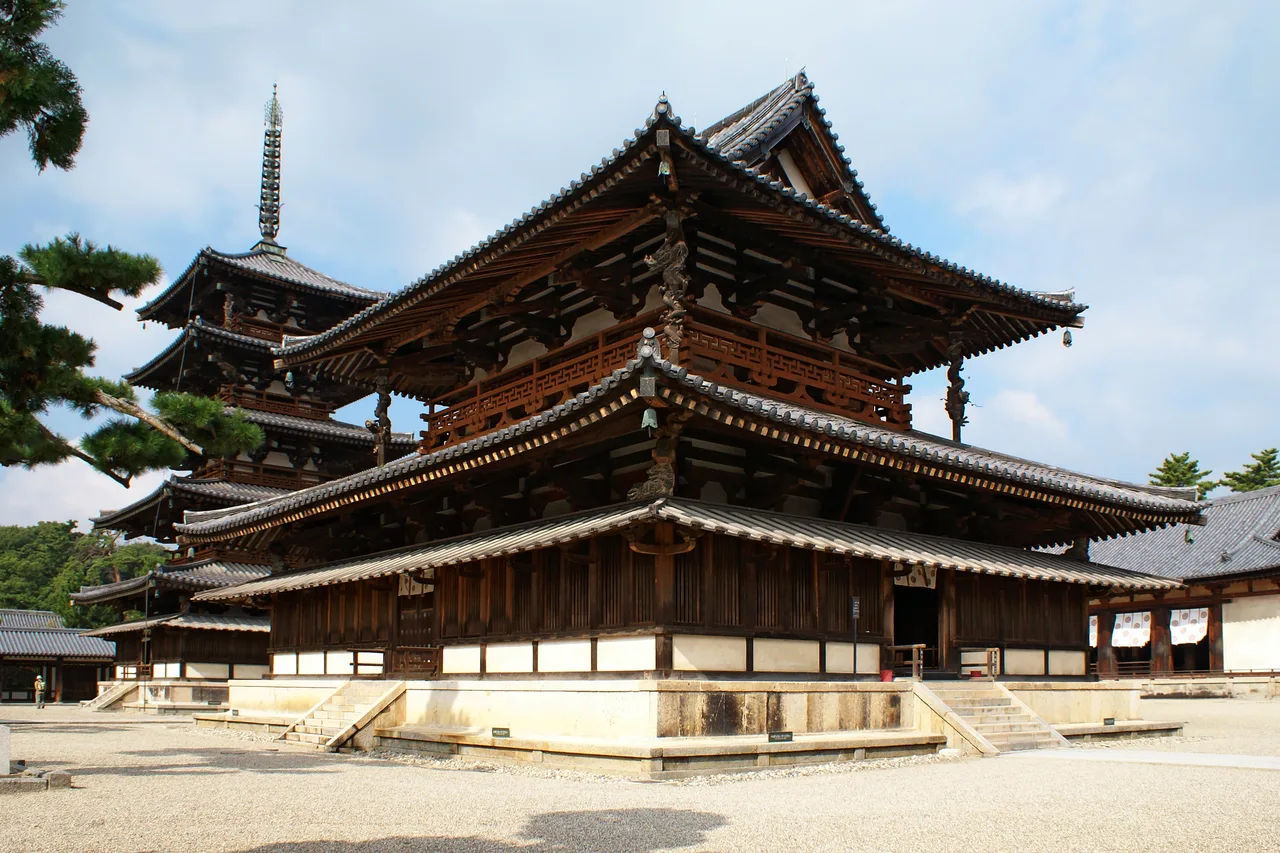
The five-storey Gojunoto pagoda and Kondo (Main Hall) of Horyu-ji, the world's oldest surviving wooden buildings, Nara, Japan

Horyu-ji

法隆寺607 CE – 770 CE
73

Interest

Early MedievalYamato JapanIkaruga

Founded

607 CE by Prince Shotoku; main structures rebuilt late 7th century CE

Oldest wooden buildings

West Precinct Kondo and Gojunoto pagoda — oldest surviving wooden structures in the world

Pagoda

Five-storey, 32 m tall; central pillar (shinbashira) provides seismic flexibility

National Treasures

Over 190 objects designated as National Treasures of Japan

UNESCO

First UNESCO World Heritage Site in Japan (1993)

Horyu-ji is a living archive of how Buddhism — and with it a whole visual and architectural tradition — was transmitted from the Asian continent to Japan.”

Overview

Horyu-ji (Temple of the Flourishing Law) is located in the town of Ikaruga, Nara Prefecture, in the central Japanese island of Honshu, about 10 kilometres south-west of Nara. According to the Nihon Shoki (Chronicles of Japan), Prince Shotoku and Empress Suiko founded the temple in 607 CE as an act of devotion during a period of illness. It was rebuilt after a fire in 670 CE; dendrochronological analysis of the timber confirms that the main structures date to the late 7th and early 8th centuries CE.

The temple complex comprises two precincts. The West Precinct (Sai-in) is the older and more famous: its Garan (temple courtyard) contains the Kondo (Main Hall) and the Gojunoto (Five-Storey Pagoda), both dating to the late 7th century. These are the oldest surviving wooden buildings in the world, constructed of hinoki cypress with bracketing systems and upswept eaves that became the defining vocabulary of East Asian temple architecture. The Gojunoto pagoda, approximately 32 metres tall, has a central pillar (shinbashira) that descends from the finial nearly to the foundation level, giving the structure the flexibility to absorb seismic movement — an engineering principle that anticipated modern earthquake-resistant design by over a millennium. The pagoda's ground floor contains clay sculptures depicting scenes from the life of the Buddha, created in 711 CE.

The East Precinct (To-in) was built in 739 CE over the site of Prince Shotoku's Ikaruga Palace and centres on the Yumedono (Hall of Dreams), an octagonal structure housing a gilded camphor-wood statue of Kannon (the Bodhisattva of Compassion) known as the Guze Kannon — long wrapped in cloth and revealed only to special visitors, now more regularly accessible.

Horyu-ji houses more than 190 objects designated as National Treasures of Japan, including Buddhist sculpture, bronze work, lacquerware, and embroidery. Of these, the Tamamushi Shrine (a miniature shrine with iridescent beetle-wing decoration, c. 650 CE) and the Kudara Kannon (a tall, elegant wooden Kannon sculpture) are among the most celebrated early Buddhist artworks in Japan. Horyu-ji was the first site in Japan to be inscribed as a UNESCO World Heritage Site (1993), as part of the Buddhist Monuments in the Horyu-ji Area.

Why It Matters

Horyu-ji is a living archive of how Buddhism — and with it a whole visual and architectural tradition — was transmitted from the Asian continent to Japan. The temple preserves the earliest phase of Japanese Buddhist architecture, art, and iconography in their original spatial context, representing a moment of profound cultural transformation when the Yamato court adopted Chinese administrative culture, Buddhism, and writing simultaneously. The structural achievement of the Gojunoto pagoda is extraordinary: a 1,350-year-old wooden building that has survived numerous earthquakes without collapse, whose central-pillar design may have inspired modern base-isolation engineering. The timber framing systems of the West Precinct also demonstrate the maturity of East Asian carpentry in the Asuka period — joinery techniques developed here influenced Japanese temple architecture for the next thousand years. As the oldest surviving Buddhist complex in Japan, Horyu-ji anchors the history of Japanese civilisation at a specific, datable moment: the convergence of state power, religious devotion, and continental cultural influence that created one of the world's most distinctive artistic traditions.

Stay curious

New stories and sites, once a month. No spam.

Evidence & Interpretation

Distinguishing what is well-established from what remains debated.

Well-Established Facts

3
  • Dendrochronological (tree-ring) dating of timber from the West Precinct structures confirms they were felled in the late 7th century CE, consistent with reconstruction after the 670 fire recorded in the Nihon Shoki.
  • The shinbashira (central pillar) of the Gojunoto pagoda descends from roof finial to near foundation level, functioning as a damper during earthquakes — confirmed by structural analysis and by the building's survival through multiple Nara-area earthquakes.
  • Bronze and clay inscriptions on major sculptures (including the Shaka Triad, 623 CE) record dates and dedicatory contexts, providing absolute dates for key artworks.

Scholarly Inferences

1
  • The Guze Kannon (Yumedono) is traditionally attributed to Prince Shotoku's era, but art-historical analysis suggests a date in the late 7th or early 8th century CE — slightly later than the prince himself.

Discovery & Excavation

1934–1954

Post-war structural survey

Major disassembly and reconstruction of the West Precinct structures revealed original construction methods and allowed dendrochronological sampling.

More Photos

Museum Artifacts

Community Photos

Share your experience

Have you visited this site? Upload your photos to help others discover it.

Location

Sources

  • Pure Land Buddhist PaintingOkazaki, Joji (1977)
  • The Roof in Japanese Buddhist ArchitectureParent, Mary Neighbour (1983)
  • UNESCO — Buddhist Monuments in the Horyu-ji AreaLink

Research Papers

Frequently Asked Questions

Where is Horyu-ji located?

Horyu-ji is located in Ikaruga, Nara Prefecture, Japan.

How old is Horyu-ji?

Horyu-ji dates to approximately 607 CE – 770 CE.

Which civilizations are associated with Horyu-ji?

Horyu-ji is associated with the Yamato Japan.

Why is Horyu-ji important?

Horyu-ji is a living archive of how Buddhism — and with it a whole visual and architectural tradition — was transmitted from the Asian continent to Japan.

Is Horyu-ji a UNESCO World Heritage Site?

Yes — Horyu-ji is inscribed as a UNESCO World Heritage Site.