
콘텐츠로 건너뛰기
Atlas Anatolia
디그
뉴스술라웨시 빙하기 치아에서 빈랑 사용 25,000년 전까지 소급카스타모누 폼페이오폴리스 바실리카에서 로마 모자이크와 에로스 두상 발견
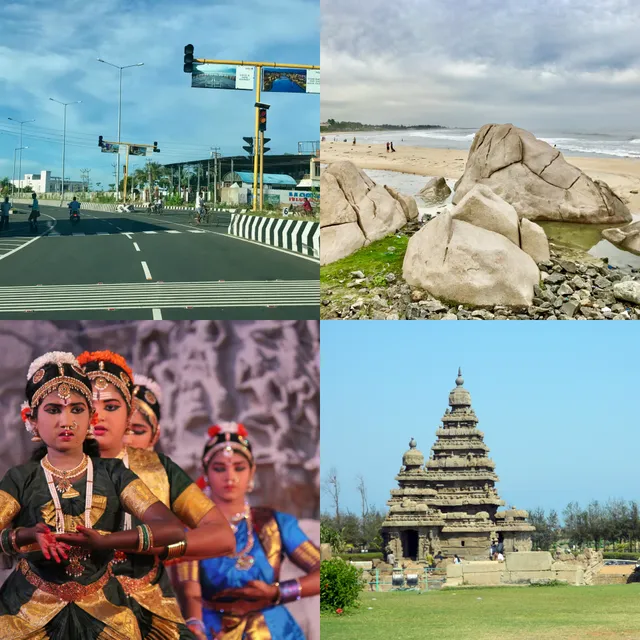
The Shore Temple at Mahabalipuram against the Bay of Bengal

Wikimedia Commons

복합 단지유네스코

Mahabalipuram

Seyfi Cem Baskin

மாமல்லபுரம்600 서기 – 800 서기

The Pallava port city on Tamil Nadu's Coromandel Coast — famous for 7th–8th-century rock-cut rathas, cave temples, the Shore Temple, and the giant open-air relief of the Descent of the Ganges — one of India's most visited UNESCO sites and a cornerstone of early Dravidian sculpture.

21
관심 66

위치

인도

12.62°N · 80.19°E · 아시아

Dynasty

Pallava kings Mahendravarman I and Narasimhavarman I (7th century CE)

Shore Temple

Structural granite temple facing the sea, c. 8th century CE

Relief

Descent of the Ganges — among the largest open-air rock reliefs

UNESCO

Group of Monuments at Mahabalipuram (1984)

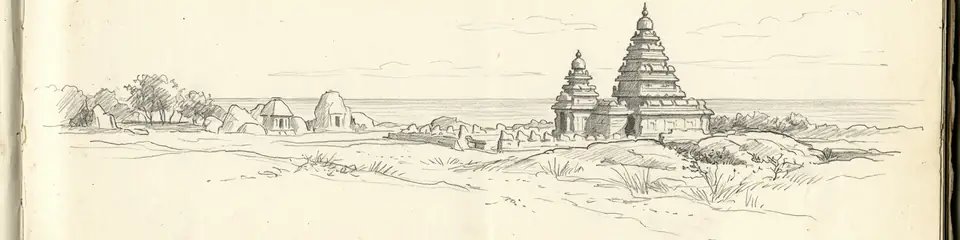
Graphite pencil sketch banner of Mahabalipuram

“Mahabalipuram documents the birth of monumental Dravidian temple form — from experimental monolithic rathas to the Shore Temple that influenced centuries of South Indian architecture.”

위치

개요

Mahabalipuram (Mamallapuram) lies on the Bay of Bengal coast about 60 kilometres south of Chennai, Tamil Nadu. Under the Pallava kings Mahendravarman I (r. c. 600–630) and Narasimhavarman I (r. c. 630–668) — titled Mamalla ("great wrestler") — the site became a royal centre for rock-cut and structural temple architecture. The monuments are carved from local granite outcrops and include monolithic rathas (chariot-shaped shrines), mandapa cave temples, and the Shore Temple (c. 8th century) facing the sea.

The Descent of the Ganges (Arjuna's Penance) is one of the largest open-air bas-reliefs in the world, depicting Shiva, ascetics, elephants, and nagas on two huge boulders. Excavations after the 2004 tsunami revealed submerged structural remains offshore, suggesting a larger ancient port. The Archaeological Survey of India maintains the site; UNESCO inscribed the Group of Monuments in 1984.

Mahabalipuram remains an active stone-carving village and a mandatory stop on South India heritage circuits alongside Chennai, Kanchipuram, and Pondicherry.

중요성

Mahabalipuram documents the birth of monumental Dravidian temple form — from experimental monolithic rathas to the Shore Temple that influenced centuries of South Indian architecture. Its coastal reliefs and Pallava inscriptions are primary sources for early medieval trade, royal titles, and sculptural workshops in the Tamil country.

증거와 해석

확립된 사실과 논쟁 중인 사항을 구분합니다.

잘 확립된 사실

2
  • Pallava inscriptions and stylistic analysis date the rathas, mandapas, and Shore Temple to the 7th–8th centuries CE.
  • Submerged structural discoveries after 2004 confirm an extensive historic port zone beyond the visible shore temples.

논쟁 중인 해석

1
  • The legend of "Seven Pagodas" swallowed by the sea is partially supported by offshore remains but the original count and destruction mechanism remain uncertain.

커뮤니티 사진

당신의 경험을 공유하세요

이 유적지를 방문하셨나요? 다른 탐험가들을 위해 사진을 업로드해 보세요.

이 페이지 인용 방법

Atlas Anatolia. (600). Mahabalipuram. Atlas Anatolia. https://atlasanatolia.com/ko/site/mahabalipuram

콘텐츠는 CC BY-SA 4.0 라이선스에 따라 제공됩니다 — 재사용 시 출처 표시가 필요합니다.

출처

  • Indian Temple Architecture: Form and Transformation — Hardy, Adam (1995)
  • UNESCO — Mahabalipuram링크

자주 묻는 질문

Mahabalipuram은(는) 어디에 위치해 있나요?

Mahabalipuram은(는) India에 위치해 있습니다.

Mahabalipuram의 연대는 언제인가요?

Mahabalipuram의 연대는 대략 600 서기 – 800 서기로 거슬러 올라갑니다.

Mahabalipuram과(와) 관련된 고대 문명은 무엇인가요?

Mahabalipuram은(는) Pallava 문명과 관련이 있습니다.

Mahabalipuram이(가) 중요한 이유는 무엇인가요?

Mahabalipuram documents the birth of monumental Dravidian temple form — from experimental monolithic rathas to the Shore Temple that influenced centuries of South Indian architecture.

Mahabalipuram은(는) 유네스코 세계유산인가요?

예 — Mahabalipuram은(는) 유네스코 세계유산으로 등재되어 있습니다.