
콘텐츠로 건너뛰기
Atlas Anatolia
디그
뉴스술라웨시 빙하기 치아에서 빈랑 사용 25,000년 전까지 소급카스타모누 폼페이오폴리스 바실리카에서 로마 모자이크와 에로스 두상 발견
L'Anse aux Meadows — Canada

Wikimedia Commons (CC BY-SA)

Continent Record

Northernmost Known Site in North America

정착지유네스코

L'Anse aux Meadows

Seyfi Cem Baskin

990 서기 – 1050 서기

The only confirmed Norse settlement in North America, L'Anse aux Meadows provides definitive evidence of pre-Columbian European contact, dating to around 1000 CE.

422
관심 69

위치

Newfoundland and Labrador · Great Northern Peninsula · 캐나다

51.60°N · 55.53°W · 북아메리카

Built

ca. 1000 CE (dendrochronology pinpoints 1021 CE)

Civilization

Norse (from Greenland/Iceland)

Discovered

1960 CE

Status

UNESCO World Heritage Site (1978)

Location

Northern tip of Newfoundland, Canada

Key Structure

Eight turf buildings, including three large halls

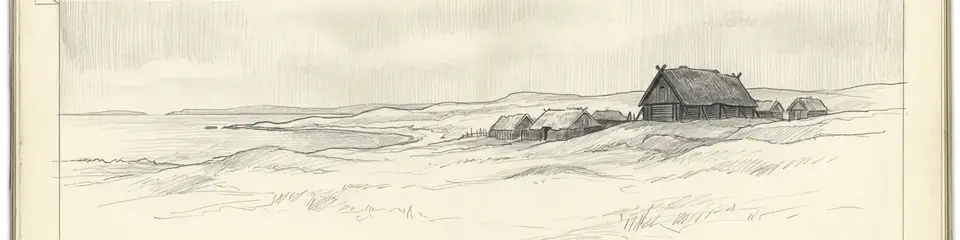
Graphite pencil sketch banner of L'Anse aux Meadows

“L'Anse aux Meadows is the earliest archaeological proof of European presence in the Americas, predating Columbus by half a millennium.”

위치

개요

Discovery

In 1960, Norwegian explorer Helge Ingstad and his archaeologist wife Anne Stine Ingstad discovered a series of overgrown mounds near Épaves Bay, Newfoundland, guided by local resident George Decker. Excavations from 1961 to 1968 revealed the remains of eight turf structures that were unmistakably Norse in origin, matching those from Iceland and Greenland. This discovery proved that Vikings had reached the Americas centuries before Columbus.

Architecture and Layout

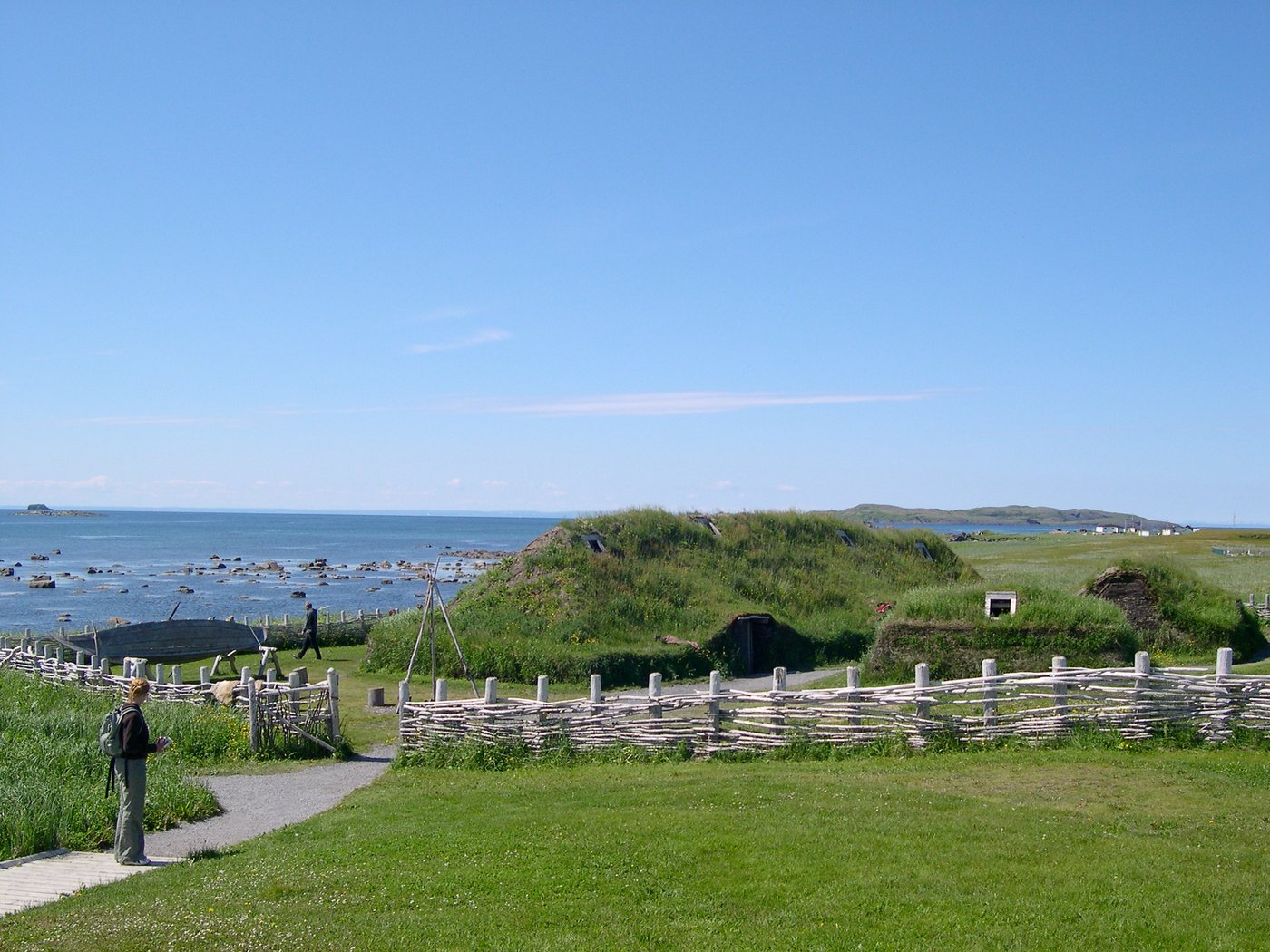
The site comprises three large dwelling halls, one smaller hall, a forge, and several workshops or storage buildings, all constructed using the classic Norse technique of turf over timber frames. The largest hall, Hall F, measures approximately 28.8 by 15.6 meters, with multiple rooms and central fireplaces. The presence of a small-scale iron smelting operation, evidenced by a smithy with a hearth and slag, demonstrates on-site production of iron from locally gathered bog ore—a hallmark of Norse technology.

2022-08-27 04 Silhouette sculpture of Norsemen above L'Anse aux Meadows, NFL CAN
2022-08-27 04 Silhouette sculpture of Norsemen above L'Anse aux Meadows, NFL CAN | Gordon Leggett (CC BY-SA 4.0)
"They built large houses there. There was no lack of salmon in the river or in the lake — and salmon larger than they had ever seen. The land seemed so good that no cattle would need fodder there in winter."
— Saga of the Greenlanders, on Leif Eriksson's settlement at Vinland (composed c. 1200 CE, recording events of c. 1000 CE)

Dating the Occupation

Radiocarbon analysis of charcoal from the smithy and other contexts initially placed the occupation between 990 and 1050 CE, with a weighted mean of around 1000 CE. A breakthrough came in 2021 when an international team used precise dendrochronology on wood fragments with clear tool marks, linking them via the Miyake event—a cosmic ray spike in 993 CE—to a felling date of exactly 1021 CE. This provides the first precise date for Norse presence in the Americas.
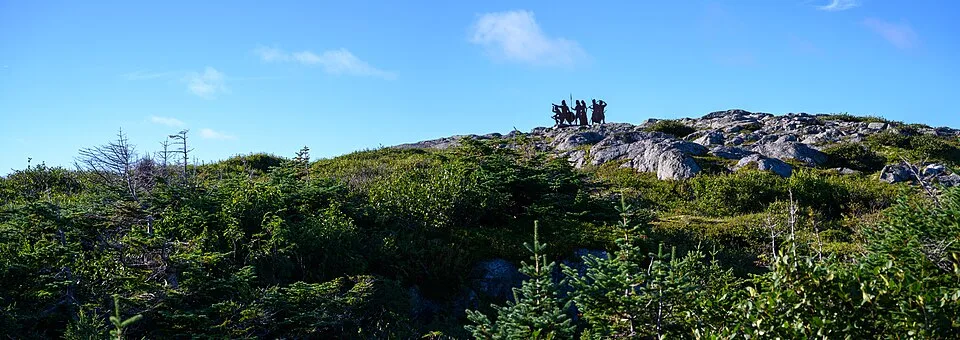
2022-08-27 01 Silhouette sculpture of Norsemen above L'Anse aux Meadows, NFL CAN
2022-08-27 01 Silhouette sculpture of Norsemen above L'Anse aux Meadows, NFL CAN | Gordon Leggett (CC BY-SA 4.0)

Interpreting the Settlement

The settlement is widely interpreted as a base for exploration and resource procurement rather than a permanent colony. Artifacts such as butternuts and butternut wood, from a tree species not native to Newfoundland but found further south around the Gulf of St. Lawrence, suggest the Norse ventured deeper into the continent. The site’s exposed location and the absence of livestock pens or large-scale agriculture imply a seasonal or temporary occupation, likely for repairing ships, trading, or gathering valuable timber.

The Vinland Question

L'Anse aux Meadows is often linked to 'Vinland' from the Norse sagas (The Saga of the Greenlanders and Eirik the Red’s Saga), but the correlation is debated. The sagas describe a place with wild grapes, which are not found in northern Newfoundland, and a land of plenty. Some scholars argue the site is a gateway to Vinland, while others suggest it is the Straumfjord of the sagas. The debate continues, with no consensus on whether L'Anse aux Meadows is exactly Vinland or one of several Norse landing points.
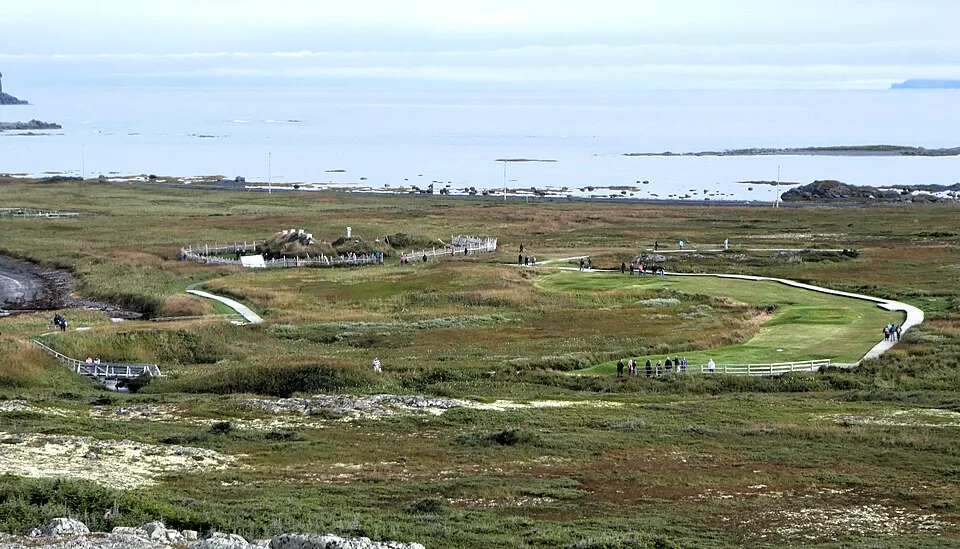
L'Anse aux Meadows National Historic Site - Newfoundland, Canada - 11 September 2023
L'Anse aux Meadows National Historic Site - Newfoundland, Canada - 11 September 2023 | Larry Syverson (CC BY-SA 2.0)

Significance and Legacy

As the first and only confirmed Norse site in North America, L'Anse aux Meadows represents a pivotal moment in global history, proving trans-Atlantic contact 500 years before Columbus. It also underscores the maritime capabilities of the Norse and their role in early globalization. Today, the site is a UNESCO World Heritage Site and a Parks Canada national historic site, with reconstructed structures offering insight into Norse life at the edge of the known world.

중요성

L'Anse aux Meadows is the earliest archaeological proof of European presence in the Americas, predating Columbus by half a millennium. It demonstrates the extraordinary seafaring reach of the Norse and changes the narrative of pre-Columbian transoceanic contact. The site embodies a fleeting but tangible connection between the Old and New Worlds, highlighting how exploration and cultural exchange were not linear but episodic.

증거와 해석

확립된 사실과 논쟁 중인 사항을 구분합니다.

잘 확립된 사실

4
  • Radiocarbon dates from multiple contexts consistently fall in the late 10th to early 11th centuries CE.
  • Dendrochronology of a wooden object yields a felling date of 1021 CE, anchored by a cosmic ray event in 993 CE.
  • The presence of a smithy with slag and iron scraps confirms on-site iron smelting using locally collected bog ore.
  • Architectural remains (turf walls, boat-shaped roofs, floor plans) are identical to Norse structures from Greenland and Iceland.

학술적 추론

2
  • The settlement served as a short-term base for exploration and resource gathering, as evidenced by exotic botanical remains and lack of large-scale agriculture.
  • The presence of butternuts (Juglans cinerea) indicates contact with regions south of Newfoundland, possibly the Gulf of St. Lawrence.

논쟁 중인 해석

2
  • Whether L'Anse aux Meadows corresponds to 'Vinland' or another location in the Norse sagas, such as Straumfjord, remains contested.
  • The nature and extent of interaction between Norse inhabitants and Indigenous peoples is unknown, with no direct archaeological evidence of contact.

발견과 발굴

Ongoing Conservation and Monitoring

지휘 Parks Canada

Parks Canada continues to maintain and monitor the site, protecting the original archaeological remains from erosion and climate impacts, while managing the reconstructed structures for visitor education.

1961–1968

Initial Discovery and Excavation

지휘 Anne Stine Ingstad (archaeologist) and Helge Ingstad (expedition leader)

Helge and Anne Stine Ingstad conducted seven seasons of excavation, uncovering the eight turf building complexes, identifying their Norse origin, and recovering a small but significant artifact collection including a bronze ring-headed pin, iron nails, and a soapstone spindle whorl.

1973–1976

Parks Canada Investigations

지휘 Parks Canada team led by various researchers

Parks Canada undertook extensive mapping, minor excavations, and conservation work to stabilize the site and prepare it for public interpretation, while gathering additional environmental and stratigraphic data.

2000–2002

Multidisciplinary Research Project

지휘 Birgitta Wallace (archaeologist) and colleagues

A collaborative project involving Parks Canada and academic institutions re-examined the site with modern techniques, including geophysical surveys and renewed artifact analysis, leading to a refined understanding of the occupation sequence.

2021

Dendrochronological Dating Study

지휘 Margot Kuitems, Birgitta Wallace, and an international team (published in Nature)

Analysis of wood samples from the site, specifically utilizing the 993 CE cosmic ray event as a marker, provided a precise felling date of AD 1021 for one piece, confirming a 50-year window for Norse activity.

커뮤니티 사진

당신의 경험을 공유하세요

이 유적지를 방문하셨나요? 다른 탐험가들을 위해 사진을 업로드해 보세요.

이 페이지 인용 방법

Atlas Anatolia. (990). L'Anse aux Meadows. Atlas Anatolia. https://atlasanatolia.com/ko/site/lanse-aux-meadows

콘텐츠는 CC BY-SA 4.0 라이선스에 따라 제공됩니다 — 재사용 시 출처 표시가 필요합니다.

출처

  • Ingstad, H. (1969). Westward to Vinland: The Discovery of Pre-Columbian Norse House-sites in North America — Helge Ingstad (1969)
  • Wallace, B. L. (2006). Westward Vikings: The Saga of L'Anse aux Meadows — Birgitta Linderoth Wallace (2006)
  • Kuitems, M. et al. (2022). Evidence for European presence in the Americas in AD 1021. Nature, 601, 388-391. — Kuitems, M., Wallace, B. L., Lindsay, C., Scifo, A., Doeve, P., Jenkins, K., ... & Dee, M. W. (2022)
  • Wallace, B. L. (2003). L'Anse aux Meadows and Vinland: An abandoned experiment. In J. H. Barrett (Ed.), Contact, Continuity, and Collapse: The Norse Colonization of the North Atlantic (pp. 207-238). Brepols. — Birgitta Linderoth Wallace (2003)
  • Fitzhugh, W. W. & Ward, E. I. (Eds.). (2000). Vikings: The North Atlantic Saga. Smithsonian Institution Press. — William W. Fitzhugh and Elisabeth I. Ward (editors) (2000)
  • UNESCO World Heritage entry for L'Anse aux Meadows National Historic Site링크

자주 묻는 질문

L'Anse aux Meadows은(는) 어디에 위치해 있나요?

L'Anse aux Meadows은(는) Newfoundland and Labrador, Great Northern Peninsula, Canada에 위치해 있습니다.

L'Anse aux Meadows의 연대는 언제인가요?

L'Anse aux Meadows의 연대는 대략 990 서기 – 1050 서기로 거슬러 올라갑니다.

L'Anse aux Meadows과(와) 관련된 고대 문명은 무엇인가요?

L'Anse aux Meadows은(는) Norse / Viking 문명과 관련이 있습니다.

L'Anse aux Meadows이(가) 중요한 이유는 무엇인가요?

L'Anse aux Meadows is the earliest archaeological proof of European presence in the Americas, predating Columbus by half a millennium.

L'Anse aux Meadows은(는) 유네스코 세계유산인가요?

예 — L'Anse aux Meadows은(는) 유네스코 세계유산으로 등재되어 있습니다.