
콘텐츠로 건너뛰기
Atlas Anatolia
디그
뉴스술라웨시 빙하기 치아에서 빈랑 사용 25,000년 전까지 소급카스타모누 폼페이오폴리스 바실리카에서 로마 모자이크와 에로스 두상 발견
The waterlogged wetland landscape of the Kuk early agricultural site, Western Highlands, Papua New Guinea

Wikimedia Commons

Continent Record

Northernmost Known Site in Oceania

정착지유네스코

Kuk Swamp

Seyfi Cem Baskin

Kuk8000 기원전 – 1 기원전

A waterlogged highland wetland in Papua New Guinea that preserves some of the earliest evidence anywhere on Earth for the independent invention of agriculture — drainage ditches, planting mounds, and cultivated plant remains showing that the peoples of New Guinea domesticated crops including banana and taro around 7,000 to 10,000 years ago, entirely separately from the more famous farming origins of the Fertile Crescent, China, or the Americas.

31
관심 42

위치

Western Highlands · 파푸아뉴기니

5.78°S · 144.33°E · 오세아니아

Agriculture origin

Independent invention of farming c. 7,000–10,000 years ago

Crops

Locally domesticated taro and banana, from wild ancestors native to New Guinea

Preservation

Waterlogged soils preserved ancient ditches, mounds, and plant microfossils

Significance

One of only a handful of independent centres of plant domestication on Earth

UNESCO

World Heritage Site 2008

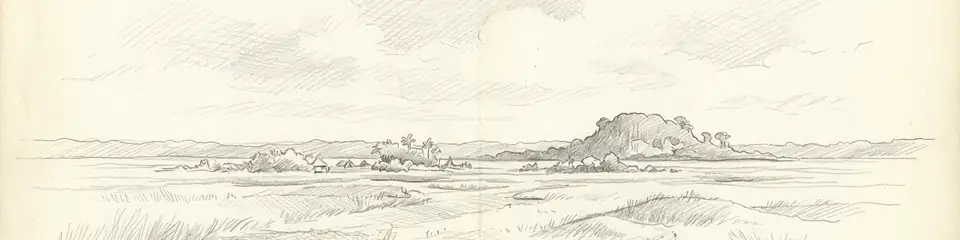
Graphite pencil sketch banner of Kuk Swamp

“Kuk Swamp is one of the cornerstones of the modern understanding that agriculture was not invented once and then spread across the world, but arose independently and repeatedly in different regions from local wild plants — a fundamental reframing of one of the most important transitions in all of human history.”

위치

개요

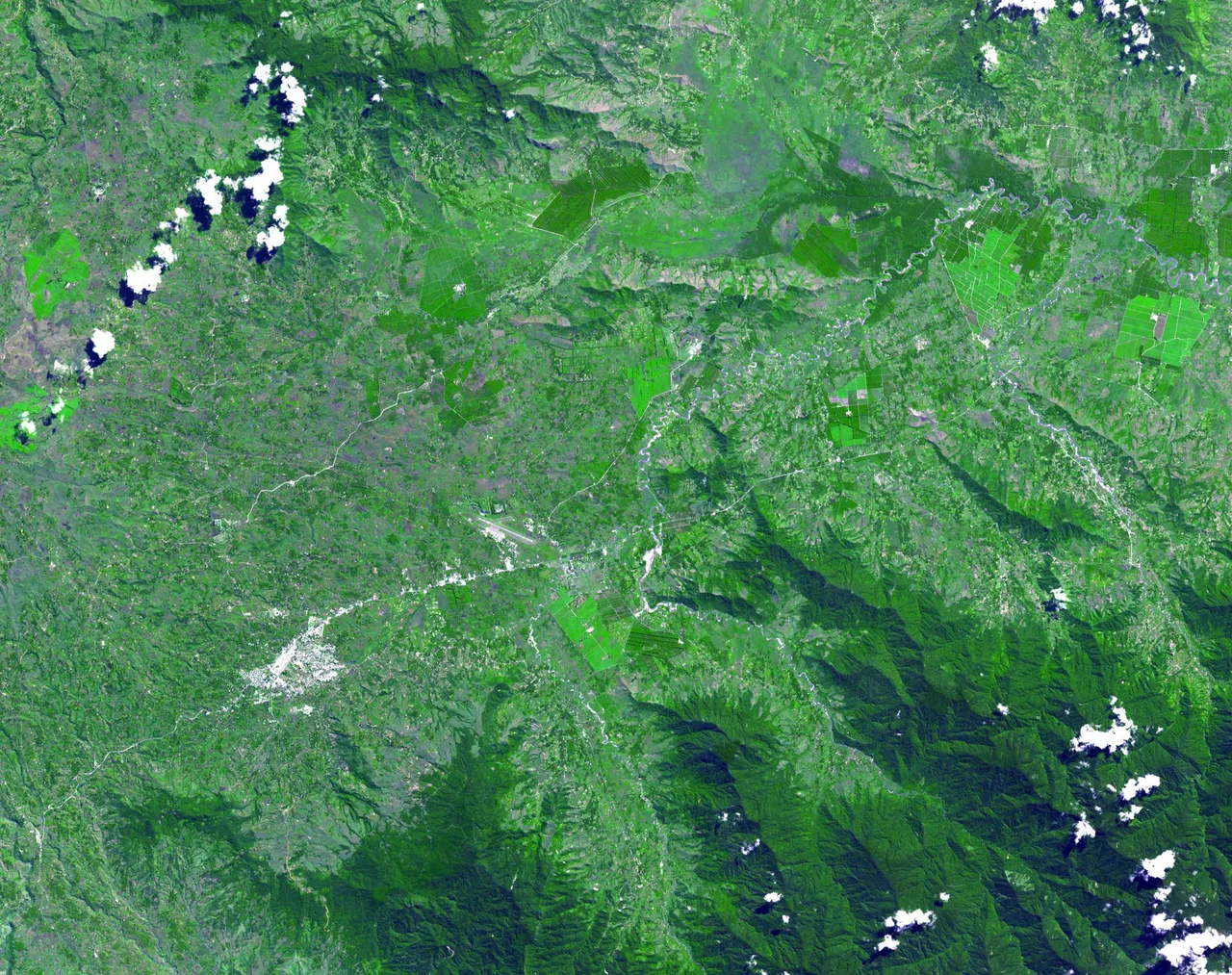
Kuk Swamp lies at roughly 1,560 metres elevation in the Wahgi Valley of the Western Highlands of Papua New Guinea. Its permanently waterlogged, oxygen-poor soils have preserved a record of prehistoric wetland cultivation that would have decomposed and vanished almost anywhere else — a sequence of ancient drainage channels, planting mounds, and buried plant remains that together constitute one of the very few places worldwide where the independent, indigenous origins of agriculture can be directly documented in the ground.

Archaeological investigation, led substantially by Jack Golson from the 1970s and greatly refined by later researchers including Tim Denham, has identified multiple distinct phases of human landscape modification at Kuk stretching back around 10,000 years. The earliest phase shows evidence of plant exploitation and possible cultivation from about 10,000 years ago; a clearer phase of organised mounded cultivation dates to roughly 7,000 years ago; and later phases show the development of the more systematic ditched-field drainage systems used to manage water for wetland-edge farming. Microfossil evidence — including starch grains, phytoliths (microscopic plant silica bodies), and pollen recovered from the buried soils — has identified the crops involved, most importantly taro (Colocasia esculenta) and banana (Musa species), both of which have wild ancestors native to the New Guinea region and were domesticated locally rather than introduced from elsewhere.

This matters because for much of the 20th century, the "Neolithic Revolution" — the transition from foraging to farming — was understood primarily through a small number of well-studied centres, above all the Fertile Crescent of the Middle East, with agriculture in other regions sometimes assumed to have spread outward from these cores. Kuk Swamp provided decisive evidence that New Guinea was an independent centre of plant domestication in its own right, one of only a handful of places on Earth where agriculture is now understood to have been invented from scratch rather than adopted from neighbours — joining the Fertile Crescent, China, Mesoamerica, the Andes, and a small number of other independent centres.

The wetland cultivation practices first evidenced at Kuk are, moreover, directly ancestral to farming systems still practised in the New Guinea highlands today, giving the site a continuity between deep prehistory and living agricultural tradition. Kuk Swamp was inscribed as a UNESCO World Heritage Site in 2008, explicitly recognised as demonstrating one of the world's independent transformations from plant gathering to cultivation.

중요성

Kuk Swamp is one of the cornerstones of the modern understanding that agriculture was not invented once and then spread across the world, but arose independently and repeatedly in different regions from local wild plants — a fundamental reframing of one of the most important transitions in all of human history. Without Kuk, New Guinea's status as an independent centre of domestication would rest on far weaker evidence. The site's exceptional waterlogged preservation captures the physical infrastructure of early farming — the actual ditches and mounds people dug — rather than only the indirect traces (seeds, tools) that survive at most early agricultural sites, giving researchers a rare direct view of how the earliest farmers reshaped their landscape to manage water and grow crops. By documenting the local domestication of banana and taro — staples that would eventually spread across the tropical world — Kuk also anchors the deep history of crops that remain globally important today, tracing their cultivation back to a specific highland valley thousands of years before written records of any kind existed anywhere on Earth.

증거와 해석

확립된 사실과 논쟁 중인 사항을 구분합니다.

잘 확립된 사실

3
  • Excavation has documented multiple superimposed phases of wetland cultivation infrastructure — drainage channels, planting mounds, and ditched fields — preserved in the waterlogged soils and dated by radiocarbon across roughly the last 10,000 years.
  • Starch grain, phytolith, and pollen analysis of buried soils has identified taro and banana among the cultivated plants, both with wild ancestors native to the New Guinea region, supporting local domestication rather than introduction.
  • The stratigraphic sequence establishes New Guinea as an independent centre of agricultural origin, corroborated by the presence of locally domesticable species and the absence of evidence for introduced Old World crops in the early phases.

논쟁 중인 해석

1
  • The precise date at which activity at Kuk crosses the threshold from intensive plant management to full domestication and agriculture is debated, with interpretations of the earliest (c. 10,000-year-old) phase differing among researchers.

발견과 발굴

1972–1977

Jack Golson excavations

Pioneering excavations identifying the ancient drainage systems and establishing Kuk as a candidate independent agricultural origin.

1998–2003

Tim Denham microfossil research

Refined dating and microfossil analysis confirming local domestication of taro and banana and the independent-origin status of the site.

커뮤니티 사진

당신의 경험을 공유하세요

이 유적지를 방문하셨나요? 다른 탐험가들을 위해 사진을 업로드해 보세요.

이 페이지 인용 방법

Atlas Anatolia. (8000). Kuk Swamp. Atlas Anatolia. https://atlasanatolia.com/ko/site/kuk-swamp

콘텐츠는 CC BY-SA 4.0 라이선스에 따라 제공됩니다 — 재사용 시 출처 표시가 필요합니다.

출처

  • Origins of Agriculture at Kuk Swamp in the Highlands of New Guinea — Denham, Tim P. et al. (2003)
  • Ten Thousand Years of Cultivation at Kuk Swamp in the Highlands of Papua New Guinea — Golson, Jack et al. (2017)
  • UNESCO — Kuk Early Agricultural Site링크

자주 묻는 질문

Kuk Swamp은(는) 어디에 위치해 있나요?

Kuk Swamp은(는) Western Highlands, Papua New Guinea에 위치해 있습니다.

Kuk Swamp의 연대는 언제인가요?

Kuk Swamp의 연대는 대략 8000 기원전 – 1 기원전로 거슬러 올라갑니다.

Kuk Swamp과(와) 관련된 고대 문명은 무엇인가요?

Kuk Swamp은(는) Papuan 문명과 관련이 있습니다.

Kuk Swamp이(가) 중요한 이유는 무엇인가요?

Kuk Swamp is one of the cornerstones of the modern understanding that agriculture was not invented once and then spread across the world, but arose independently and repeatedly in different regions from local wild plants — a fundamental reframing of one of the most important transitions in all of human history.

Kuk Swamp은(는) 유네스코 세계유산인가요?

예 — Kuk Swamp은(는) 유네스코 세계유산으로 등재되어 있습니다.