
콘텐츠로 건너뛰기
Atlas Anatolia
디그
뉴스술라웨시 빙하기 치아에서 빈랑 사용 25,000년 전까지 소급카스타모누 폼페이오폴리스 바실리카에서 로마 모자이크와 에로스 두상 발견
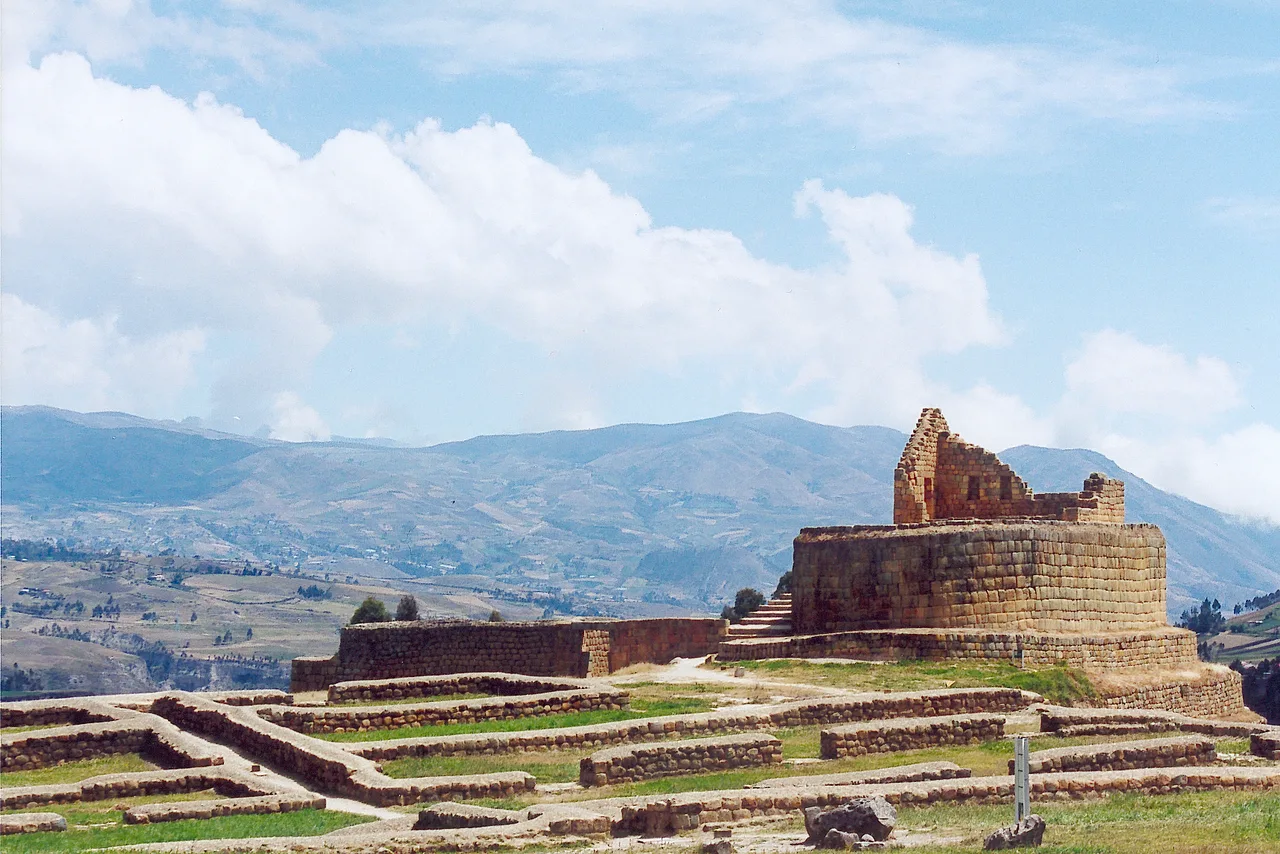
The elliptical Castillo (Temple of the Sun) at Ingapirca, built by the Inca atop an earlier Cañari sacred site, Ecuador

Wikimedia Commons

복합 단지

Ingapirca

Seyfi Cem Baskin

500 서기 – 1532 서기

Ecuador's most important archaeological site — an elliptical stone temple complex built atop an earlier Cañari sacred site, combining Cañari lunar worship with Inca solar religion. Its centrepiece, the Castillo (Temple of the Sun), is a masterwork of Inca dry-stone construction whose elliptical platform is astronomically aligned, marking the fusion of two distinct Andean civilizations in the decades before Spanish conquest.

31
관심 47

위치

Cañar Province · 에콰도르

2.54°S · 78.92°W · 남아메리카

Cañari origins

Sacred site from c. 500 CE, dedicated to Cañari moon worship

Inca construction

Castillo (Temple of the Sun) built under Tupac Yupanqui / Huayna Capac, c. 1450–1500 CE

Castillo

Elliptical Inca ashlar platform, astronomically aligned to solstices and equinoxes

Elevation

~3,160 m in the Ecuadorian highlands

Significance

Largest and best-preserved pre-Columbian complex in Ecuador

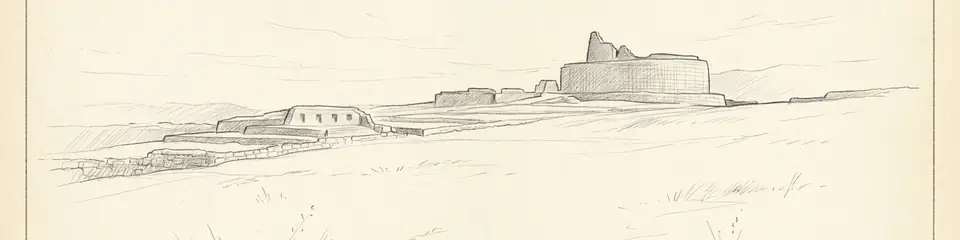
Graphite pencil sketch banner of Ingapirca

“Ingapirca is a rare place where the archaeological record directly shows imperial absorption rather than replacement.”

위치

개요

Ingapirca ("Wall of the Inca" in Quechua) sits at approximately 3,160 metres elevation in Cañar Province in the Ecuadorian highlands. It is the largest and best-preserved pre-Columbian archaeological complex in Ecuador, and one of the clearest surviving examples of the layered relationship between the Inca Empire and the cultures it absorbed during its rapid 15th-century expansion.

The site was originally sacred to the Cañari people, an agricultural and moon-worshipping society who occupied the southern Ecuadorian highlands for centuries before Inca contact. When the Inca Empire, under Tupac Yupanqui and later Huayna Capac, extended its control into the region in the late 15th century, they built directly on top of and around the existing Cañari religious centre — a common Inca strategy for absorbing conquered peoples' sacred geography rather than erasing it.

The complex's defining structure is the Castillo, an elliptical platform of finely fitted Inca ashlar masonry that functioned as a Temple of the Sun (Inti). Its curved form is unusual among Inca structures, which typically favour rectilinear designs, and is thought to reflect adaptation to the pre-existing Cañari sacred site beneath it. The temple's walls and openings are astronomically aligned to track solstices and equinoxes, allowing priests to regulate the agricultural and ceremonial calendar.

Surrounding the Castillo are the remains of collca (storage buildings), a possible Cañari-era cemetery, aqueducts and water channels, and a stretch of the Inca road system (Qhapaq Ñan) that once connected Ingapirca to Cusco, over 1,600 kilometres to the south. Excavations have recovered ceramics, tools, and burial goods from both Cañari and Inca occupation phases, allowing archaeologists to document the transition between the two cultures in unusual material detail.

Ingapirca was studied by early travellers including the Spanish naturalist Antonio de Ulloa in the 18th century, and has been the subject of sustained Ecuadorian and international archaeological research since the early 20th century. It remains an active site of both scholarship and Cañari cultural identity, with the nearby Inti Raymi and Cañari solstice festivals still celebrated at the site today.

중요성

Ingapirca is a rare place where the archaeological record directly shows imperial absorption rather than replacement. Most Inca sites obscure what came before them; at Ingapirca, Cañari and Inca construction phases sit side by side, letting archaeologists trace exactly how the Inca incorporated a conquered people's sacred landscape into their own state religion rather than simply destroying it. As the largest and most intact pre-Columbian complex in Ecuador, Ingapirca anchors the country's archaeological record in a period — the final decades before Spanish conquest — that is otherwise thinly documented compared to the heavily studied Peruvian and Bolivian Andes. It demonstrates that Inca imperial architecture, engineering, and astronomy extended far beyond the empire's Peruvian heartland. The elliptical Temple of the Sun also stands as one of the finest surviving examples of Inca dry-stone construction outside Peru — evidence that the empire's renowned masonry techniques, requiring no mortar yet capable of surviving five centuries of seismic activity, were exported and adapted wherever the empire expanded.

증거와 해석

확립된 사실과 논쟁 중인 사항을 구분합니다.

잘 확립된 사실

3
  • Stratigraphic excavation has identified distinct Cañari and Inca occupation layers at Ingapirca, with Inca ashlar construction directly overlying earlier Cañari features.
  • Archaeoastronomical survey of the Castillo's window and doorway alignments confirms deliberate orientation toward solstice sunrise and sunset positions.
  • A section of the Inca road system (Qhapaq Ñan) has been traced connecting Ingapirca to the broader Inca road network extending toward Cusco.

논쟁 중인 해석

1
  • The exact function of the elliptical structure identified as a possible Cañari-era cemetery beneath the Castillo remains debated, with some researchers proposing alternative ceremonial uses.

발견과 발굴

1919

Max Uhle survey

Early scientific documentation of Ingapirca by the German-Peruvian archaeologist Max Uhle, a pioneer of Andean archaeology.

1966–1982

Ecuadorian state excavation and restoration

Systematic excavation and site conservation by Ecuador's national cultural heritage authorities established the current understanding of the Cañari-Inca sequence.

커뮤니티 사진

당신의 경험을 공유하세요

이 유적지를 방문하셨나요? 다른 탐험가들을 위해 사진을 업로드해 보세요.

이 페이지 인용 방법

Atlas Anatolia. (500). Ingapirca. Atlas Anatolia. https://atlasanatolia.com/ko/site/ingapirca

콘텐츠는 CC BY-SA 4.0 라이선스에 따라 제공됩니다 — 재사용 시 출처 표시가 필요합니다.

출처

  • Ingapirca: Arqueología y Etnohistoria — Fresco, Antonio (1984)
  • Dynamic Display, Propaganda, and the Reinforcement of Provincial Power in the Inca Empire — Ogburn, Dennis E. (2004)
  • Instituto Nacional de Patrimonio Cultural — Ingapirca링크

자주 묻는 질문

Ingapirca은(는) 어디에 위치해 있나요?

Ingapirca은(는) Cañar Province, Ecuador에 위치해 있습니다.

Ingapirca의 연대는 언제인가요?

Ingapirca의 연대는 대략 500 서기 – 1532 서기로 거슬러 올라갑니다.

Ingapirca과(와) 관련된 고대 문명은 무엇인가요?

Ingapirca은(는) Inca, Cañari 문명과 관련이 있습니다.

Ingapirca이(가) 중요한 이유는 무엇인가요?

Ingapirca is a rare place where the archaeological record directly shows imperial absorption rather than replacement.

Ingapirca은(는) 유네스코 세계유산인가요?

Ingapirca은(는) 현재 유네스코 세계유산 목록에 등재되어 있지 않습니다.