
콘텐츠로 건너뛰기
Atlas Anatolia
디그
뉴스술라웨시 빙하기 치아에서 빈랑 사용 25,000년 전까지 소급카스타모누 폼페이오폴리스 바실리카에서 로마 모자이크와 에로스 두상 발견
White plastered main keep and roofs of Himeji Castle, Japan

Wikimedia Commons (CC BY-SA 4.0)

Country Record

Longest Recorded History in Japan

요새유네스코주요

Himeji Castle

Seyfi Cem Baskin

姫路城1333 서기 – 1868 서기

Japan's finest surviving feudal castle — a white-plastered maze of keeps, gates, and moats in Hyogo Prefecture — draws enormous Chinese and English search traffic as the country's most complete "original" fortress and a UNESCO World Heritage Site since 1993.

21
관심 76

위치

일본

34.84°N · 134.69°E · 아시아

Main keep

Rebuilt 1601–1609 under Ikeda Terumasa

Nickname

White Heron Castle (Shirasagi-jo)

Conservation

Major restoration completed 2015

UNESCO

World Heritage Site (1993)

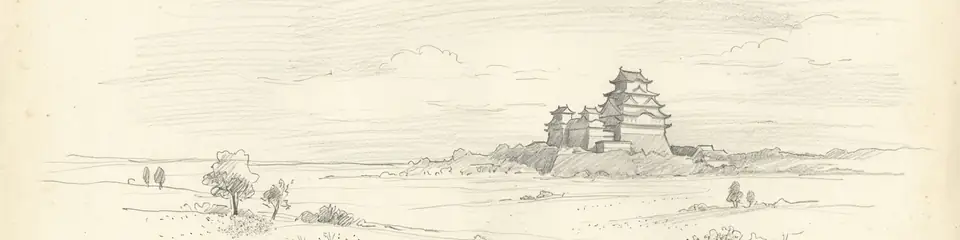
Graphite pencil sketch banner of Himeji Castle

“Himeji Castle is the best-preserved example of early 17th-century Japanese castle engineering — a wooden keep whose maze of gates and walls documents Tokugawa-era defensive thinking.”

위치

개요

Himeji Castle crowns Himeyama hill in Himeji City, Hyogo Prefecture, on the inland sea route between Kyoto and western Japan. A fortification existed from the 14th century; the present labyrinthine layout took shape under the warlord Toyotomi Hideyoshi in the 1580s and was completed in its iconic white form by the Tokugawa vassal Ikeda Terumasa in 1609. The main keep (tenshu) rises five storeys externally, seven internally, on a stone base with defensive loopholes, hidden floors, and maze-like passages designed to slow attackers.

The white plastered walls earned the nicknames "White Heron Castle" (Shirasagi-jo). Unlike many Japanese castles rebuilt in concrete after 1945, Himeji's wooden keep survived World War II bombing and a major conservation project (2009–2015) that re-coated plaster and replaced roof tiles without altering the Edo-period silhouette. The castle never saw a major siege; its value is architectural completeness rather than battle scars.

UNESCO inscribed Himeji as Japan's first castle World Heritage Site (1993). The adjacent Koko-en garden is a modern reconstruction of samurai villas. Together with Horyu-ji and Tōdai-ji, it represents a different chapter of Japanese heritage — feudal military architecture rather than Buddhist temples.

중요성

Himeji Castle is the best-preserved example of early 17th-century Japanese castle engineering — a wooden keep whose maze of gates and walls documents Tokugawa-era defensive thinking. Its survival through modern wars makes it the benchmark for authentic castle tourism in Japan, dominating search interest ahead of rebuilt sites like Osaka Castle.

증거와 해석

확립된 사실과 논쟁 중인 사항을 구분합니다.

잘 확립된 사실

2
  • Timber bearing marks and domain records date the present tenshu to the early Edo period.
  • Castle plan with spiral maze, murder holes, and stone-drop windows matches early 17th-century military manuals.

학술적 추론

1
  • Ikeda investment aimed to display loyalty and prestige to the Tokugawa shogunate after transfer to Himeji.

커뮤니티 사진

당신의 경험을 공유하세요

이 유적지를 방문하셨나요? 다른 탐험가들을 위해 사진을 업로드해 보세요.

이 페이지 인용 방법

Atlas Anatolia. (1333). Himeji Castle. Atlas Anatolia. https://atlasanatolia.com/ko/site/himeji-castle

콘텐츠는 CC BY-SA 4.0 라이선스에 따라 제공됩니다 — 재사용 시 출처 표시가 필요합니다.

출처

  • Japanese Castles 1540–1640 — Turnbull, Stephen (2003)
  • UNESCO — Himeji-jo링크

자주 묻는 질문

Himeji Castle은(는) 어디에 위치해 있나요?

Himeji Castle은(는) Japan에 위치해 있습니다.

Himeji Castle의 연대는 언제인가요?

Himeji Castle의 연대는 대략 1333 서기 – 1868 서기로 거슬러 올라갑니다.

Himeji Castle과(와) 관련된 고대 문명은 무엇인가요?

Himeji Castle은(는) Yamato Japan, Tokugawa 문명과 관련이 있습니다.

Himeji Castle이(가) 중요한 이유는 무엇인가요?

Himeji Castle is the best-preserved example of early 17th-century Japanese castle engineering — a wooden keep whose maze of gates and walls documents Tokugawa-era defensive thinking.

Himeji Castle은(는) 유네스코 세계유산인가요?

예 — Himeji Castle은(는) 유네스코 세계유산으로 등재되어 있습니다.