
콘텐츠로 건너뛰기
Atlas Anatolia
디그
뉴스술라웨시 빙하기 치아에서 빈랑 사용 25,000년 전까지 소급카스타모누 폼페이오폴리스 바실리카에서 로마 모자이크와 에로스 두상 발견
Vermilion torii gate tunnel at Fushimi Inari-taisha, Kyoto

Wikimedia Commons (CC BY-SA 4.0)

유산성소주요

Fushimi Inari-taisha

Seyfi Cem Baskin

伏見稲荷大社711 서기 – 2024 서기

The head shrine of Inari worship on Mount Inari in Kyoto — famous for thousands of vermilion torii gates lining forest paths — ranks fourth among missing sites in our multilingual pageview audit and is Japan's most photographed Shinto sanctuary.

21
관심 79

위치

일본

34.97°N · 135.77°E · 아시아

Founded

Tradition dates to 711 CE on Mount Inari

Torii

Thousands of donor gates line mountain paths

Deity

Inari — kami of rice, foxes (kitsune) as messengers

Status

Head shrine (taisha) of Inari worship nationwide

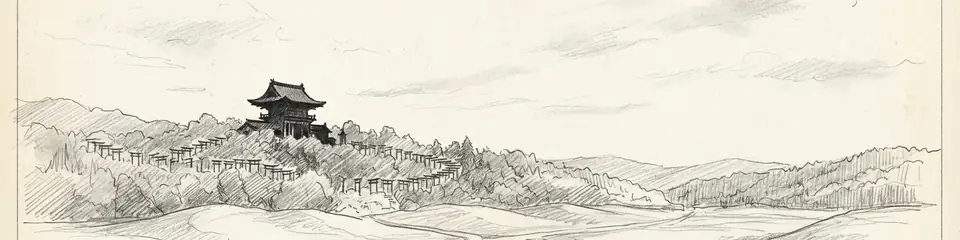
Graphite pencil sketch banner of Fushimi Inari-taisha

“Fushimi Inari documents how Shinto parish networks scaled through merchant patronage — each torii a dated donation record in wood and lacquer.”

위치

개요

Fushimi Inari-taisha stands at the base of Mount Inari in Fushimi ward, Kyoto, Japan. Tradition credits the Hata clan with founding the shrine in 711 CE on the first day of the horse in the second month — an early date for Inari, kami of rice, sake, and prosperity. The shrine became the principal Inari institution, with tens of thousands of sub-shrines across Japan bearing its name.

Vermilion torii gates donated by merchants and devotees since the Edo period form tunnels along paths ascending the wooded mountain to inner shrines and stone fox (kitsune) statues — Inari's messengers. The main hall (honden) was rebuilt in 1499 and 1589; the Romon gate dates to 1589 patronage. Unlike Buddhist temples on the atlas, Fushimi Inari remains an active Shinto site with daily ritual, New Year pilgrimages, and festival processions.

The shrine is not individually UNESCO-listed but lies within the cultural landscape of Kyoto. Its torii corridors dominate image search and travel media for Japan. Pair with Kiyomizu-dera and Himeji Castle for Kyoto sacred architecture and feudal Japan.

중요성

Fushimi Inari documents how Shinto parish networks scaled through merchant patronage — each torii a dated donation record in wood and lacquer. Its mountain paths fuse landscape pilgrimage with vernacular economics (rice, trade) in ways Buddhist temple complexes parallel but do not duplicate.

증거와 해석

확립된 사실과 논쟁 중인 사항을 구분합니다.

잘 확립된 사실

2
  • Medieval and Edo-period donor inscriptions on torii record dates, names, and dedications.
  • Shrine registers and imperial patronage documents name 1499/1589 rebuild phases.

학술적 추론

1
  • Merchant donations expanded torii corridors as Inari cult spread with urban commerce.

커뮤니티 사진

당신의 경험을 공유하세요

이 유적지를 방문하셨나요? 다른 탐험가들을 위해 사진을 업로드해 보세요.

이 페이지 인용 방법

Atlas Anatolia. (711). Fushimi Inari-taisha. Atlas Anatolia. https://atlasanatolia.com/ko/site/fushimi-inari

콘텐츠는 CC BY-SA 4.0 라이선스에 따라 제공됩니다 — 재사용 시 출처 표시가 필요합니다.

출처

  • A New History of Shinto — Breen, John; Teeuwen, Mark (2010)
  • Fushimi Inari Taisha — official site링크

자주 묻는 질문

Fushimi Inari-taisha은(는) 어디에 위치해 있나요?

Fushimi Inari-taisha은(는) Japan에 위치해 있습니다.

Fushimi Inari-taisha의 연대는 언제인가요?

Fushimi Inari-taisha의 연대는 대략 711 서기 – 2024 서기로 거슬러 올라갑니다.

Fushimi Inari-taisha과(와) 관련된 고대 문명은 무엇인가요?

Fushimi Inari-taisha은(는) Yamato Japan, Tokugawa 문명과 관련이 있습니다.

Fushimi Inari-taisha이(가) 중요한 이유는 무엇인가요?

Fushimi Inari documents how Shinto parish networks scaled through merchant patronage — each torii a dated donation record in wood and lacquer.

Fushimi Inari-taisha은(는) 유네스코 세계유산인가요?

Fushimi Inari-taisha은(는) 현재 유네스코 세계유산 목록에 등재되어 있지 않습니다.