
콘텐츠로 건너뛰기
Atlas Anatolia
디그
뉴스술라웨시 빙하기 치아에서 빈랑 사용 25,000년 전까지 소급카스타모누 폼페이오폴리스 바실리카에서 로마 모자이크와 에로스 두상 발견
The wooden Kiyomizu Stage of Kiyomizu-dera temple above Kyoto

Wikimedia Commons (CC BY-SA 3.0)

유산신전유네스코주요

Kiyomizu-dera

Seyfi Cem Baskin

清水寺778 서기 – 2024 서기

The hillside wooden temple in eastern Kyoto — famous for its 13-metre Kiyomizu Stage jutting over the valley and Otowa waterfall — ranks fifth among missing sites in our EN/DE/TR/ZH pageview audit and is a core monument of UNESCO's Historic Monuments of Ancient Kyoto.

21
관심 76

위치

일본

34.99°N · 135.78°E · 아시아

Founded

778 CE beside Otowa waterfall

Kiyomizu Stage

~13 m high wooden platform — nail-free keying

Renovation

Major stage rebuild completed 2020

UNESCO

Historic Monuments of Ancient Kyoto (1994)

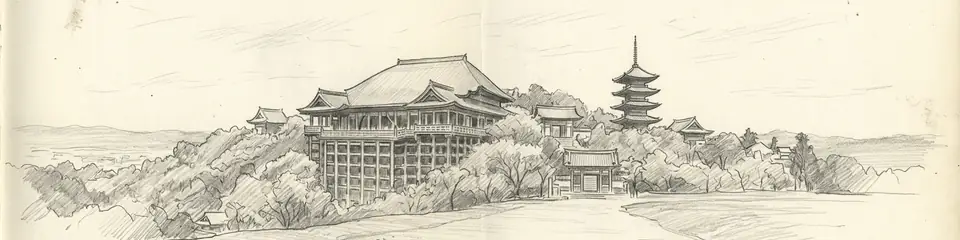
Graphite pencil sketch banner of Kiyomizu-dera

“Kiyomizu-dera's cantilevered stage is a textbook of Japanese timber engineering — keyed columns, massive overhang, and ritual landscape fused on a steep site.”

위치

개요

Kiyomizu-dera stands on the slopes of Mount Otowa in eastern Kyoto, Japan. The temple was founded in 778 CE beside the Otowa waterfall; the present layout reflects Tokugawa-era patronage and periodic rebuilds following fire. The Kiyomizu Stage (butai) — a vast wooden platform supported on tall pillars without nails in the traditional keying system — projects over the hillside and offers views across Kyoto to the west.

The main hall enshrines Kannon (Avalokiteshvara); the Jishu Shrine within the precinct is popular for love divination. Pilgrims drink from three streams of the Otowa waterfall for health, longevity, or academic success (tradition advises choosing only one). The temple name means "pure water temple." Night illuminations during cherry and maple seasons draw enormous crowds.

UNESCO inscribed Kiyomizu-dera among the Historic Monuments of Ancient Kyoto in 1994. The 2017–2020 renovation replaced stage and roof timbers while preserving medieval proportions. Together with Fushimi Inari-taisha and Tōdai-ji, it represents the pilgrimage architecture that defines Japan's search interest in sacred sites.

중요성

Kiyomizu-dera's cantilevered stage is a textbook of Japanese timber engineering — keyed columns, massive overhang, and ritual landscape fused on a steep site. Its UNESCO Kyoto cluster status and seasonal illumination make it the Buddhist counterpart to Fushimi Inari's Shinto torii in global travel search.

증거와 해석

확립된 사실과 논쟁 중인 사항을 구분합니다.

잘 확립된 사실

2
  • Temple chronicles and dendrochronology date major rebuilds and the 2020 stage timber replacement.
  • Medieval pilgrimage routes and Edo-period guidebooks describe the stage and Otowa rites.

학술적 추론

1
  • Tokugawa patronage stabilised the hillside complex after repeated fires in the 16th–17th centuries.

커뮤니티 사진

당신의 경험을 공유하세요

이 유적지를 방문하셨나요? 다른 탐험가들을 위해 사진을 업로드해 보세요.

이 페이지 인용 방법

Atlas Anatolia. (778). Kiyomizu-dera. Atlas Anatolia. https://atlasanatolia.com/ko/site/kiyomizu-dera

콘텐츠는 CC BY-SA 4.0 라이선스에 따라 제공됩니다 — 재사용 시 출처 표시가 필요합니다.

출처

  • History of Japanese Art — Mason, Penelope (2004)
  • UNESCO — Historic Monuments of Ancient Kyoto링크

자주 묻는 질문

Kiyomizu-dera은(는) 어디에 위치해 있나요?

Kiyomizu-dera은(는) Japan에 위치해 있습니다.

Kiyomizu-dera의 연대는 언제인가요?

Kiyomizu-dera의 연대는 대략 778 서기 – 2024 서기로 거슬러 올라갑니다.

Kiyomizu-dera과(와) 관련된 고대 문명은 무엇인가요?

Kiyomizu-dera은(는) Yamato Japan, Tokugawa 문명과 관련이 있습니다.

Kiyomizu-dera이(가) 중요한 이유는 무엇인가요?

Kiyomizu-dera's cantilevered stage is a textbook of Japanese timber engineering — keyed columns, massive overhang, and ritual landscape fused on a steep site.

Kiyomizu-dera은(는) 유네스코 세계유산인가요?

예 — Kiyomizu-dera은(는) 유네스코 세계유산으로 등재되어 있습니다.