
콘텐츠로 건너뛰기
Atlas Anatolia
디그
뉴스술라웨시 빙하기 치아에서 빈랑 사용 25,000년 전까지 소급카스타모누 폼페이오폴리스 바실리카에서 로마 모자이크와 에로스 두상 발견
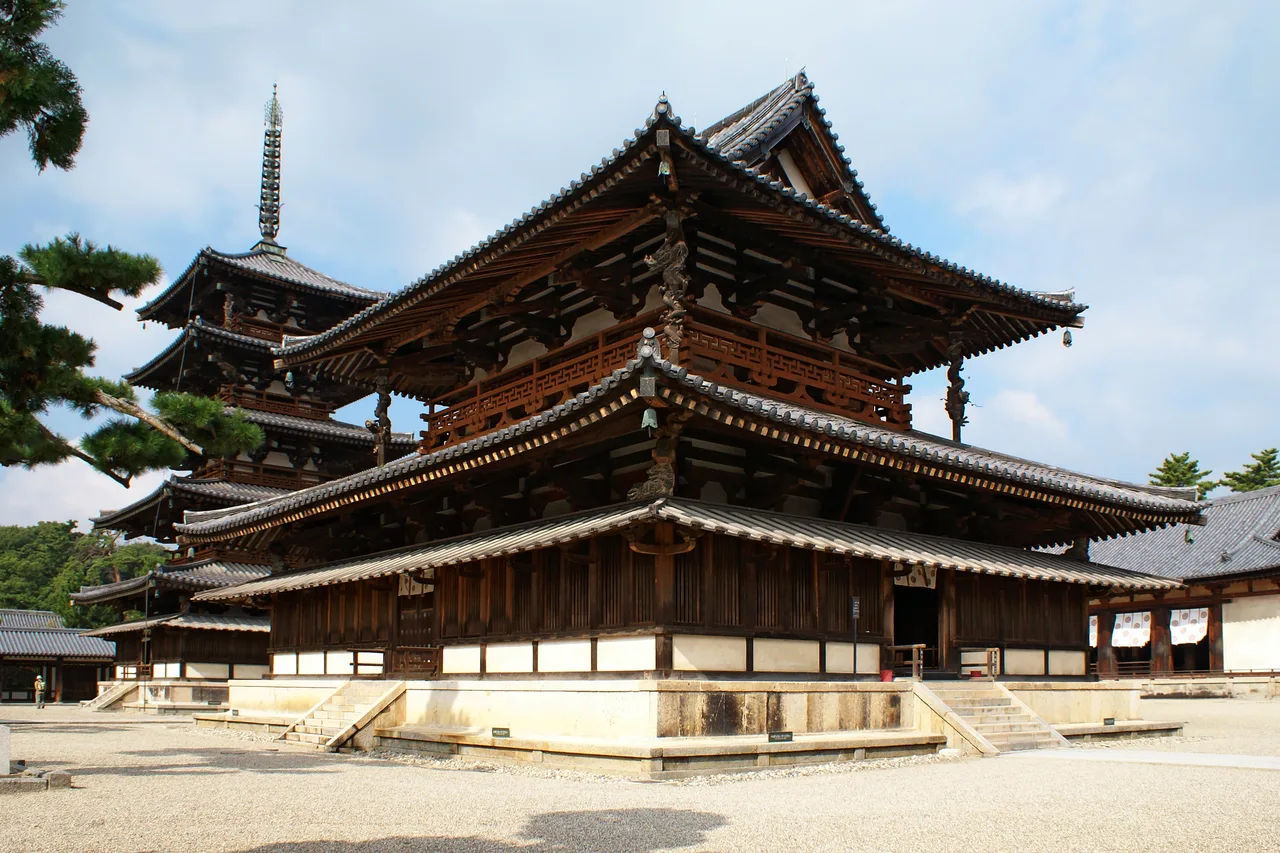
The five-storey Gojunoto pagoda and Kondo (Main Hall) of Horyu-ji, the world's oldest surviving wooden buildings, Nara, Japan

Wikimedia Commons

Country Record

Oldest Temple in Japan

신전유네스코

Horyu-ji

Seyfi Cem Baskin

法隆寺607 서기 – 770 서기

The oldest surviving wooden building complex in the world — a Buddhist temple and monastery founded in 607 CE by Prince Shotoku on the Yamato Plain of Japan, containing structures that have stood for more than 1,400 years. The West Precinct's five-storey pagoda and Kondo (Main Hall) represent the culmination of early East Asian Buddhist architecture as it was transmitted from China and Korea to Japan.

31
관심 68

위치

Ikaruga · Nara Prefecture · 일본

34.61°N · 135.73°E · 아시아

Founded

607 CE by Prince Shotoku; main structures rebuilt late 7th century CE

Oldest wooden buildings

West Precinct Kondo and Gojunoto pagoda — oldest surviving wooden structures in the world

Pagoda

Five-storey, 32 m tall; central pillar (shinbashira) provides seismic flexibility

National Treasures

Over 190 objects designated as National Treasures of Japan

UNESCO

First UNESCO World Heritage Site in Japan (1993)

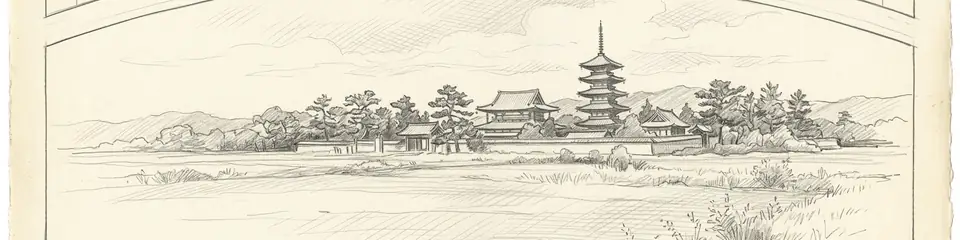
Graphite pencil sketch banner of Horyu-ji

“Horyu-ji is a living archive of how Buddhism — and with it a whole visual and architectural tradition — was transmitted from the Asian continent to Japan.”

위치

개요

Horyu-ji (Temple of the Flourishing Law) is located in the town of Ikaruga, Nara Prefecture, in the central Japanese island of Honshu, about 10 kilometres south-west of Nara. According to the Nihon Shoki (Chronicles of Japan), Prince Shotoku and Empress Suiko founded the temple in 607 CE as an act of devotion during a period of illness. It was rebuilt after a fire in 670 CE; dendrochronological analysis of the timber confirms that the main structures date to the late 7th and early 8th centuries CE.

The temple complex comprises two precincts. The West Precinct (Sai-in) is the older and more famous: its Garan (temple courtyard) contains the Kondo (Main Hall) and the Gojunoto (Five-Storey Pagoda), both dating to the late 7th century. These are the oldest surviving wooden buildings in the world, constructed of hinoki cypress with bracketing systems and upswept eaves that became the defining vocabulary of East Asian temple architecture. The Gojunoto pagoda, approximately 32 metres tall, has a central pillar (shinbashira) that descends from the finial nearly to the foundation level, giving the structure the flexibility to absorb seismic movement — an engineering principle that anticipated modern earthquake-resistant design by over a millennium. The pagoda's ground floor contains clay sculptures depicting scenes from the life of the Buddha, created in 711 CE.

The East Precinct (To-in) was built in 739 CE over the site of Prince Shotoku's Ikaruga Palace and centres on the Yumedono (Hall of Dreams), an octagonal structure housing a gilded camphor-wood statue of Kannon (the Bodhisattva of Compassion) known as the Guze Kannon — long wrapped in cloth and revealed only to special visitors, now more regularly accessible.

Horyu-ji houses more than 190 objects designated as National Treasures of Japan, including Buddhist sculpture, bronze work, lacquerware, and embroidery. Of these, the Tamamushi Shrine (a miniature shrine with iridescent beetle-wing decoration, c. 650 CE) and the Kudara Kannon (a tall, elegant wooden Kannon sculpture) are among the most celebrated early Buddhist artworks in Japan. Horyu-ji was the first site in Japan to be inscribed as a UNESCO World Heritage Site (1993), as part of the Buddhist Monuments in the Horyu-ji Area.

중요성

Horyu-ji is a living archive of how Buddhism — and with it a whole visual and architectural tradition — was transmitted from the Asian continent to Japan. The temple preserves the earliest phase of Japanese Buddhist architecture, art, and iconography in their original spatial context, representing a moment of profound cultural transformation when the Yamato court adopted Chinese administrative culture, Buddhism, and writing simultaneously. The structural achievement of the Gojunoto pagoda is extraordinary: a 1,350-year-old wooden building that has survived numerous earthquakes without collapse, whose central-pillar design may have inspired modern base-isolation engineering. The timber framing systems of the West Precinct also demonstrate the maturity of East Asian carpentry in the Asuka period — joinery techniques developed here influenced Japanese temple architecture for the next thousand years. As the oldest surviving Buddhist complex in Japan, Horyu-ji anchors the history of Japanese civilisation at a specific, datable moment: the convergence of state power, religious devotion, and continental cultural influence that created one of the world's most distinctive artistic traditions.

증거와 해석

확립된 사실과 논쟁 중인 사항을 구분합니다.

잘 확립된 사실

3
  • Dendrochronological (tree-ring) dating of timber from the West Precinct structures confirms they were felled in the late 7th century CE, consistent with reconstruction after the 670 fire recorded in the Nihon Shoki.
  • The shinbashira (central pillar) of the Gojunoto pagoda descends from roof finial to near foundation level, functioning as a damper during earthquakes — confirmed by structural analysis and by the building's survival through multiple Nara-area earthquakes.
  • Bronze and clay inscriptions on major sculptures (including the Shaka Triad, 623 CE) record dates and dedicatory contexts, providing absolute dates for key artworks.

학술적 추론

1
  • The Guze Kannon (Yumedono) is traditionally attributed to Prince Shotoku's era, but art-historical analysis suggests a date in the late 7th or early 8th century CE — slightly later than the prince himself.

발견과 발굴

1934–1954

Post-war structural survey

Major disassembly and reconstruction of the West Precinct structures revealed original construction methods and allowed dendrochronological sampling.

커뮤니티 사진

당신의 경험을 공유하세요

이 유적지를 방문하셨나요? 다른 탐험가들을 위해 사진을 업로드해 보세요.

이 페이지 인용 방법

Atlas Anatolia. (607). Horyu-ji. Atlas Anatolia. https://atlasanatolia.com/ko/site/horyu-ji

콘텐츠는 CC BY-SA 4.0 라이선스에 따라 제공됩니다 — 재사용 시 출처 표시가 필요합니다.

출처

  • Pure Land Buddhist Painting — Okazaki, Joji (1977)
  • The Roof in Japanese Buddhist Architecture — Parent, Mary Neighbour (1983)
  • UNESCO — Buddhist Monuments in the Horyu-ji Area링크

자주 묻는 질문

Horyu-ji은(는) 어디에 위치해 있나요?

Horyu-ji은(는) Ikaruga, Nara Prefecture, Japan에 위치해 있습니다.

Horyu-ji의 연대는 언제인가요?

Horyu-ji의 연대는 대략 607 서기 – 770 서기로 거슬러 올라갑니다.

Horyu-ji과(와) 관련된 고대 문명은 무엇인가요?

Horyu-ji은(는) Yamato Japan 문명과 관련이 있습니다.

Horyu-ji이(가) 중요한 이유는 무엇인가요?

Horyu-ji is a living archive of how Buddhism — and with it a whole visual and architectural tradition — was transmitted from the Asian continent to Japan.

Horyu-ji은(는) 유네스코 세계유산인가요?

예 — Horyu-ji은(는) 유네스코 세계유산으로 등재되어 있습니다.