
콘텐츠로 건너뛰기
Atlas Anatolia
디그
뉴스술라웨시 빙하기 치아에서 빈랑 사용 25,000년 전까지 소급카스타모누 폼페이오폴리스 바실리카에서 로마 모자이크와 에로스 두상 발견
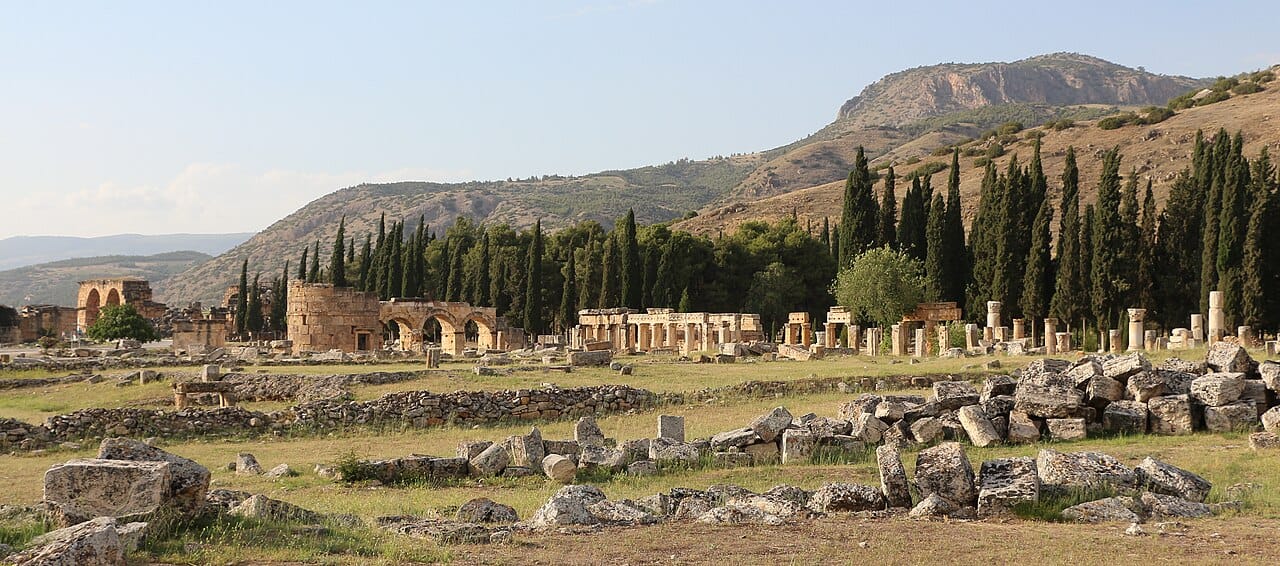
Travertine terraces and ancient ruins at Hierapolis-Pamukkale

Wikimedia Commons (CC BY-SA)

도시유네스코주요

Hierapolis

Seyfi Cem Baskin

190 기원전 – 1354 서기

A Greco-Roman spa city perched above the famous white travertine terraces of Pamukkale. One of the best-preserved ancient cities in Turkey, with a vast necropolis, theatre, and the Plutonium — a gate to the underworld.

211
관심 67

위치

Denizli · Aegean · 튀르키예

37.93°N · 29.12°E · 아시아

UNESCO Status

World Heritage Site (1988)

Theatre Capacity

~12,000

Necropolis

1,200+ tombs

Thermal Springs

36°C (97°F)

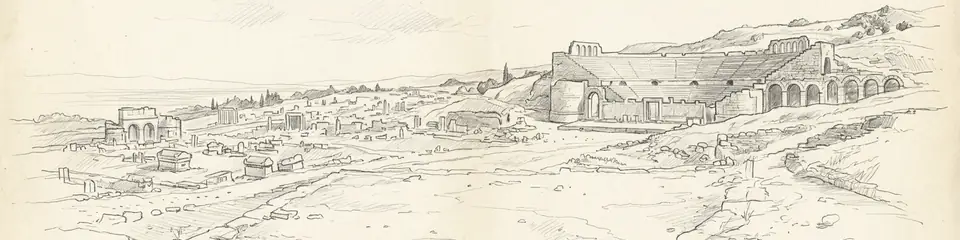
Graphite pencil sketch banner of Hierapolis

“Hierapolis represents the intersection of ancient medicine, religion, and natural wonder.”

위키백과에서

Hierapolis was an ancient Greco-Roman city in Phrygia, located on hot springs in classical Phrygia in southwestern Anatolia. Its ruins are adjacent to modern Pamukkale in Turkey.

위키백과에서 전체 기사 읽기 →

위치

개요

Hierapolis was founded as a thermal spa around 190 BCE by Eumenes II of Pergamon. The city flourished under Roman rule, becoming a major center for healing, textile production (especially wool dyeing), and early Christianity. The Apostle Philip is believed to have been martyred here.

The site sits atop the spectacular travertine terraces of Pamukkale ("Cotton Castle" in Turkish), formed by calcium-rich thermal waters cascading down the hillside over millennia. The city's theatre, seating 12,000, is one of the best-preserved in Anatolia.
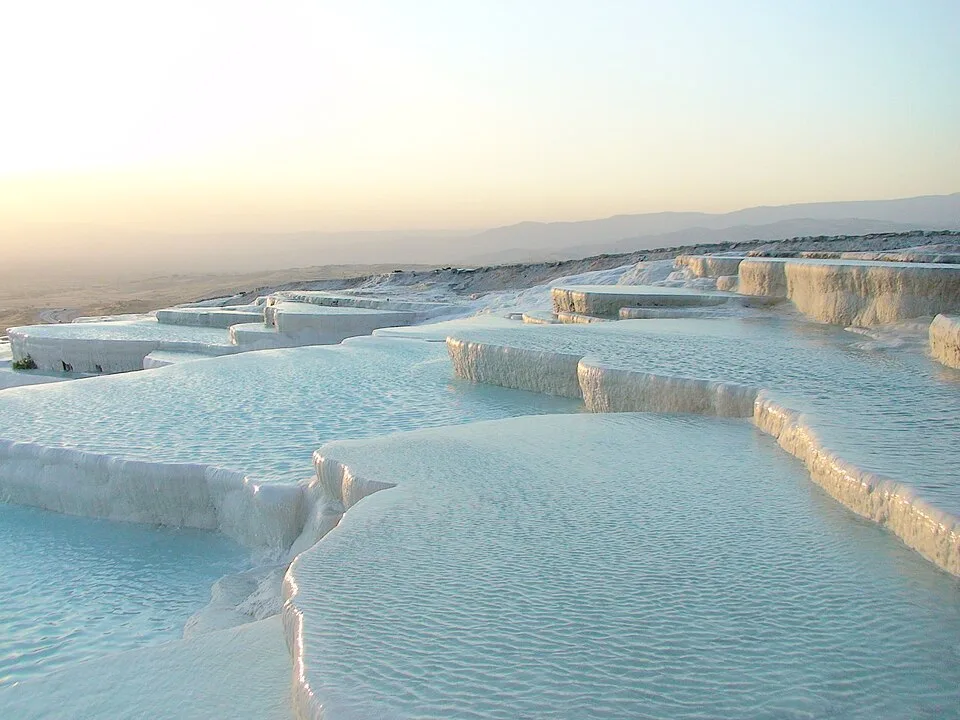
Pamukkale Hierapolis Travertine pools
Pamukkale Hierapolis Travertine pools | Pvasiliadis (CC BY-SA 3.0)
"The hot springs of Hierapolis burst from the earth as if boiled in a furnace, yet men bathe in them without harm."
— Strabo, Geography XIII.4.14, c. 20 BCE

The necropolis of Hierapolis is the largest ancient cemetery in Anatolia, with over 1,200 tombs spanning Hellenistic, Roman, and early Christian periods. The Plutonium, a cave emitting deadly carbon dioxide gases, was believed to be an entrance to the underworld and was used by priests to demonstrate divine power.
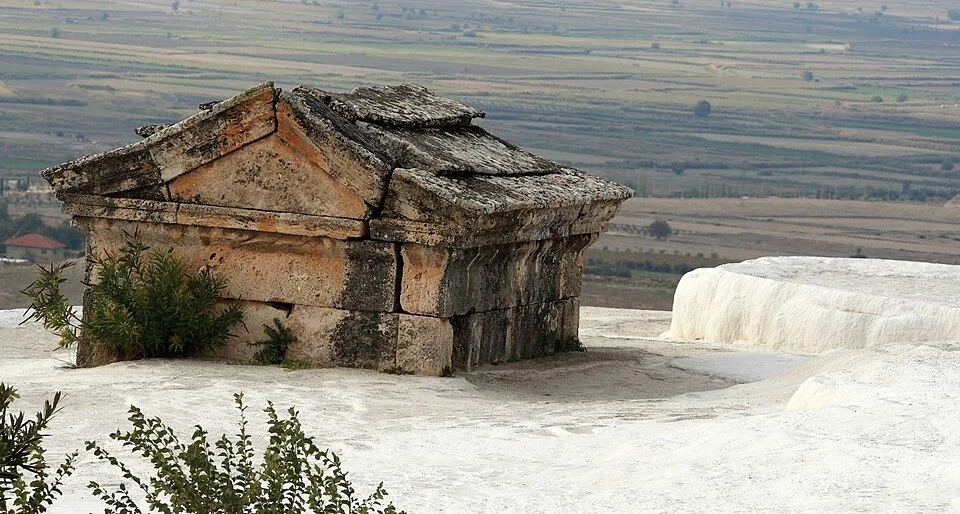
Tomb submerged in a travertine pool in Hierapolis
Tomb submerged in a travertine pool in Hierapolis | Frank K. (CC BY 2.0)

The city's urban plan is a classic example of Roman orthogonal design, centered on the long, colonnaded Frontinus Street. Major public buildings, including baths, a gymnasium, and temples, lined this thoroughfare, showcasing the city's wealth. The extensive water management system, featuring stone aqueducts and clay pipes, distributed thermal water to public baths, private homes, and industrial dyeing workshops. Hierapolis was a cosmopolitan hub, connected to trade routes across Anatolia. Its decline began with a major earthquake in the 7th century CE and was gradual, with a reduced population persisting into the Byzantine and Seljuk periods until the 14th century. The final abandonment is linked to further seismic activity and the shifting of trade routes.
중요성

Hierapolis represents the intersection of ancient medicine, religion, and natural wonder. The thermal springs that attracted settlers 2,200 years ago continue to draw visitors today, making it one of the most visited archaeological sites in Turkey. The site provides exceptional evidence for understanding ancient spa culture, early Christian communities in Asia Minor, and Greco-Roman urban planning. Its necropolis is an unparalleled record of funerary practices across several centuries. UNESCO inscribed Hierapolis-Pamukkale in 1988.

증거와 해석

확립된 사실과 논쟁 중인 사항을 구분합니다.

잘 확립된 사실

2
  • The Plutonium emits carbon dioxide gas that was lethal to animals brought near it in antiquity.
  • The necropolis contains over 1,200 tombs from Hellenistic through early Christian periods.

학술적 추론

1
  • The city was a major center for textile production, particularly wool dyeing, based on archaeological evidence of dyeing facilities.

논쟁 중인 해석

1
  • Whether the Apostle Philip was martyred at Hierapolis or elsewhere remains debated among scholars.

발견과 발굴

1957

Italian excavations begin

지휘 Paolo Verzone

Paolo Verzone of the Turin Polytechnic began systematic excavations.

1988

UNESCO inscription

Hierapolis-Pamukkale inscribed as a UNESCO World Heritage Site.

커뮤니티 사진

당신의 경험을 공유하세요

이 유적지를 방문하셨나요? 다른 탐험가들을 위해 사진을 업로드해 보세요.

관련 이야기

이 페이지 인용 방법

Atlas Anatolia. (190). Hierapolis. Atlas Anatolia. https://atlasanatolia.com/ko/site/hierapolis

콘텐츠는 CC BY-SA 4.0 라이선스에 따라 제공됩니다 — 재사용 시 출처 표시가 필요합니다.

그래프

관련 유적지와 스토리로의 연결.

World History Encyclopedia에서 전체 기사 읽기
World History Encyclopedia · CC BY-NC-SA

출처

  • UNESCO World Heritage — Hierapolis-Pamukkale링크

자주 묻는 질문

Hierapolis은(는) 어디에 위치해 있나요?

Hierapolis은(는) Denizli, Aegean, Türkiye에 위치해 있습니다.

Hierapolis의 연대는 언제인가요?

Hierapolis의 연대는 대략 190 기원전 – 1354 서기로 거슬러 올라갑니다.

Hierapolis과(와) 관련된 고대 문명은 무엇인가요?

Hierapolis은(는) Greek, Roman, Byzantine 문명과 관련이 있습니다.

Hierapolis이(가) 중요한 이유는 무엇인가요?

Hierapolis represents the intersection of ancient medicine, religion, and natural wonder.

Hierapolis은(는) 유네스코 세계유산인가요?

예 — Hierapolis은(는) 유네스코 세계유산으로 등재되어 있습니다.