
콘텐츠로 건너뛰기
Atlas Anatolia
디그
뉴스술라웨시 빙하기 치아에서 빈랑 사용 25,000년 전까지 소급카스타모누 폼페이오폴리스 바실리카에서 로마 모자이크와 에로스 두상 발견
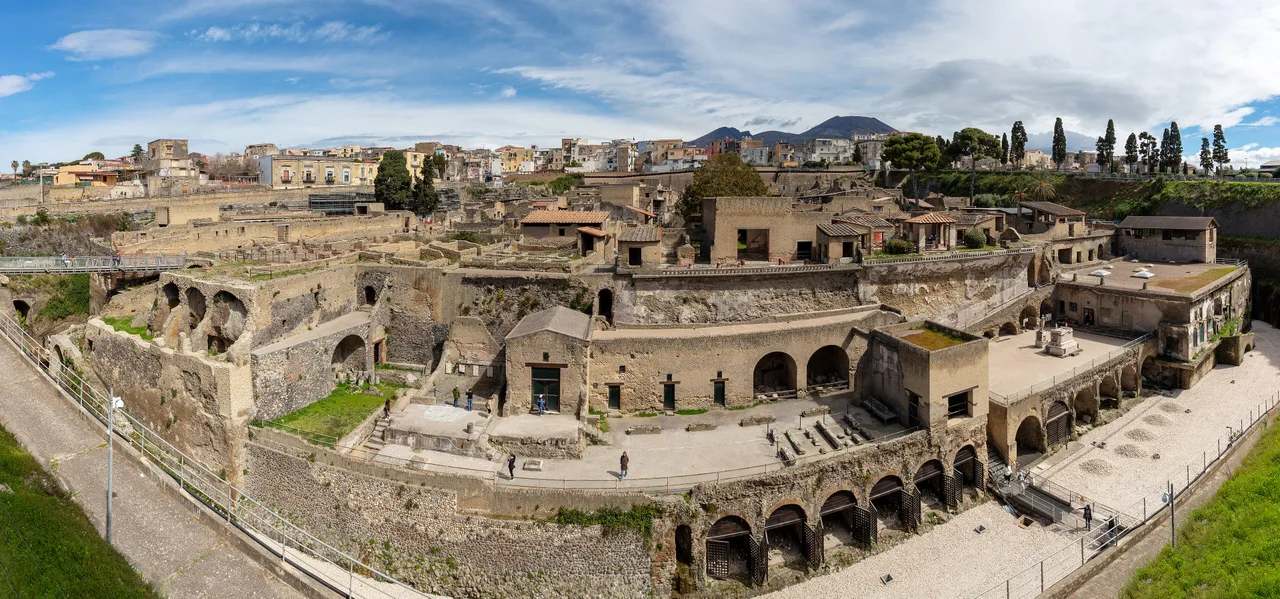
The preserved streets of Herculaneum with multi-storey buildings

Wikimedia Commons

도시유네스코주요

Herculaneum

Seyfi Cem Baskin

Ercolano300 기원전 – 79 서기

A wealthy Roman town buried by Vesuvius in 79 CE to a depth of 20 m — more completely preserved than Pompeii, with wooden furniture, carbonized scrolls, and organic material intact.

41
관심 81

위치

이탈리아

40.81°N · 14.35°E · 유럽

Buried depth

Up to 23 m of pyroclastic material

Eruption date

24–25 August 79 CE

Excavated area

~4 ha of ~20 ha total

Papyrus scrolls recovered

1,800+, from the Villa of the Papyri

Skeletons found

300+ on the seafront, killed by pyroclastic surge

UNESCO

World Heritage Site (jointly with Pompeii)

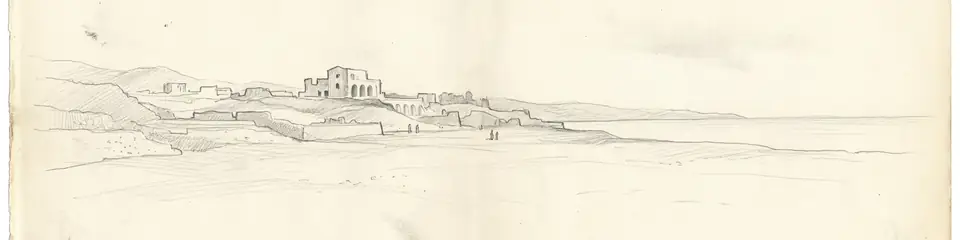
Graphite pencil sketch banner of Herculaneum

“Herculaneum preserves what Pompeii does not.”

위치

개요

Herculaneum occupies a headland on the Bay of Naples, 7 km northwest of Pompeii and directly west of Vesuvius. Unlike Pompeii, which was buried under meters of volcanic ash and pumice, Herculaneum was engulfed by a superheated pyroclastic surge moving at 160–180 km/h on the night of 24–25 August 79 CE. The material that covered it — a volcanic mud and rock mixture that later hardened to near-concrete — preserved organic material that has survived nowhere else in the Roman world: wooden beds, doors, and staircases; carbonized food on stoves; fabric impressions; and an extraordinary library at the Villa of the Papyri containing more than 1,800 papyrus scrolls, the only intact private library to survive from antiquity. The scrolls, mostly philosophical texts by the Epicurean philosopher Philodemus of Gadara, were carbonized by the heat but are slowly being decoded using X-ray and AI-assisted imaging. Excavations have been partial: only a fraction of the town — roughly 4 hectares of an estimated 20 — has been uncovered. The Bourbon-era tunneling of the 18th century removed sculptures and objects with little documentation; systematic excavation began in the 1920s.
중요성

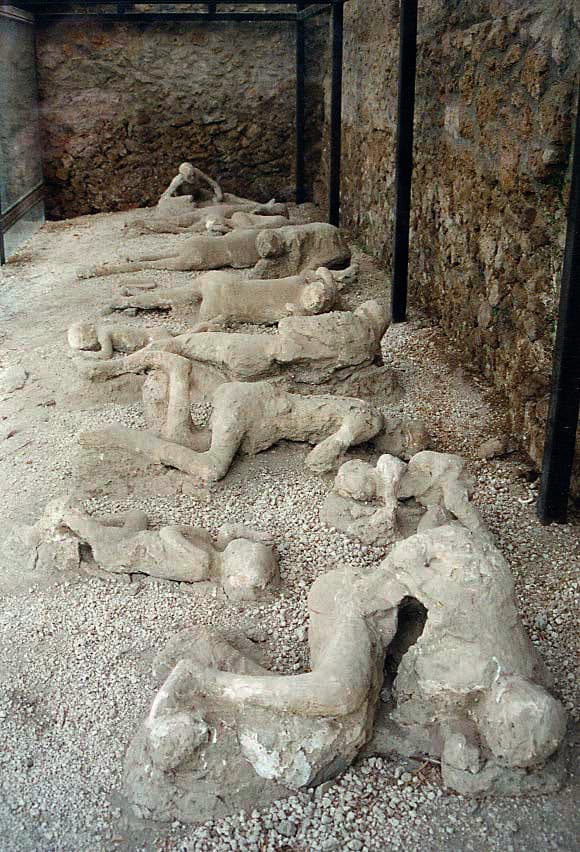
Herculaneum preserves what Pompeii does not. The same eruption that killed both cities treated them differently: Pompeii's buildings survive to first-floor height; Herculaneum's survive to two and three stories, with upper floors intact. The wooden elements — shelves, shutters, stairs — give a physical reality to Roman domestic life that no other site provides. The Villa of the Papyri's scrolls are the only substantial private library from antiquity to have survived, and ongoing efforts to decode the carbonized texts using multispectral imaging and AI are producing new Epicurean philosophy that has been unread for 2,000 years. The skeletons found in boat chambers at the waterfront — over 300 individuals who fled to the shore and were killed by the surge — are the largest assemblage of Roman skeletal material from a single event and have transformed understanding of diet, disease, and demographics in the first-century Roman world.

증거와 해석

확립된 사실과 논쟁 중인 사항을 구분합니다.

잘 확립된 사실

4
  • The eruption date of 79 CE is confirmed by a letter from Pliny the Younger to the historian Tacitus, in which Pliny describes watching the eruption from Misenum across the bay.
  • Pyroclastic material at Herculaneum reaches 23 m depth in places, compared to 4–6 m of pumice at Pompeii — explaining both the superior preservation and the difficulty of excavation.
  • The Villa of the Papyri contained more than 1,800 partially preserved scrolls, the only known intact private library from antiquity, composed predominantly of Epicurean philosophical texts.
  • Stable isotope analysis of skeletons found at the seafront indicates a diet heavy in marine protein, consistent with a port-adjacent population, and reveals high incidence of spinal conditions suggesting manual labor.

논쟁 중인 해석

1
  • A recent study (Nature, 2020) proposed that the extreme heat of the pyroclastic surge (c. 500°C) caused instant death by vaporization of brain tissue, turning it to glass — but the mechanism and temperatures are contested.

커뮤니티 사진

당신의 경험을 공유하세요

이 유적지를 방문하셨나요? 다른 탐험가들을 위해 사진을 업로드해 보세요.

관련 이야기

이 페이지 인용 방법

Atlas Anatolia. (300). Herculaneum. Atlas Anatolia. https://atlasanatolia.com/ko/site/herculaneum

콘텐츠는 CC BY-SA 4.0 라이선스에 따라 제공됩니다 — 재사용 시 출처 표시가 필요합니다.

그래프

관련 유적지와 스토리로의 연결.

출처

  • Herculaneum: Italy's Buried Treasure — Joseph Jay Deiss (1985)
  • Herculaneum Conservation Project링크
  • Reading the Herculaneum Papyri: An Update (2023)링크

자주 묻는 질문

Herculaneum은(는) 어디에 위치해 있나요?

Herculaneum은(는) Italy에 위치해 있습니다.

Herculaneum의 연대는 언제인가요?

Herculaneum의 연대는 대략 300 기원전 – 79 서기로 거슬러 올라갑니다.

Herculaneum과(와) 관련된 고대 문명은 무엇인가요?

Herculaneum은(는) Roman 문명과 관련이 있습니다.

Herculaneum이(가) 중요한 이유는 무엇인가요?

Herculaneum preserves what Pompeii does not.

Herculaneum은(는) 유네스코 세계유산인가요?

예 — Herculaneum은(는) 유네스코 세계유산으로 등재되어 있습니다.