

콘텐츠로 건너뛰기
Atlas Anatolia
디그
뉴스술라웨시 빙하기 치아에서 빈랑 사용 25,000년 전까지 소급카스타모누 폼페이오폴리스 바실리카에서 로마 모자이크와 에로스 두상 발견
Babylon — Iraq

Wikimedia Commons (CC BY-SA)

Country Record

Earliest Known Site in Iraq

The Ishtar Lion — Babylon Collectible Enamel Pin
🔒
🎖️The Ishtar Lion(Collectible)도시유네스코주요

Babylon

Seyfi Cem Baskin

بابل1894 기원전 – 539 기원전

Capital of ancient Babylonia, Babylon flourished under Hammurabi and Nebuchadnezzar II, famed for its Hanging Gardens and Ishtar Gate, before falling to Persia in 539 BCE.

412
관심 87

위치

Babil Governorate · Mesopotamia · 이라크

32.54°N · 44.42°E · 아시아

Period

c. 1894–539 BCE (First Dynasty to Persian conquest)

Civilization

Babylonian (Amorite, Kassite, Neo-Babylonian)

Excavated

Systematic excavations 1899–1917 by Robert Koldewey

Key Rulers

Hammurabi (r. 1792–1750 BCE), Nebuchadnezzar II (r. 605–562 BCE)

UNESCO Status

World Heritage Site since 2019

Area

Approx. 900 hectares (walled inner city)

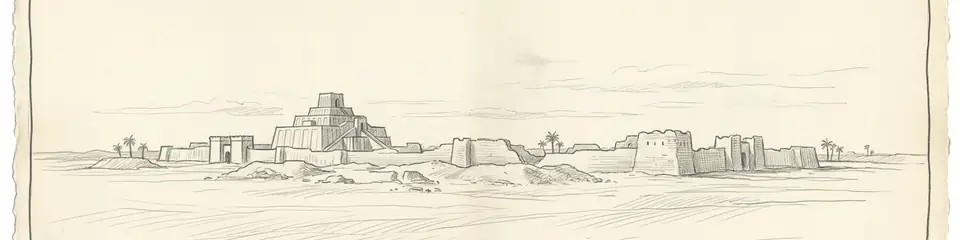
Graphite pencil sketch banner of Babylon

“Babylon stands as one of the most iconic cities of the ancient world, embodying the pinnacle of Mesopotamian civilization.”

위치

개요

Historical Overview

Babylon first rose to prominence under Hammurabi (c. 1792–1750 BCE), who united Mesopotamia and codified his famous law code. The city’s strategic location on the Euphrates made it a commercial and political hub. After a period of Kassite rule, it declined until revitalization under Nebuchadnezzar II in the 6th century BCE, when grand construction projects transformed the cityscape.

Discovery and Excavation

Although never completely abandoned, Babylon’s ruins were first scientifically documented by Claudius Rich in 1811. Systematic excavation began in 1899 under Robert Koldewey, whose meticulous work at the Ishtar Gate and Processional Way revealed the city’s extraordinary glazed brick architecture. These excavations, lasting until 1917, set new methodological standards for Near Eastern archaeology and confirmed many textual descriptions.
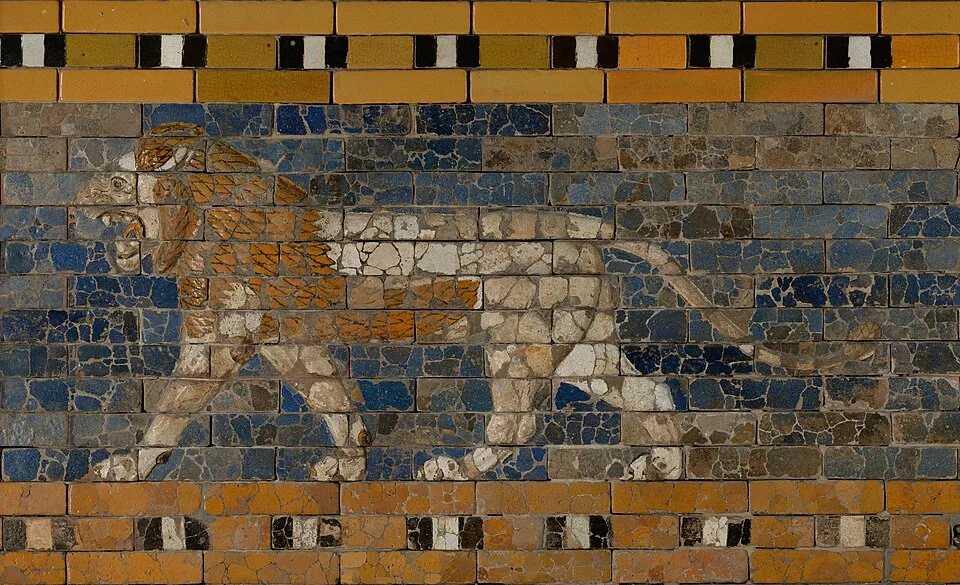
Processional Way, Babylon
Processional Way, Babylon | unknown artist Details on Google Art Project (Public domain)
"Babylon, the most renowned city of the world. It surpasses in grandeur any city of which we have knowledge. The city stands on a broad plain, an exact square, fourteen miles in length on each side, so that the entire circuit is fifty-six miles."
— Herodotus, Histories I.178, c. 440 BCE
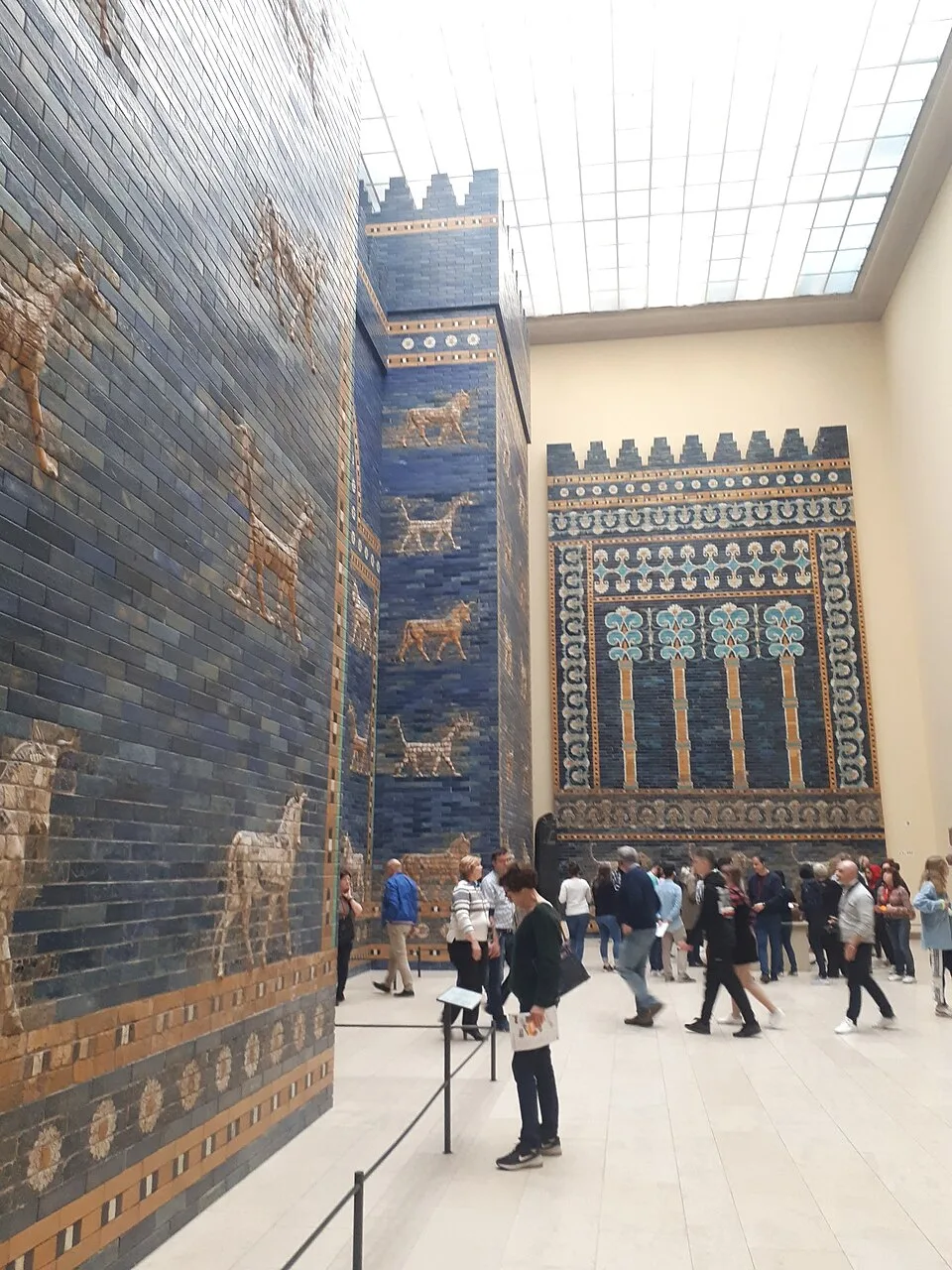
Pergamon museum Ishtar Gate
Pergamon museum Ishtar Gate | Sinoulpgc (CC0)

Architecture and Urban Layout

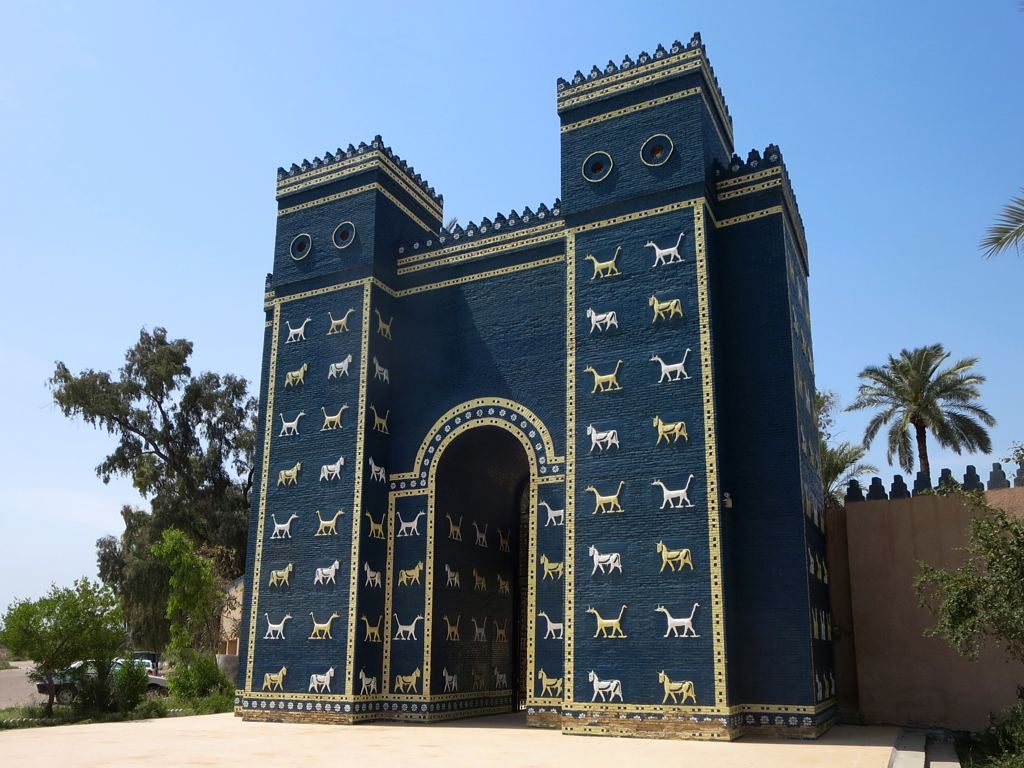
The inner city covered approximately 9 square kilometers, enclosed by massive double walls. The Processional Way, flanked by walls adorned with lions and floral motifs, led to the Ishtar Gate, now famously reconstructed in Berlin. The Etemenanki ziggurat, described by Herodotus, stood seven tiers high and was dedicated to Marduk. Royal palaces, including Nebuchadnezzar’s Southern Palace with its vaulted substructures, attest to advanced engineering. Whether the Hanging Gardens were situated here remains debated; some scholars argue for a location in Nineveh.
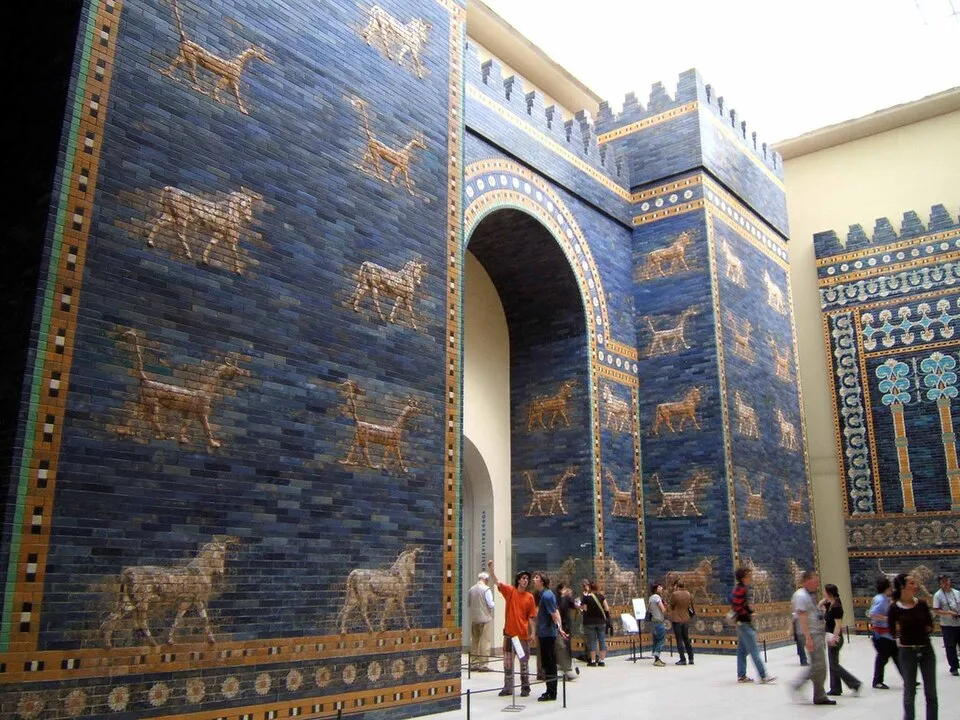
Ishtar Gate at Berlin Museum
Ishtar Gate at Berlin Museum | Rictor Norton (CC BY 2.0)
"Beside the waters of Babylon we sat and wept… yet the Processional Way still names the gods who once ruled the brick."
— Psalm 137:1 combined with archaeological reality of the Ishtar Gate route

Cultural and Scientific Legacy

Babylon was a center of learning, particularly in astronomy and mathematics. The city’s scribes maintained detailed astronomical diaries that later influenced Greek science. The legacy of Hammurabi’s legal code reverberated throughout antiquity. The site also holds profound religious significance, appearing prominently in biblical narratives such as the Tower of Babel and the Jewish exile. The deterministic concept of celestial omens and the 60-minute hour originated here.

Decline and Afterlife

Following the Persian conquest by Cyrus the Great in 539 BCE, Babylon lost its political independence but remained a populous city. Hellenistic rulers, including Alexander the Great, intended to make it their eastern capital, but after his death the city gradually declined, eclipsed by Seleucia and Ctesiphon. By the early Islamic period, it had diminished into a village, and the ruins became a source for brick robbers. The site’s layered history offers a complex record of continuity and change.
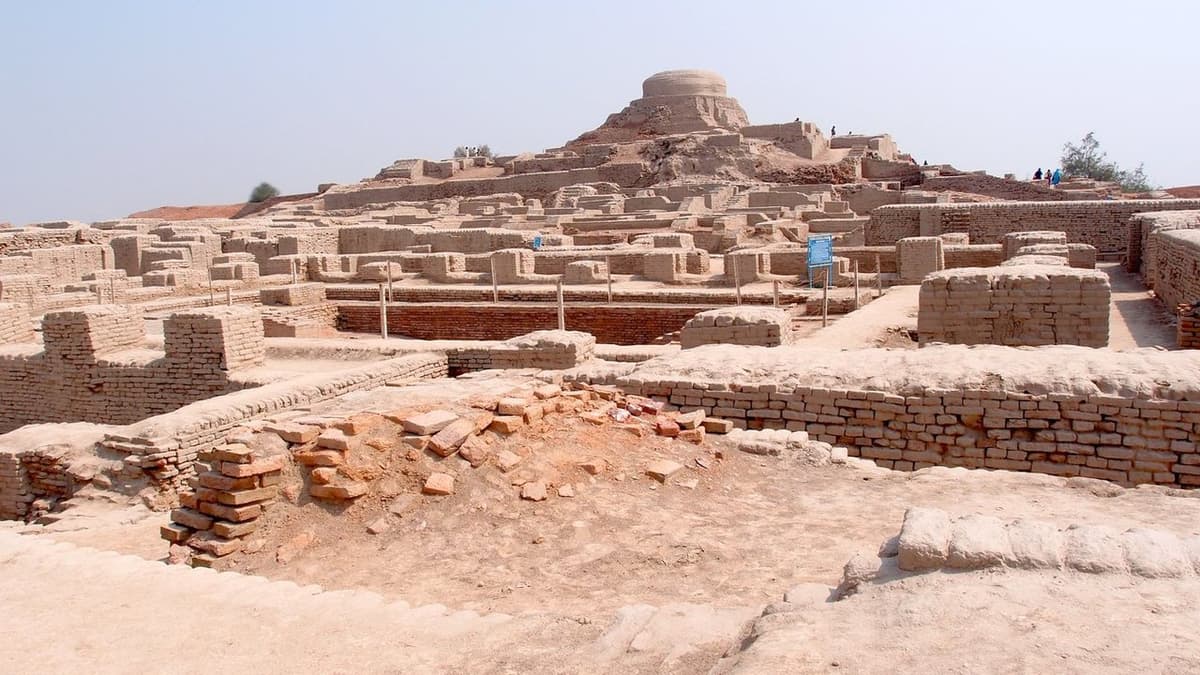
중요성

Babylon stands as one of the most iconic cities of the ancient world, embodying the pinnacle of Mesopotamian civilization. Its legal, architectural, and astronomical achievements influenced later cultures from Greece to the Islamic world. The city’s legendary status—fueled by biblical references and classical descriptions—continues to captivate both scholars and the public, making it a symbol of human ambition and cultural memory.

증거와 해석

확립된 사실과 논쟁 중인 사항을 구분합니다.

잘 확립된 사실

4
  • The Ishtar Gate was constructed of molded glazed bricks and dedicated by Nebuchadnezzar II, as confirmed by in situ inscriptions.
  • The Processional Way extended over 250 m from the gate, lined with lions and floral motifs, discovered during Koldewey’s excavations.
  • Cuneiform tablets document the city’s role as an astronomical observation center, including the 'Astronomical Diaries' from the 7th century BCE onward.
  • Etemenanki, the ziggurat of Marduk, was the largest in Mesopotamia, with a base of 91 × 91 m and at least seven stories.

학술적 추론

1
  • The Hanging Gardens, if historical, likely employed a sophisticated water-screw system, though no physical remains have been identified at Babylon.

논쟁 중인 해석

2
  • Some scholars locate the Hanging Gardens at Nineveh, attributing them to Sennacherib, based on textual and archaeological evidence.
  • The extent to which Babylon was destroyed or declined after the Achaemenid period is contested; some evidence points to gradual urban contraction rather than sudden abandonment.

발견과 발굴

1811–1811

Claudius Rich’s initial survey

지휘 Claudius Rich

Claudius Rich mapped the visible mounds and collected inscribed bricks, sparking European interest.

1850–1854

Layard’s brief excavations

지휘 Austen Henry Layard

Austen Henry Layard conducted limited soundings while en route to Assyrian sites.

1899–1917

Koldewey’s German Oriental Society expedition

지휘 Robert Koldewey

Systematic excavation revealed the Ishtar Gate, Processional Way, and Etemenanki. Methods set new standards in stratigraphy.

1978–1989

Iraqi restoration project

지휘 State Board of Antiquities

Iraqi Department of Antiquities reconstructed parts of the Ishtar Gate and city walls, drawing on Koldewey’s records.

2005

Post-invasion damage assessment and conservation

지휘 Various international missions

UNESCO and Iraqi authorities documented damage from military operations and looting, initiating protective measures.

커뮤니티 사진

당신의 경험을 공유하세요

이 유적지를 방문하셨나요? 다른 탐험가들을 위해 사진을 업로드해 보세요.

관련 이야기

이 페이지 인용 방법

Atlas Anatolia. (1894). Babylon. Atlas Anatolia. https://atlasanatolia.com/ko/site/babylon

콘텐츠는 CC BY-SA 4.0 라이선스에 따라 제공됩니다 — 재사용 시 출처 표시가 필요합니다.

그래프

관련 유적지와 스토리로의 연결.

출처

  • Oates, J. (1986). Babylon. — Joan Oates (1986)
  • Dalley, S. (2013). The Mystery of the Hanging Garden of Babylon. — Stephanie Dalley (2013)
  • George, A.R. (1992). Babylonian Topographical Texts. — A.R. George (1992)
  • George, A. R. (2005). 'The Tower of Babel: Archaeology, history and cuneiform texts.' Archiv für Orientforschung 51: 75–95. — A. R. George (2005)
  • UNESCO World Heritage Centre. Babylon.링크
  • Livius.org. Babylon.링크

자주 묻는 질문

Babylon은(는) 어디에 위치해 있나요?

Babylon은(는) Babil Governorate, Mesopotamia, Iraq에 위치해 있습니다.

Babylon의 연대는 언제인가요?

Babylon의 연대는 대략 1894 기원전 – 539 기원전로 거슬러 올라갑니다.

Babylon과(와) 관련된 고대 문명은 무엇인가요?

Babylon은(는) Babylonian, Akkadian, Assyrian 문명과 관련이 있습니다.

Babylon이(가) 중요한 이유는 무엇인가요?

Babylon stands as one of the most iconic cities of the ancient world, embodying the pinnacle of Mesopotamian civilization.

Babylon은(는) 유네스코 세계유산인가요?

예 — Babylon은(는) 유네스코 세계유산으로 등재되어 있습니다.