
콘텐츠로 건너뛰기
Atlas Anatolia
디그
뉴스술라웨시 빙하기 치아에서 빈랑 사용 25,000년 전까지 소급카스타모누 폼페이오폴리스 바실리카에서 로마 모자이크와 에로스 두상 발견
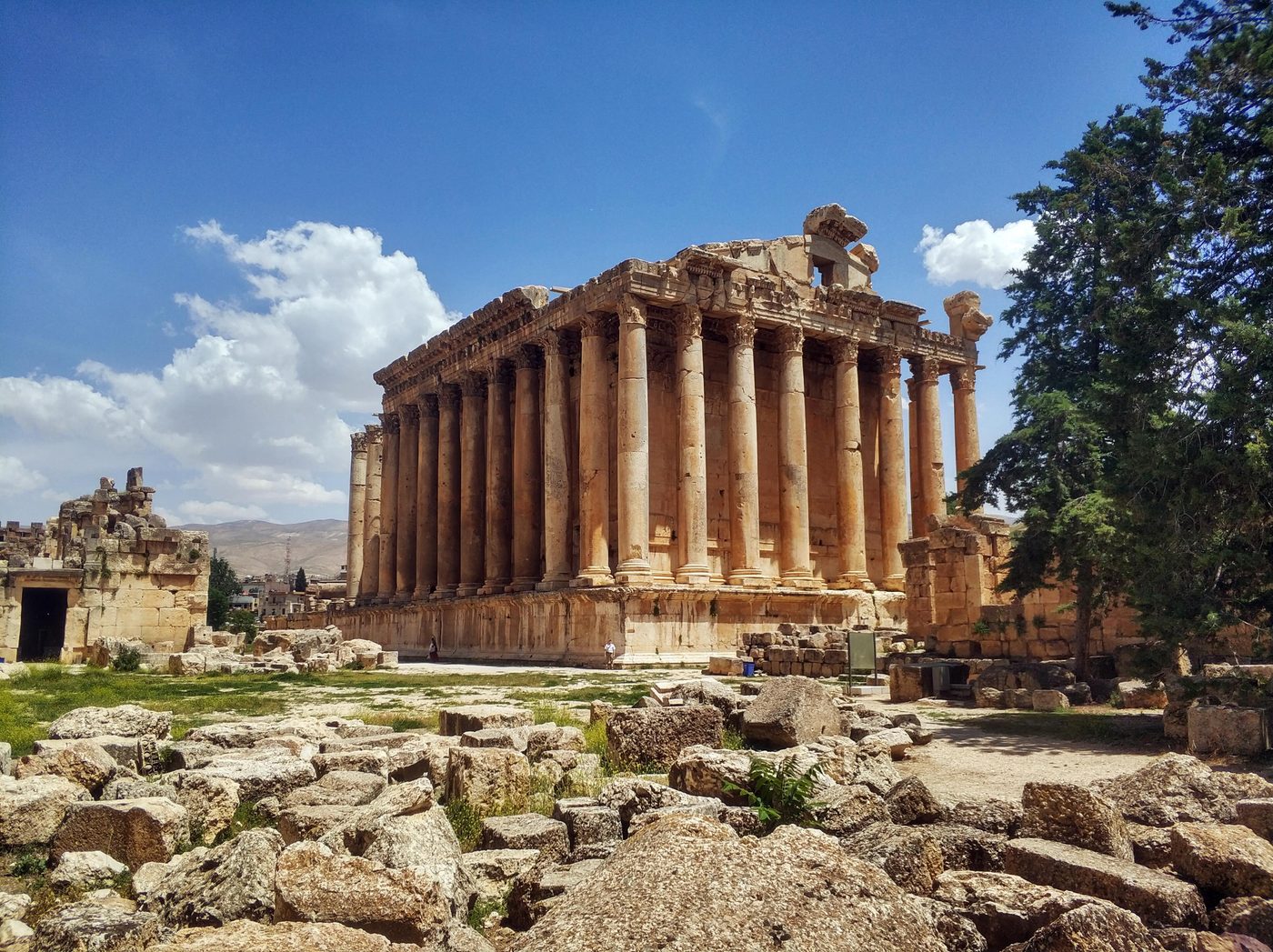
Baalbek — Lebanon

Wikimedia Commons (CC BY-SA)

Country Record

Earliest Known Site in Lebanon

신전유네스코주요

Baalbek

Seyfi Cem Baskin

بعلبك1000 기원전 – 400 서기

Baalbek, Lebanon's monumental Roman temple complex, preserves the largest stone blocks ever quarried and stands as a testament to imperial ambition and religious syncretism.

421
관심 75

위치

Baalbek-Hermel Governorate · Beqaa Valley · 레바논

34.01°N · 36.20°E · 아시아

Built

circa 1000 BCE (Phoenician sanctuary); major Roman construction 1st–3rd century CE

Civilization

Phoenician, Roman

Discovered

Never lost; first documented by European travelers in the 16th century; systematic excavations from 1898

Status

UNESCO World Heritage Site (1984)

Notable Features

The trilithon: three stones weighing ~800 tons each; the 'Stone of the Pregnant Woman' weighing ~1,000 tons

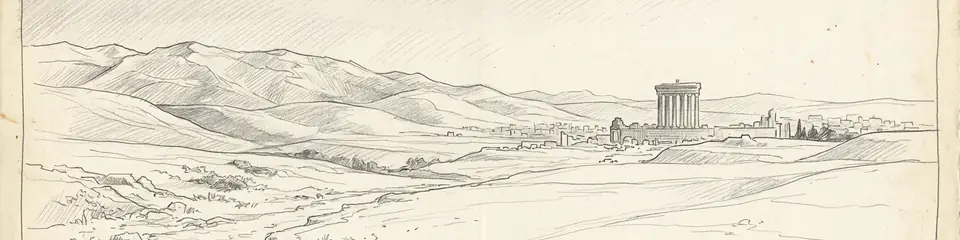
Graphite pencil sketch banner of Baalbek

“Baalbek illustrates the Roman Empire's ability to integrate and transform local cults, creating a monumental landscape that symbolized imperial power.”

위치

개요

Historical Context

Baalbek (ancient Heliopolis) lies in the Bekaa Valley of Lebanon. The site was initially a Phoenician sanctuary dedicated to a local triad, likely Baal, Anat, and another deity, during the first millennium BCE. After the Roman conquest in the 1st century BCE, the settlement became a Roman colony under Augustus (Colonia Julia Augusta Felix Heliopolitana). Major construction began in the late 1st century CE, with the Temple of Jupiter and its forecourts, and continued through the 3rd century CE, including the well-preserved Temple of Bacchus and the Temple of Venus. The site declined following the Christianization of the Roman Empire and was later fortified during the Islamic period.

Monumental Architecture

The most striking feature of Baalbek is the enormous scale of its Roman construction. The Temple of Jupiter was raised on a colossal podium containing the 'trilithon'—three stone blocks each measuring approximately 19 meters long, 4 meters high, and 3.5 meters wide, weighing around 800 tons. The quarry a few kilometers away preserves an even larger monolith, the 'Stone of the Pregnant Woman,' weighing an estimated 1,000 tons. The Temple of Bacchus, slightly smaller but exceptionally well-preserved, features intricate Corinthian columns and a richly decorated entablature. The complex also includes the Temple of Venus, a circular structure, and the hexagonal forecourt.
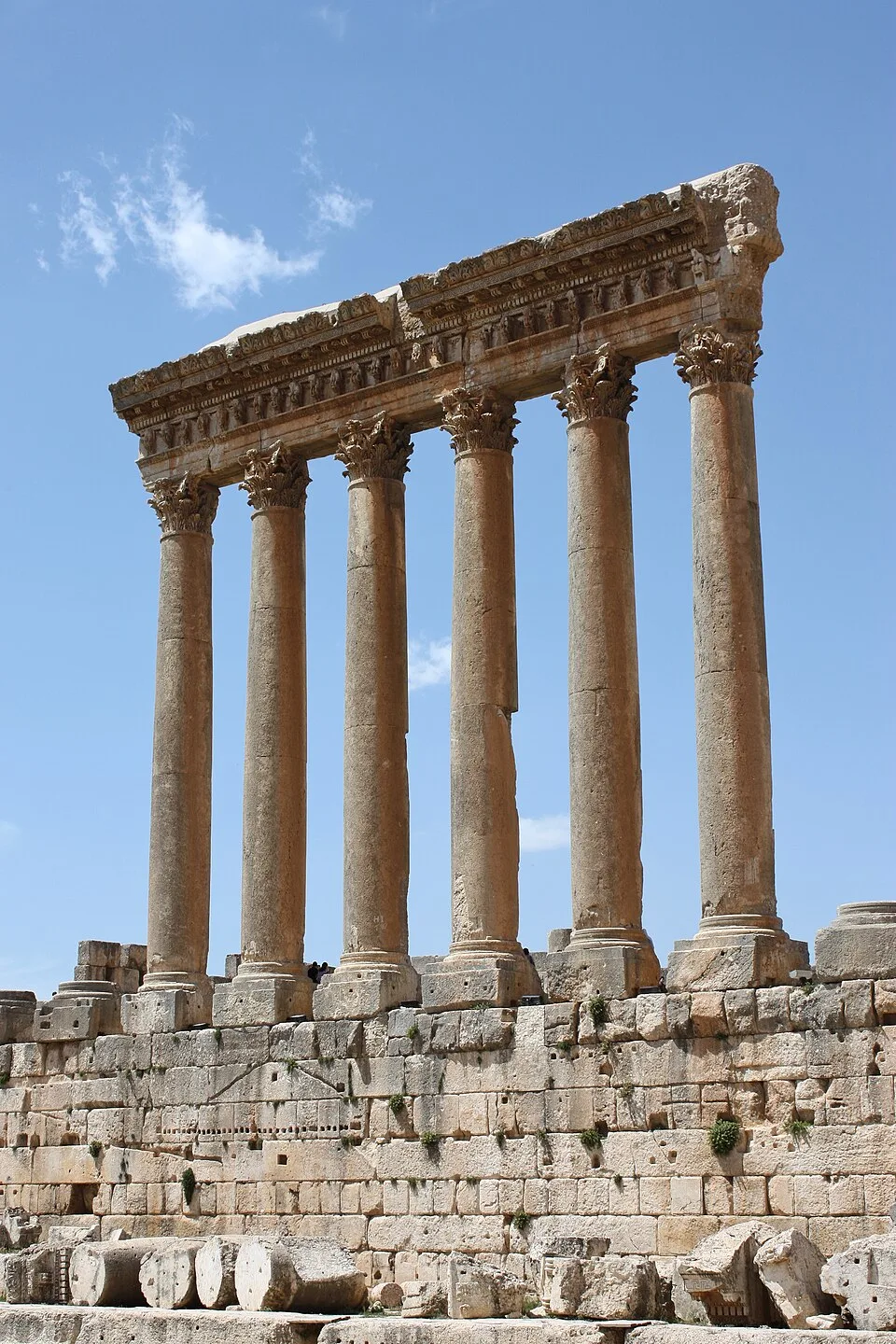
Baalbek - temple of Jupiter
Baalbek - temple of Jupiter | Eusebius (CC BY 3.0)
"The temples of Baalbek surpass anything we Romans have built in the West. The columns of Jupiter alone reach to a height that staggers the eye."
— Macrobius, Saturnalia I.23, on Heliopolis (early 5th century CE)

Religious Significance

The sanctuary was dedicated to the Heliopolitan triad: Jupiter Heliopolitanus, Venus Heliopolitana, and Mercury. The syncretic cult blended local Semitic deities with Greco-Roman gods, attracting pilgrims from across the region. Rituals likely involved processions, oracles, and perhaps sacred prostitution, as suggested by ancient sources like the De Dea Syria. The site's oracle was famed in the ancient world, with emperors such as Trajan consulting it before military campaigns.
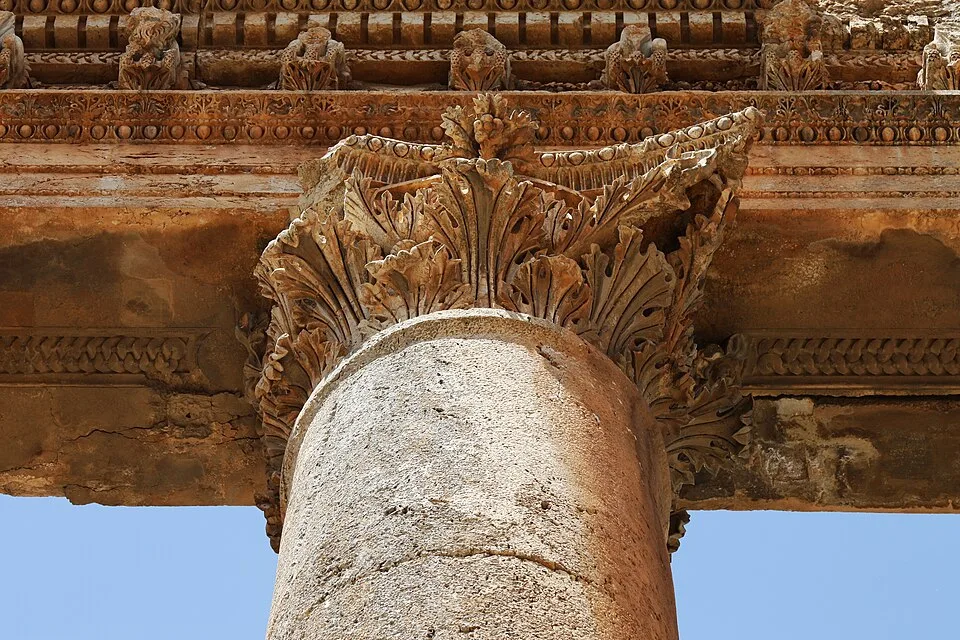
Baalbek - temple de Jupiter - chapiteau
Baalbek - temple de Jupiter - chapiteau | Eusebius (CC BY 3.0)

Archaeological Investigations

Baalbek has been known since antiquity, but serious study began in the 16th century with European travelers like F. von Troilo. Systematic excavations commenced in 1898 under a German mission led by Theodor Wiegand and Otto Puchstein, which produced the definitive record of the temple complex. French archaeologists continued work during the Mandate period, clearing debris and restoring structures. Since the 1990s, Lebanese authorities and international partners have focused on conservation, stabilizing the temples damaged by earthquakes and conflict.

Unresolved Questions

Scholars continue to debate the methods used to transport and lift the massive stones, with theories ranging from Roman cranes to lost techniques. The precise origins of the cult and the extent of pre-Roman occupation are also subjects of ongoing research.

중요성

Baalbek illustrates the Roman Empire's ability to integrate and transform local cults, creating a monumental landscape that symbolized imperial power. Its colossal stonework challenges our understanding of ancient engineering, while its temple complex stands as one of the largest and best-preserved Roman religious sites in the world. The site's enduring allure for pilgrims and travelers over millennia underscores its role as a crossroads of cultures.

증거와 해석

확립된 사실과 논쟁 중인 사항을 구분합니다.

잘 확립된 사실

4
  • The trilithon in the Temple of Jupiter’s podium consists of three limestone blocks each weighing approximately 800 tons.
  • The Temple of Bacchus is one of the best-preserved Roman temples, with its elaborate decorative sculpture largely intact.
  • Ancient sources identify Baalbek as Heliopolis, a major cult center for Jupiter Heliopolitanus.
  • The site was a Roman colony founded by Augustus under the name Colonia Julia Augusta Felix Heliopolitana.

학술적 추론

2
  • The name 'Baalbek' likely derives from the Phoenician deity Baal, indicating pre-Roman religious activity.
  • The large altars and courtyards suggest that the sanctuary hosted mass public rituals and sacrificial events.

논쟁 중인 해석

1
  • The engineering techniques used to quarry, transport, and lift the trilithon stones remain a subject of scholarly disagreement.

발견과 발굴

1898–1905

German Excavations

지휘 Theodor Wiegand, Otto Puchstein

First systematic archaeological exploration of the temple complex, directed by Theodor Wiegand and Otto Puchstein. They cleared debris, mapped the ruins, and published a monumental survey.

1920–1940

French Mandate Period Clearance

지휘 French Mandate archaeologists (e.g., Henri Seyrig)

Extensive clearance and restoration by French authorities, revealing subsidiary structures and restoring the Temple of Bacchus.

1990

Lebanese-German Conservation Project

지휘 Lebanese Directorate General of Antiquities, German Archaeological Institute (M. van Ess)

Ongoing collaboration focusing on structural stabilization after earthquake damage, including anastylosis of fallen columns in the Temple of Bacchus.

1998–2005

UNESCO-Lebanon Restoration Project

지휘 UNESCO, Lebanese authorities

Focused on the propylaea and the Temple of Bacchus, addressing stone decay and structural cracks.

커뮤니티 사진

당신의 경험을 공유하세요

이 유적지를 방문하셨나요? 다른 탐험가들을 위해 사진을 업로드해 보세요.

이 페이지 인용 방법

Atlas Anatolia. (1000). Baalbek. Atlas Anatolia. https://atlasanatolia.com/ko/site/baalbek

콘텐츠는 CC BY-SA 4.0 라이선스에 따라 제공됩니다 — 재사용 시 출처 표시가 필요합니다.

출처

  • Jidejian, N. (1975). Baalbek: Heliopolis, City of the Sun — Nina Jidejian (1975)
  • Ragette, F. (1980). Baalbek — Friedrich Ragette (1980)
  • Butcher, K. (2003). Roman Syria and the Near East — Kevin Butcher (2003)
  • Kropp, A. J. M. (2010). The imagery and cult of the Heliopolitan triad at Baalbek — Andreas J. M. Kropp (2010)
  • UNESCO World Heritage List: Baalbek링크

자주 묻는 질문

Baalbek은(는) 어디에 위치해 있나요?

Baalbek은(는) Baalbek-Hermel Governorate, Beqaa Valley, Lebanon에 위치해 있습니다.

Baalbek의 연대는 언제인가요?

Baalbek의 연대는 대략 1000 기원전 – 400 서기로 거슬러 올라갑니다.

Baalbek과(와) 관련된 고대 문명은 무엇인가요?

Baalbek은(는) Roman, Carthaginian / Phoenician, Canaanite 문명과 관련이 있습니다.

Baalbek이(가) 중요한 이유는 무엇인가요?

Baalbek illustrates the Roman Empire's ability to integrate and transform local cults, creating a monumental landscape that symbolized imperial power.

Baalbek은(는) 유네스코 세계유산인가요?

예 — Baalbek은(는) 유네스코 세계유산으로 등재되어 있습니다.