
コンテンツへスキップ
Atlas Anatolia
ニュースIce Age teeth in Sulawesi push betel-nut use back as far as 25,000 yearsRoman mosaic and Eros head uncovered in the basilica at Pompeiopolis, Kastamonu
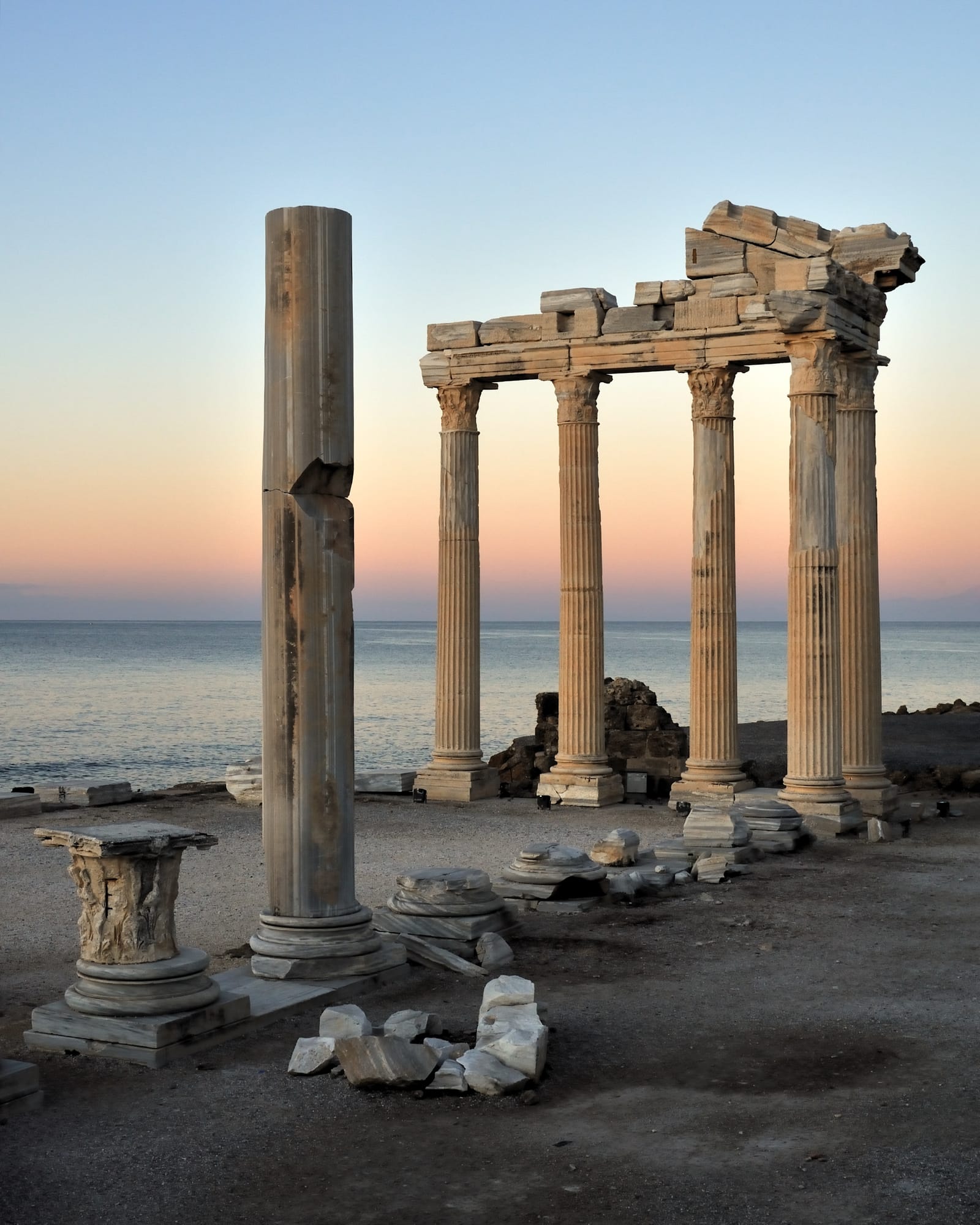
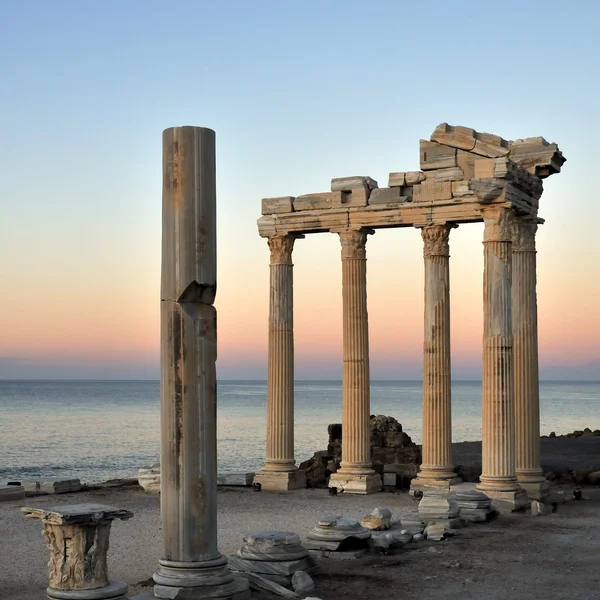
Temple of Apollo columns at Side against the Mediterranean Sea

Wikimedia Commons (CC BY-SA)

都市

Side

Seyfi Cem Baskin

700 紀元前 – 1200 西暦

A grand Roman port city jutting into the Mediterranean on a narrow peninsula, crowned by one of the largest theatres in Anatolia and flanked by the remains of temples to Apollo and Athena against the sea.

411
関心 62

所在地

Antalya · Mediterranean · トルコ

36.77°N · 31.39°E · アジア

Theatre Capacity

15,000-20,000

Key Temples

Apollo and Athena

City Wall Length

~800m preserved

Museum

Roman baths converted to Side Museum

Water Supply System

A 25 km long Roman aqueduct from the Manavgat River, with a 10 m high, 226 m long bridge section (Nymphaeum Bridge).

Main Excavator

Prof. Dr. Arif Müfid Mansel, who directed the Turkish excavations from their inception in 1947 until 1975.

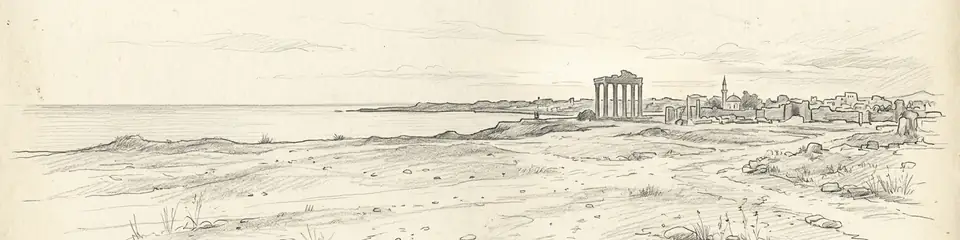
Graphite pencil sketch banner of Side

“Side offers a remarkably complete portrait of a prosperous Roman provincial city — from its commercial harbor to its religious sanctuaries, from its public entertainment to its defensive infrastructure.”

Wikipediaより

Side was an ancient Greek city on the southern Mediterranean coast of Turkey, known for its large theatre and the Temple of Apollo.

Wikipediaで全文を読む →

所在地

概要

Side was one of the most important port cities of ancient Pamphylia, occupying a dramatic peninsula that juts into the Mediterranean along the southern Turkish coast. Founded around the 7th century BCE by Aeolian Greek colonists, the city's name derives from an old Anatolian word meaning "pomegranate."

The city reached its zenith under Roman rule in the 2nd and 3rd centuries CE, when it became a thriving center for the slave trade and olive oil commerce. Its massive theatre, seating approximately 15,000 to 20,000 spectators, is the largest in Pamphylia and was built against the flat terrain using a substructure of arches — an engineering solution that distinguished it from hillside Greek theatres.

"Side is a city of Pamphylia, situated on the coast, having a port."
— Strabo, c. 7 BCE - 23 CE

The Temple of Apollo, with its five re-erected Corinthian columns standing against the Mediterranean sunset, has become one of Turkey's most iconic archaeological images. Adjacent stood the Temple of Athena, the city's patron deity. The monumental gate, colonnaded agora, Roman baths (now the Side Museum), and nymphaeum speak to the wealth that flowed through this maritime hub.

Side also preserves one of the most complete Roman city walls in Turkey, stretching from the main gate across the peninsula, with towers and defensive features intact.
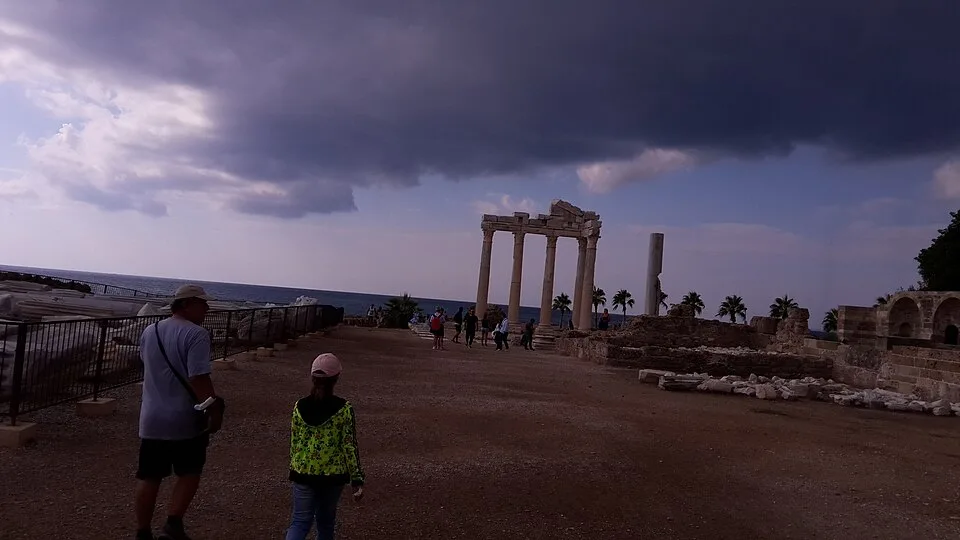
Side Ancient City
Side Ancient City | Litobates (CC BY-SA 4.0)

Beyond its grand monuments, Side's urban fabric reveals a sophisticated infrastructure. A complex network of colonnaded streets, including the main colonnaded avenue leading from the city gate to the harbor, connected its districts. The city's water supply was secured by a 25 km long Roman aqueduct from the Manavgat River, terminating in a monumental three-story nymphaeum (fountain house) near the main gate. The extensive agora, excavated by Arif Müfid Mansel, functioned as the commercial and civic heart, featuring shops, a library, and a circular temple to Tyche, the goddess of fortune.

Side's prosperity began to wane in the 4th century CE due to a combination of factors: earthquakes, the silting of its harbor, and increasing pirate raids. It was largely abandoned by the 10th century, though it saw a brief revival in the 12th century as a Byzantine settlement. The site was eventually covered by sand dunes, which paradoxically aided in the preservation of its spectacular ruins until systematic excavations began in the mid-20th century.

重要性

Side offers a remarkably complete portrait of a prosperous Roman provincial city — from its commercial harbor to its religious sanctuaries, from its public entertainment to its defensive infrastructure. Its theatre, built entirely on arched substructures on flat ground, represents a distinctive Roman engineering approach. The coexistence of temples dedicated to Apollo and Athena at the harbor edge illustrates the religious life of a multicultural port city. Side's well-preserved agora provides exceptional evidence for Roman commercial architecture in the eastern Mediterranean.

証拠と解釈

確立された事実と議論が続く事柄を区別する。

確立された事実

4
  • The theatre at Side was constructed during the 2nd century CE using a system of arched substructures, as it could not be built into a hillside on the flat peninsula.
  • Inscriptions confirm that Side was a major center for the slave trade in the 2nd and 1st centuries BCE.
  • Coins minted at Side from the 5th century BCE onward frequently depict a pomegranate, confirming the city's association with the fruit.
  • Excavations by Arif Müfid Mansel in the 1960s uncovered a large, well-preserved Roman bath complex (the 'Imperial Baths') adjacent to the agora, confirming the city's extensive public amenities.

学術的推論

1
  • The simultaneous construction of temples to both Apollo and Athena at the harbor suggests the city sought divine protection for both maritime commerce and military defense.

議論のある解釈

1
  • The origin of the name "Side" is debated — while commonly attributed to the Anatolian word for pomegranate, some scholars propose alternative etymologies from pre-Greek languages.

発見と発掘調査

1947

Turkish excavations begin

指揮 Arif Mufid Mansel

Arif Mufid Mansel of Istanbul University initiated systematic excavations at Side.

1947–1966

Major phase of excavation

Extensive uncovering of the theatre, agora, temples, and city gates over two decades.

1983

Side Museum established

The restored Roman baths were converted into the Side Museum, housing statuary and sarcophagi found on site.

2000–2020

Ongoing conservation

Continued restoration of the theatre and temple precinct with modern conservation techniques.

コミュニティ写真

あなたの体験を共有する

この遺跡を訪れたことがありますか?写真をアップロードして魅力を共有しましょう。

このページの引用方法

Atlas Anatolia. (700). Side. Atlas Anatolia. https://atlasanatolia.com/ja/site/side

コンテンツはCC BY-SA 4.0ライセンスの下で提供されています — 再利用の際は出典表示が必要です。

World History Encyclopediaで全文を読む
World History Encyclopedia · CC BY-NC-SA

出典

  • Side: The Nymph of Pamphylia — Arif Mufid Mansel (1978)
  • Side Museum — Turkish Ministry of Cultureリンク
  • Die Pamphylischen Stadte: Side — Johannes Nolle (1993)

よくある質問

Sideはどこにありますか?

SideはAntalya, Mediterranean, Türkiyeに位置しています。

Sideの年代はいつ頃ですか?

Sideはおよそ700 紀元前 – 1200 西暦のものとされています。

Sideはどの文明に関連していますか?

SideはGreek, Roman, Byzantine, Pamphylian文明に関連しています。

Sideが重要な理由は何ですか?

Side offers a remarkably complete portrait of a prosperous Roman provincial city — from its commercial harbor to its religious sanctuaries, from its public entertainment to its defensive infrastructure.

Sideはユネスコ世界遺産ですか?

Sideは現在ユネスコ世界遺産には登録されていません。