
コンテンツへスキップ
Atlas Anatolia
ニュースIce Age teeth in Sulawesi push betel-nut use back as far as 25,000 yearsRoman mosaic and Eros head uncovered in the basilica at Pompeiopolis, Kastamonu
The spires and facades of the Sagrada Família basilica, Barcelona

Wikimedia Commons (CC BY-SA 4.0)

Country Record

Longest Recorded History in Spain

遺産神殿UNESCO注目

Sagrada Família

Seyfi Cem Baskin

Basílica de la Sagrada Família1882 西暦 – 2030 西暦

Antoni Gaudí's still-unfinished basilica in Barcelona — organic stone spires, hyperbolic vaults, and facades crowded with biblical sculpture — is the most searched individual monument in our multilingual pageview audit and a UNESCO World Heritage Site since 2005.

21
関心 25

所在地

スペイン

41.40°N · 2.17°E · ヨーロッパ

Begun

1882; Gaudí led design from 1883

Architect

Antoni Gaudí (1852–1926); work continues

Style

Catalan Modernisme; tree-column interior

UNESCO

Works of Antoni Gaudí (2005)

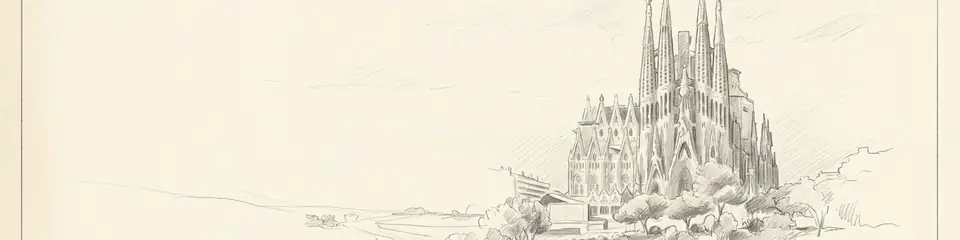
Graphite pencil sketch banner of Sagrada Família

“The Sagrada Família is the supreme built testament to Gaudí's synthesis of engineering, nature, and Catholic narrative — and the monument that dominates global search interest among sites not yet on the atlas.”

所在地

概要

The Basílica de la Sagrada Família rises in the Eixample district of Barcelona, Catalonia, Spain. The bookseller Josep Maria Bocabella founded the Expiatory Temple of the Holy Family in 1882; Antoni Gaudí took over the project in 1883 and devoted the last decades of his life to it, dying in 1926 with only a fraction complete. Work continues under successive architects funded by donations and ticket sales.

Gaudí fused Gothic verticality with Art Nouveau organic forms: branching columns modelled on trees, ruled-surface geometry, and facades narrating Christ's birth, passion, and glory in stone. The Nativity Facade (largely Gaudí's) contrasts with the starker Passion Facade by Josep Maria Subirachs (20th century). The interior forest of columns and stained glass transforms sunlight into coloured bands across the nave.

UNESCO inscribed the nativity façade and crypt in 2005 as part of Gaudí's works. A final completion target in the 2030s would make it the longest-running major church construction in modern history. Pair with medieval Alhambra for Spain's arc from Islamic palace to modern sacred architecture.

重要性

The Sagrada Família is the supreme built testament to Gaudí's synthesis of engineering, nature, and Catholic narrative — and the monument that dominates global search interest among sites not yet on the atlas. Its ongoing construction documents how a 19th-century foundation project became a 21st-century icon of Catalan identity and UNESCO heritage.

証拠と解釈

確立された事実と議論が続く事柄を区別する。

確立された事実

2
  • Gaudí's models, drawings, and on-site fabric document design evolution from neo-Gothic to ruled-surface structure.
  • Computer-aided stone cutting since the 1990s follows surviving Gaudí geometry and workshop traditions.

学術的推論

1
  • Completion timelines depend on fundraising and craft capacity — not fixed archaeological endpoints.

コミュニティ写真

あなたの体験を共有する

この遺跡を訪れたことがありますか?写真をアップロードして魅力を共有しましょう。

このページの引用方法

Atlas Anatolia. (1882). Sagrada Família. Atlas Anatolia. https://atlasanatolia.com/ja/site/sagrada-familia

コンテンツはCC BY-SA 4.0ライセンスの下で提供されています — 再利用の際は出典表示が必要です。

出典

  • Gaudí: The Complete Works — Basílica de la Sagrada Família (2019)
  • UNESCO — Works of Antoni Gaudíリンク

よくある質問

Sagrada Famíliaはどこにありますか?

Sagrada FamíliaはSpainに位置しています。

Sagrada Famíliaの年代はいつ頃ですか?

Sagrada Famíliaはおよそ1882 西暦 – 2030 西暦のものとされています。

Sagrada Famíliaはどの文明に関連していますか?

Sagrada FamíliaはCatalan文明に関連しています。

Sagrada Famíliaが重要な理由は何ですか?

The Sagrada Família is the supreme built testament to Gaudí's synthesis of engineering, nature, and Catholic narrative — and the monument that dominates global search interest among sites not yet on the atlas.

Sagrada Famíliaはユネスコ世界遺産ですか?

はい — Sagrada Famíliaはユネスコ世界遺産に登録されています。