
コンテンツへスキップ
Atlas Anatolia
ニュースIce Age teeth in Sulawesi push betel-nut use back as far as 25,000 yearsRoman mosaic and Eros head uncovered in the basilica at Pompeiopolis, Kastamonu
Rapa Nui — Chile

Wikimedia Commons (CC BY-SA)

Continent Record

Southernmost Known Site in South America

複合体UNESCO注目

Rapa Nui

Seyfi Cem Baskin

1100 西暦 – 1722 西暦

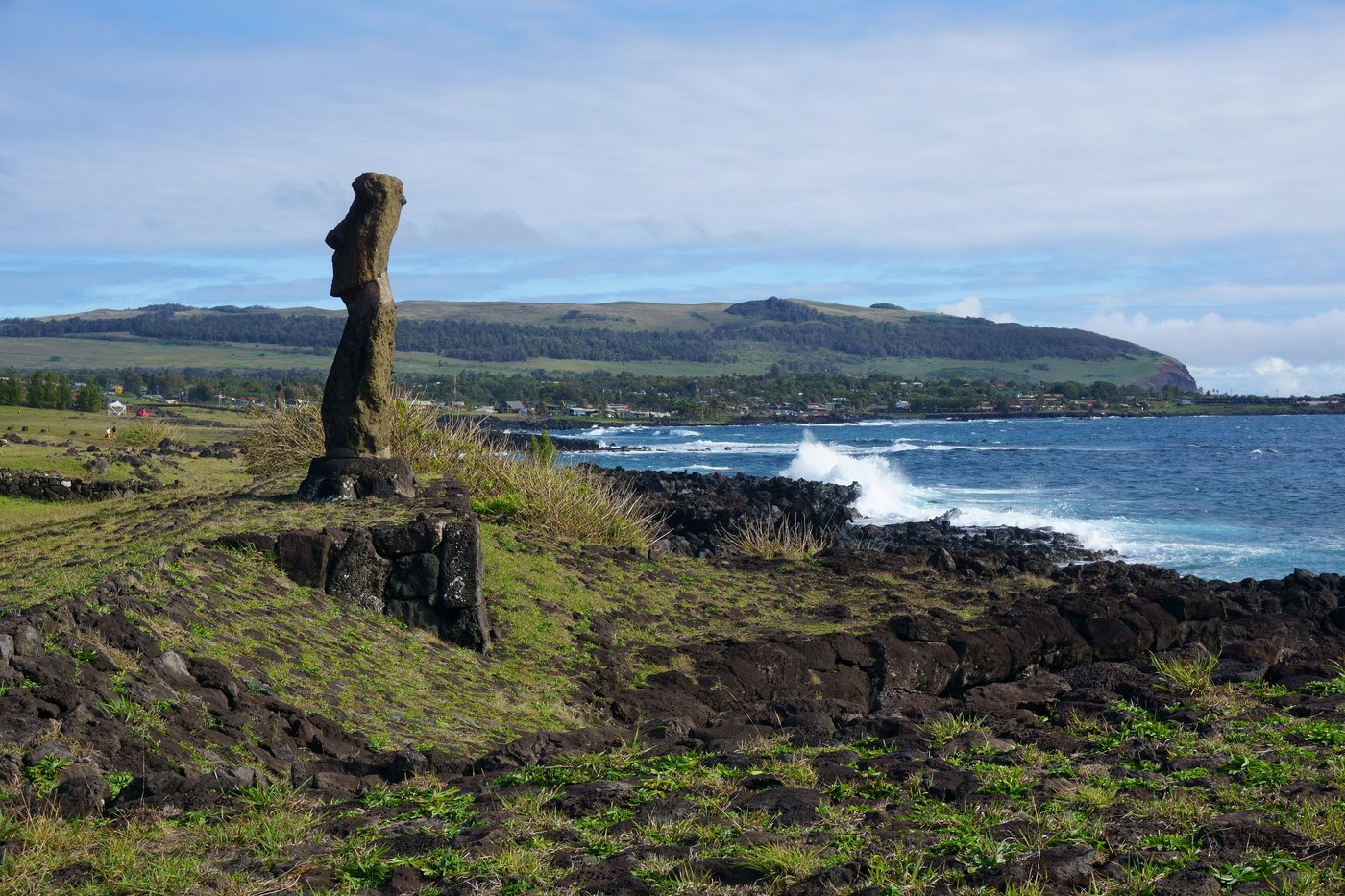
Rapa Nui (Easter Island) is famed for its colossal stone moai, crafted by a Polynesian society that flourished from roughly 1100 to 1722 CE, leaving a cryptic legacy of monumental art and ecological transformation.

323
関心 89

所在地

Valparaíso Region · Polynesia · Chile

27.11°S · 109.35°W · 南アメリカ

Built

Moai carving and ahu construction ca. 1100–1600 CE

Civilization

Polynesian Rapa Nui culture

Discovered

Easter Sunday 1722 CE by Jacob Roggeveen

Status

UNESCO World Heritage Site (1995), Rapa Nui National Park

Moai Count

887 recorded moai, with 397 still at Rano Raraku quarry

Annexation

Chilean territory since 1888

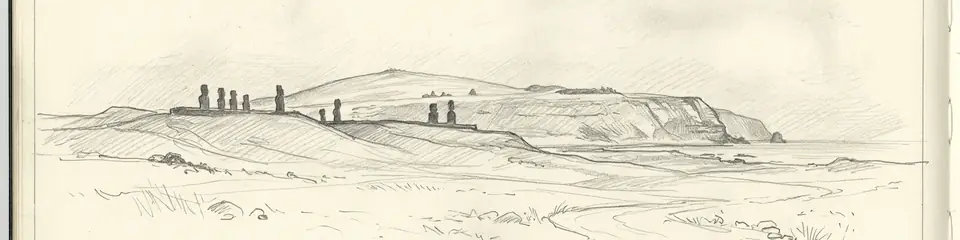
Graphite pencil sketch banner of Rapa Nui

“Rapa Nui epitomizes how an isolated society engineered monumental works within tight ecological limits, making it a critical case study for human-environment dynamics.”

所在地

概要

Discovery and Early Encounters

Rapa Nui first entered the European record on Easter Sunday in 1722, when Dutch navigator Jacob Roggeveen sighted the island. His chronicles describe a lush, treeless landscape dotted with immense stone statues, many still upright atop ceremonial platforms. Later visitors, including Spanish expeditions in 1770 and James Cook in 1774, reported a diminished population and toppled moai, hinting at profound socio-cultural changes. The early accounts reveal a society in transition and sparked enduring questions about the island’s past.

Settlement and Chronology

Archaeological consensus places initial Polynesian settlement around 1200 CE, though some earlier radiocarbon dates suggest a roughly 1100 CE arrival. These seafarers brought plants, animals, and a complex social structure to the remote 164 km² island. By 1300–1500 CE, the culture had developed into a chiefdom-based society centered on lineage groups, each erecting moai to honor ancestors. The island’s isolation—over 3,600 km from continental Chile—fostered a unique cultural trajectory and extreme reliance on local resources.
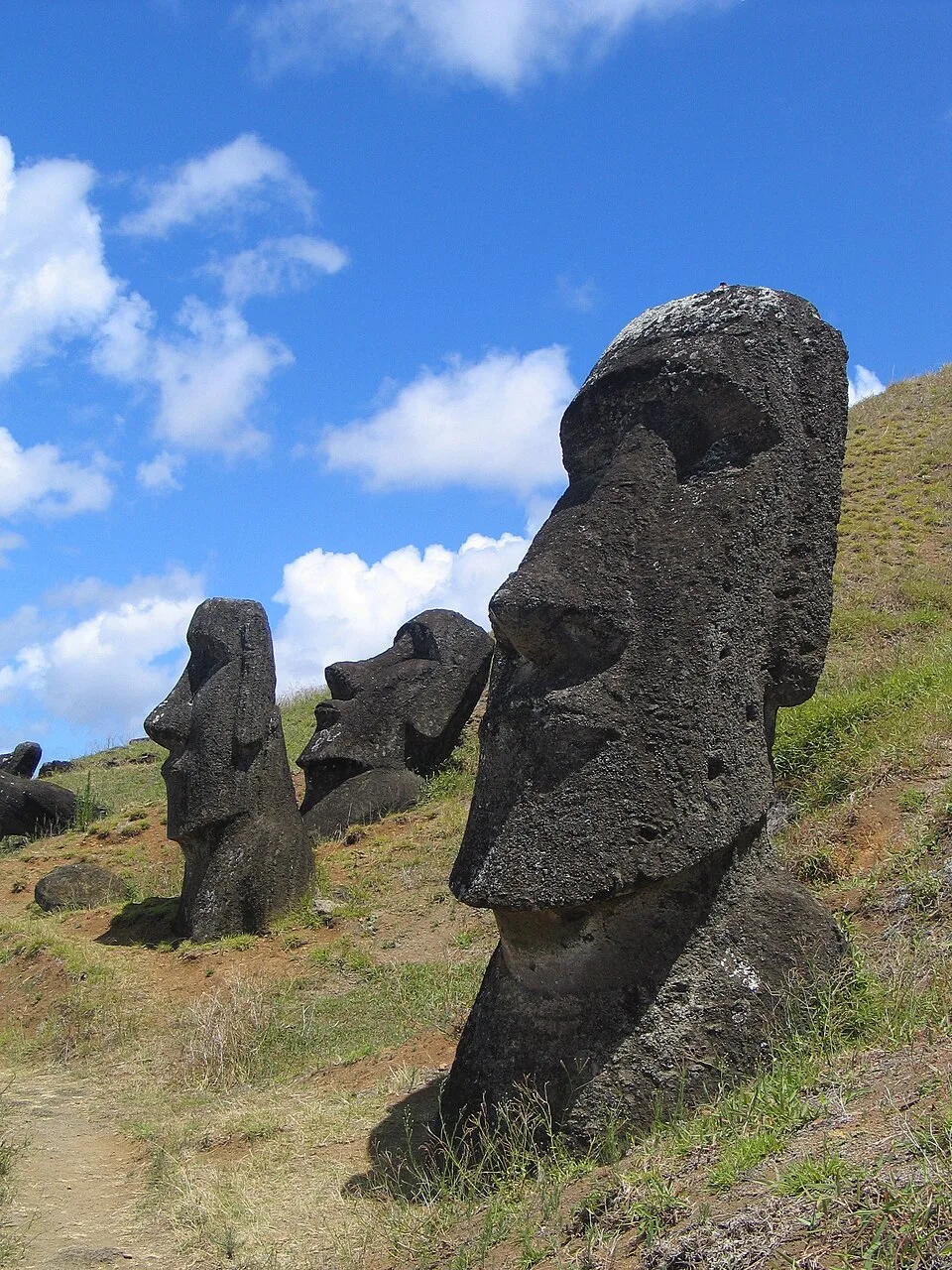
Moai Rano raraku
Moai Rano raraku | Aurbina (Public domain)
"We could not comprehend how it was possible that these people, who are devoid of heavy thick timber for making any machines, as also of strong ropes, had been able to erect such images."
— Jacob Roggeveen, on first European contact with Rapa Nui, Easter Sunday, 5 April 1722

The Moai and Ceremonial Centers

The iconic moai, nearly 1,000 monolithic figures averaging 4 meters in height and 14 tons, were carved primarily at Rano Raraku quarry from compressed volcanic tuff. Transported up to 18 km to coastal ahu platforms, their erection required astonishing communal effort and engineering skill. Some moai bear pukao, red scoria topknots from Puna Pau quarry. Archaeological evidence suggests the statues were imbued with mana and embodied deified ancestors, serving as focal points for ritual and social cohesion. Most were toppled during internal strife by the 18th century.
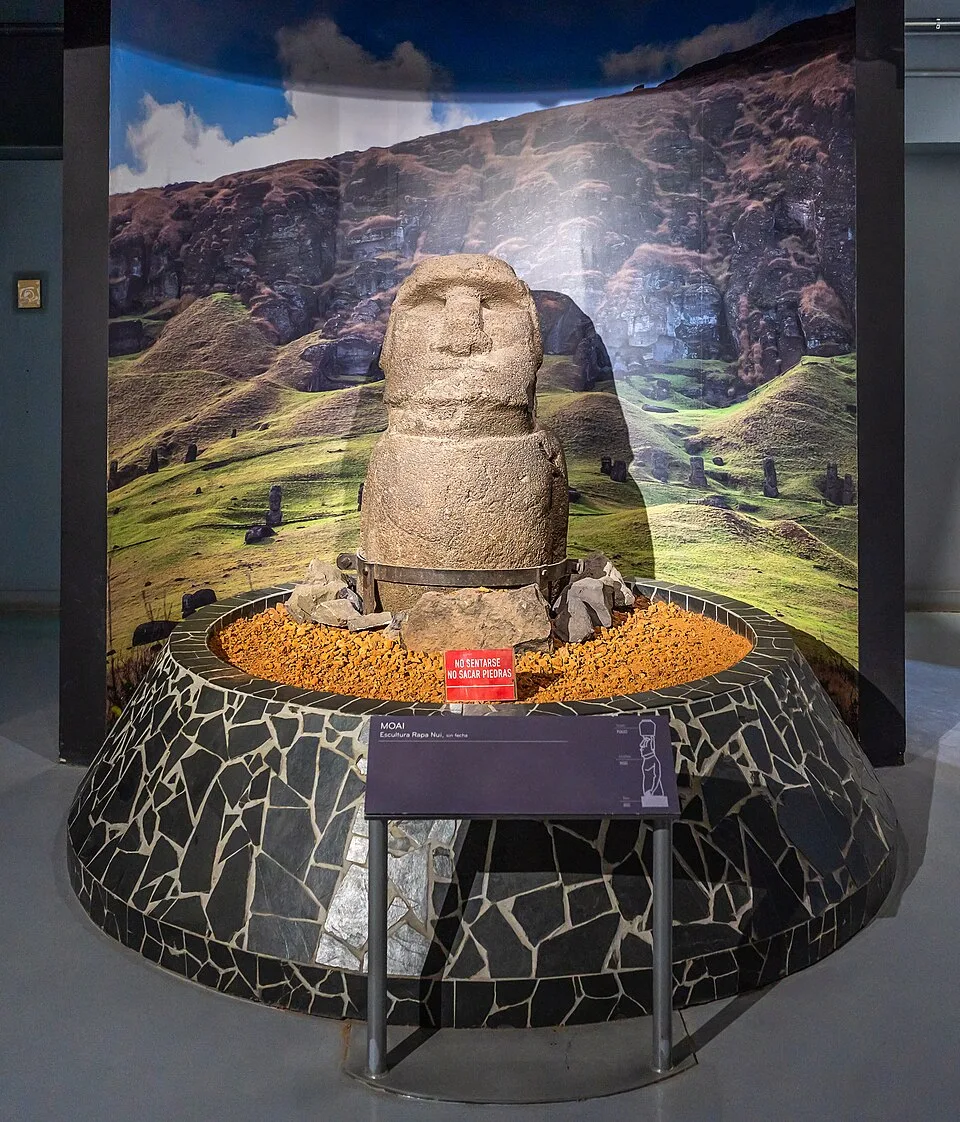
Escultura Rapa Nui (Moai) A74353920250105
Escultura Rapa Nui (Moai) A74353920250105 | Rjcastillo (CC BY-SA 4.0)
"At Rano Raraku the unfinished giants still sleep in the quarry — a factory of gods frozen mid-birth."
— Paraphrase of modern descriptions of the Rano Raraku moai quarry

Environmental Change and Societal Shifts

Pollen and faunal analyses confirm the island was once forested with the now-extinct Paschalococos disperta palm. Deforestation, likely driven by a combination of human slash-and-burn cultivation and seed predation by the introduced Polynesian rat, triggered soil erosion and reduced agricultural capacity. This ecological stress coincides with the cessation of moai construction around 1500–1650 CE and the emergence of the Tangata Manu (Birdman) cult, centered at Orongo ceremonial village. The new ritual order replaced ancestor worship with annual competitions for leadership based on obtaining the first sooty tern egg from nearby Motu Nui islet.

Collapse, Resilience, and Reinterpretation

The traditional narrative of a catastrophic societal collapse driven by overexploitation has been challenged. Recent scholarship emphasizes resilience: the islanders adapted horticultural techniques like lithic mulching and rock gardens to sustain a population that may never have exceeded 3,000–4,000. The devastating impacts of European contact—introduced diseases, slave raids in the 1860s, and sheep ranching—overwhelmed a society already in flux. Thus, Rapa Nui’s story is less one of self-inflicted collapse than of a people innovating in the face of environmental and external pressures.
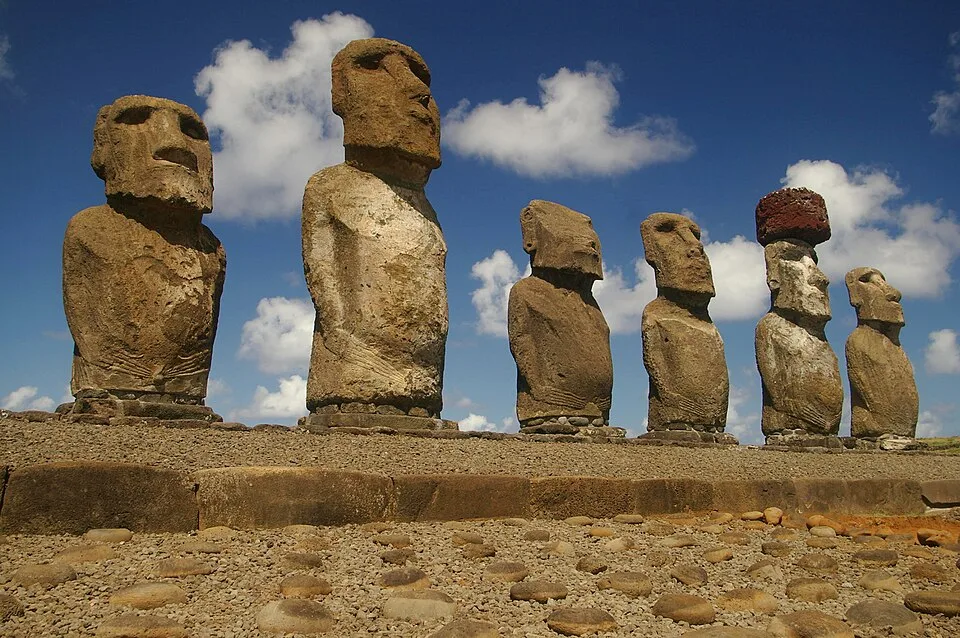
Ahu Tongariki cropped
Ahu Tongariki cropped | Rivi (CC BY-SA 3.0)

UNESCO and Legacy

Rapa Nui National Park was inscribed as a UNESCO World Heritage Site in 1995, recognizing its unparalleled cultural landscape. Intensive conservation and archaeological research continue, led by Chilean institutions and international teams. The island remains a powerful symbol of human creativity and vulnerability, attracting interdisciplinary study that refines our understanding of its complex prehistory.
重要性

Rapa Nui epitomizes how an isolated society engineered monumental works within tight ecological limits, making it a critical case study for human-environment dynamics. Its contested collapse narrative fuels global debates on sustainability, resilience, and the role of external agents in cultural change. The island’s enigmatic moai and Birdman cult offer unique insights into Polynesian ritual evolution and adaptation.

証拠と解釈

確立された事実と議論が続く事柄を区別する。

確立された事実

3
  • Moai were carved from Rano Raraku tuff, a compressed volcanic ash, using basalt tools.
  • Virtually all moai were toppled by the time of European contact in the 18th century, likely during internecine conflict.
  • Deforestation eliminated the dominant palm species by ca. 1500 CE, evidenced by pollen cores and charcoal.

学術的推論

2
  • The moai represent deified ancestors and served as conduits of supernatural power for their lineage.
  • Moai transport likely involved a combination of log rollers, sledges, and human labor, though a standing 'walking' technique may have been used.

議論のある解釈

3
  • The degree to which internal warfare and cannibalism contributed to societal breakdown before European contact remains highly contested.
  • The exact date of initial Polynesian settlement varies between 800–1200 CE; accepted evidence leans toward 1200 CE but the 1100 CE starting date remains plausible.
  • Whether ecological overexploitation alone caused collapse or whether introduced diseases and slaving were more decisive is an ongoing scholarly debate.

発見と発掘調査

1914–1915

Mana Expedition

指揮 Katherine Routledge

Katherine Routledge led the first systematic archaeological survey, mapping ahu platforms and moai, and recording oral traditions.

1955–1956

Norwegian Archaeological Expedition

指揮 Thor Heyerdahl

Thor Heyerdahl's team conducted excavations at Ahu Vinapu, Ahu Akivi, and Rano Raraku, testing diffusionist theories and gathering radiocarbon dates.

1968–1976

Mulloy Restoration Projects

指揮 William Mulloy

William Mulloy directed excavations and restorations at Tahai, Ahu Akivi, and Ahu Vai Uri, pioneering moai re-erection techniques.

1978

University of Chile Long-Term Research

指揮 Claudio Cristino & Patricia Vargas

Multidisciplinary teams under Claudio Cristino and Patricia Vargas mapped archaeological features and studied settlement patterns across the island.

2001–2010

Rapa Nui Landscapes of Construction Project

指揮 Sue Hamilton

Directed by Sue Hamilton, this project used intensive survey and excavation to investigate the social contexts of statue quarrying and transport.

コミュニティ写真

あなたの体験を共有する

この遺跡を訪れたことがありますか?写真をアップロードして魅力を共有しましょう。

関連記事

このページの引用方法

Atlas Anatolia. (1100). Rapa Nui. Atlas Anatolia. https://atlasanatolia.com/ja/site/rapa-nui

コンテンツはCC BY-SA 4.0ライセンスの下で提供されています — 再利用の際は出典表示が必要です。

グラフ

関連する遺跡やストーリーへのつながり。

出典

  • Heyerdahl, T. (1958), Aku-Aku: The Secret of Easter Island — Thor Heyerdahl (1958)
  • Van Tilburg, J.A. (1994), Easter Island: Archaeology, Ecology and Culture — Jo Anne Van Tilburg (1994)
  • Hunt, T.L. & Lipo, C.P. (2011), The Statues that Walked: Unraveling the Mystery of Easter Island — Terry L. Hunt & Carl P. Lipo (2011)
  • Late Colonization of Easter Island — Hunt, T.L. & Lipo, C.P. (2006)
  • Revisiting the Collapse of Rapa Nui (Easter Island) through a Bayesian Synthesis of Historical Data — Di Napoli, R.J. et al. (2020)
  • UNESCO World Heritage Centre - Rapa Nui National Parkリンク

よくある質問

Rapa Nuiはどこにありますか?

Rapa NuiはValparaíso Region, Polynesia, Chileに位置しています。

Rapa Nuiの年代はいつ頃ですか?

Rapa Nuiはおよそ1100 西暦 – 1722 西暦のものとされています。

Rapa Nuiはどの文明に関連していますか?

Rapa NuiはRapa Nui文明に関連しています。

Rapa Nuiが重要な理由は何ですか?

Rapa Nui epitomizes how an isolated society engineered monumental works within tight ecological limits, making it a critical case study for human-environment dynamics.

Rapa Nuiはユネスコ世界遺産ですか?

はい — Rapa Nuiはユネスコ世界遺産に登録されています。