
コンテンツへスキップ
Atlas Anatolia
ニュースIce Age teeth in Sulawesi push betel-nut use back as far as 25,000 yearsRoman mosaic and Eros head uncovered in the basilica at Pompeiopolis, Kastamonu
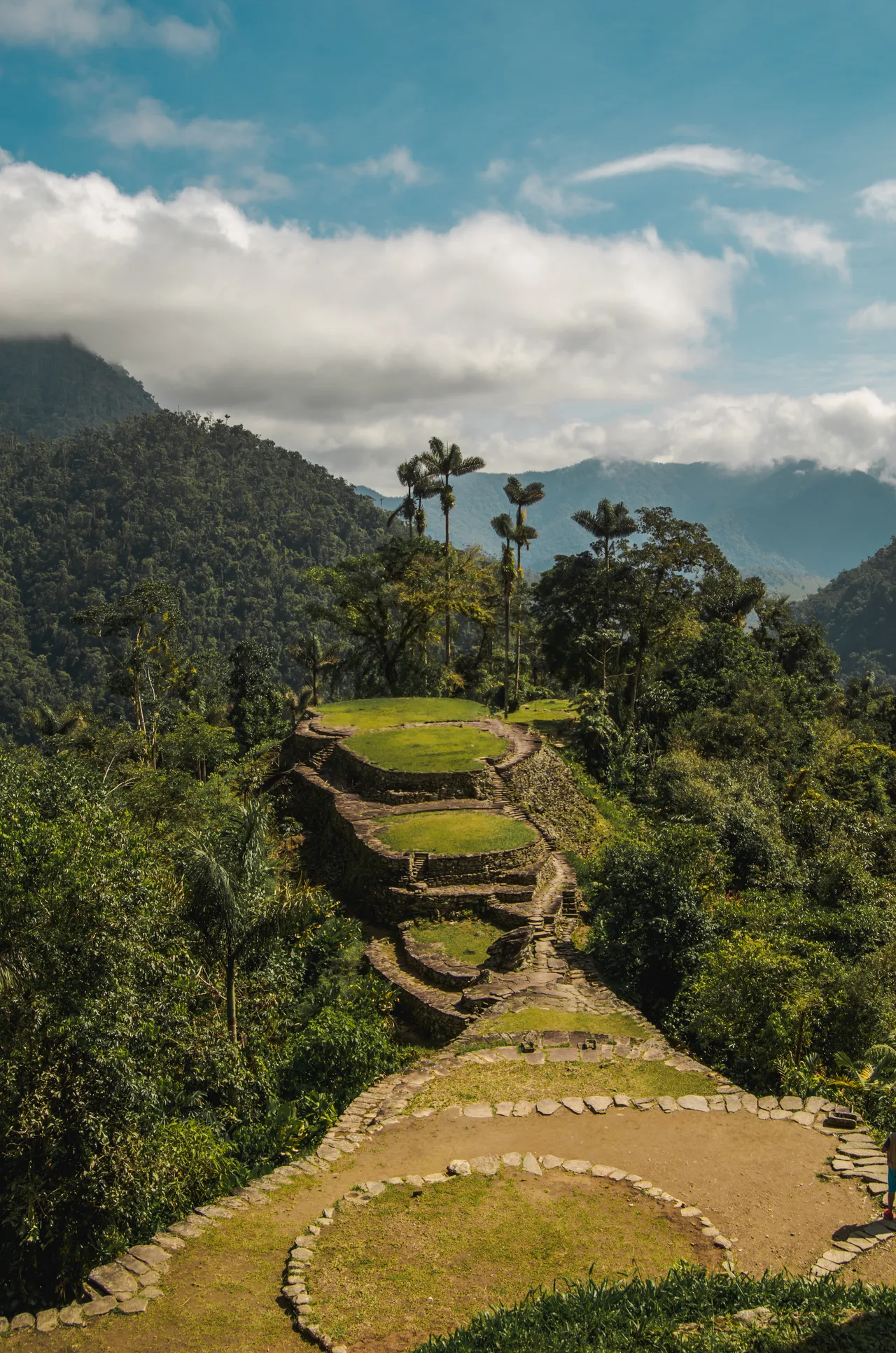
Stone terraces and circular foundations of Ciudad Perdida (Teyuna) in the Colombian jungle

Wikimedia Commons

Continent Record

Northernmost Known Site in South America

都市注目

Ciudad Perdida

Seyfi Cem Baskin

800 西暦 – 1600 西暦

The Lost City of the Sierra Nevada — a Tayrona settlement of terraced plazas and circular foundations clinging to a jungle mountainside in northern Colombia, founded around 800 CE and still sacred to four indigenous communities who call it Teyuna, the heart of the world.

31
関心 59

所在地

Colombia

11.04°N · 73.92°W · 南アメリカ

Founded

c. 800 CE by the Tayrona people

Altitude

800-1300 m in the Sierra Nevada de Santa Marta

Scale

169 terraces, 35 circular house platforms; estimated population 2,000-8,000

Sacred today

Four indigenous communities (Kogi, Arhuaco, Kankuamo, Wiwa) maintain it as Teyuna

Access

4-6 day jungle trek — one of the most celebrated hikes in South America

Rediscovery

1972 by looters; documented by Colombian government from 1976

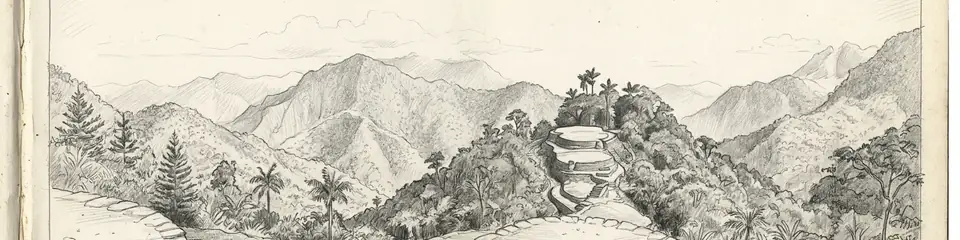
Graphite pencil sketch banner of Ciudad Perdida

“Ciudad Perdida is remarkable for two reasons: it is one of the largest pre-Columbian cities in South America and one of the very few ancient sites that remains actively sacred to living descendants of its creators.”

所在地

概要

Ciudad Perdida (Spanish: Lost City) clings to the slopes of the Sierra Nevada de Santa Marta in northern Colombia, at an altitude of 800-1300 metres above sea level in some of the densest jungle in South America. Known to its creators as Teyuna, it was founded by the Tayrona people around 800 CE and served as the largest and most important settlement in the region until the Spanish conquest, when it was abandoned in the 16th century following the devastation of the Tayrona population by disease and warfare.

The city is reached after a four-to-six-day trek through jungle and river crossings that has become one of the most celebrated hiking routes in South America. The site itself consists of some 169 terraces cut into the steep hillside, connected by stone paths and staircases, with 35 circular house platforms visible on the main terraces. At its peak the city may have housed between 2,000 and 8,000 people and functioned as the political and ritual capital of a network of settlements across the Sierra Nevada. A sophisticated drainage system of stone-lined channels managed the enormous rainfall of this tropical mountain environment.

The Tayrona did not practice large-scale agriculture but organised a diverse economy of fishing, hunting, gathering, and small-scale cultivation, combined with long-distance trade in gold and other goods. Their gold work — cast figures of animals and humans, and elaborate pectorals — is among the most sophisticated in pre-Columbian South America.

Ciudad Perdida was rediscovered by tomb looters in 1972 and subsequently archaeologically documented by the Colombian government. Four surviving indigenous communities — the Kogi, Arhuaco, Kankuamo, and Wiwa — regard it as a sacred ancestral site and actively participate in its management.

重要性

Ciudad Perdida is remarkable for two reasons: it is one of the largest pre-Columbian cities in South America and one of the very few ancient sites that remains actively sacred to living descendants of its creators. The Kogi people, who withdrew into the high Sierra Nevada after the Spanish conquest and have maintained their traditional culture to the present day, regard Teyuna as the heart (and navel) of the world and perform ceremonies there to maintain cosmic balance. The site offers an unusually complete picture of Tayrona urbanism: terraces, drainage, communal plazas, and the absence of monumental temples suggest a society organised around community rather than divine kingship. The four-day jungle trek required to reach it means that visitors arrive with a genuine sense of effort and immersion — matching the kind of dedicated pilgrimage the site probably always required. The relationship between the archaeological site and the living indigenous communities makes Ciudad Perdida one of the most ethically complex and culturally resonant sites in the Americas.

証拠と解釈

確立された事実と議論が続く事柄を区別する。

確立された事実

3
  • Archaeological survey and radiocarbon dating establish founding around 800 CE and occupation through the 16th century; 169 terraced platforms with stone revetments and circular house foundations have been documented.
  • A sophisticated drainage system of stone-lined channels managing the heavy tropical rainfall has been mapped across the site; the engineering presupposes planning and coordinated labour at a community scale.
  • Gold objects in Tayrona style (cast animal figures, pectorals) have been found in mortuary contexts at the site and at related Tayrona settlements across the Sierra Nevada, confirming a gold-working tradition and trade network.

学術的推論

1
  • The Kogi identification of Teyuna as the spiritual heart of the world and the site of ceremonies to maintain cosmic balance is a living oral tradition; how closely it reflects pre-colonial Tayrona belief cannot be verified archaeologically.

コミュニティ写真

あなたの体験を共有する

この遺跡を訪れたことがありますか?写真をアップロードして魅力を共有しましょう。

このページの引用方法

Atlas Anatolia. (800). Ciudad Perdida. Atlas Anatolia. https://atlasanatolia.com/ja/site/ciudad-perdida

コンテンツはCC BY-SA 4.0ライセンスの下で提供されています — 再利用の際は出典表示が必要です。

出典

  • Colombia: Ancient Peoples and Places — Reichel-Dolmatoff, Gerardo (1965)
  • The Elder Brothers: A Lost South American People and Their Wisdom — Ereira, Alan (1992)

よくある質問

Ciudad Perdidaはどこにありますか?

Ciudad PerdidaはColombiaに位置しています。

Ciudad Perdidaの年代はいつ頃ですか?

Ciudad Perdidaはおよそ800 西暦 – 1600 西暦のものとされています。

Ciudad Perdidaはどの文明に関連していますか?

Ciudad PerdidaはTayrona文明に関連しています。

Ciudad Perdidaが重要な理由は何ですか?

Ciudad Perdida is remarkable for two reasons: it is one of the largest pre-Columbian cities in South America and one of the very few ancient sites that remains actively sacred to living descendants of its creators.

Ciudad Perdidaはユネスコ世界遺産ですか?

Ciudad Perdidaは現在ユネスコ世界遺産には登録されていません。