
コンテンツへスキップ
Atlas Anatolia
ニュースIce Age teeth in Sulawesi push betel-nut use back as far as 25,000 yearsRoman mosaic and Eros head uncovered in the basilica at Pompeiopolis, Kastamonu
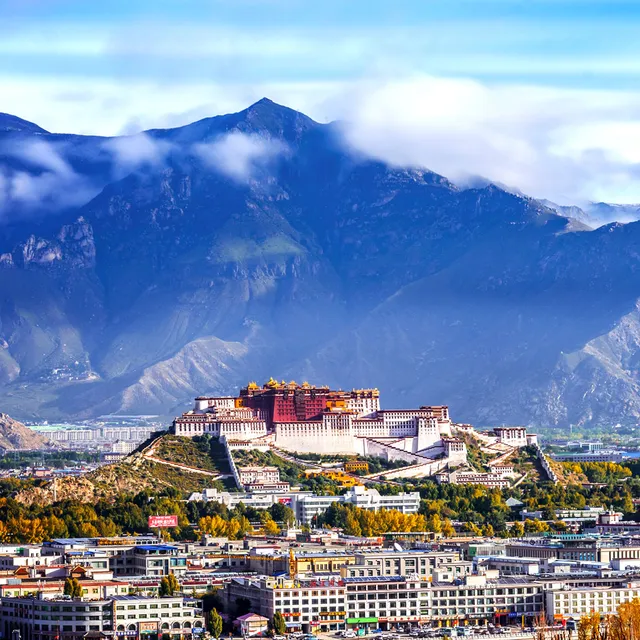
The Potala Palace on Red Hill above Lhasa, Tibet

Wikimedia Commons

Country Record

Known by the Most Names in China

遺産複合体UNESCO注目

Potala Palace

Seyfi Cem Baskin

པོ་ཏ་ལ637 西暦 – 1959 西暦

The fortress-palace rising 13 storeys on Red Mountain above Lhasa — winter residence of the Dalai Lamas since the 7th century and symbol of Tibetan Buddhism — whose white and red wings, golden roofs, and chapels dominate the Himalaya skyline at 3,700 metres.

21
関心 78

所在地

中国

29.66°N · 91.12°E · アジア

Elevation

~3,700 m above sea level on Red Hill

Height

13 storeys; over 1,000 rooms (traditional count)

Major rebuild

17th century under the Fifth Dalai Lama

UNESCO

Historic Ensemble of the Potala Palace (1994)

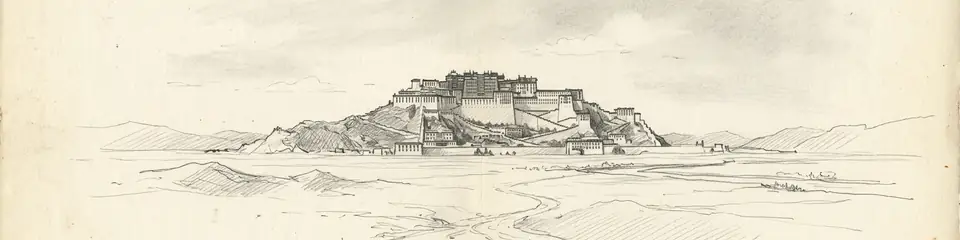
Graphite pencil sketch banner of Potala Palace

“The Potala is the supreme architectural expression of Tibetan Buddhist governance — a palace-temple whose scale and altitude embody the unique fusion of spiritual and temporal authority in the Himalaya.”

所在地

概要

The Potala Palace crowns Marpo Ri (Red Hill) in the centre of the Lhasa Valley, Tibet Autonomous Region, China, at roughly 3,700 metres elevation. Tradition associates the hill with Songtsen Gampo (7th century), who built a palace for his marriage alliances; the present monumental complex largely reflects the 17th-century reconstruction under the Fifth Dalai Lama, Ngawang Lobsang Gyatso, with major expansion continuing under the Thirteenth Dalai Lama.

The White Palace (Phodrang Karpo) contains the Dalai Lama's residential and administrative quarters; the Red Palace (Phodrang Marpo) houses chapels, stupas of successive Dalai Lamas, and assembly halls dense with murals, thangkas, and gilded tombs. The building integrates fortress walls, sloping stone foundations, and timber superstructure engineered for seismic and alpine conditions.

The UNESCO Historic Ensemble of the Potala Palace, Lhasa (1994, extended 2000–2001) also includes Jokhang Temple and Norbulingka summer palace. The Potala remains among the most photographed monuments in Asia and a focal point of Tibetan cultural identity.

重要性

The Potala is the supreme architectural expression of Tibetan Buddhist governance — a palace-temple whose scale and altitude embody the unique fusion of spiritual and temporal authority in the Himalaya. Its 1994 UNESCO listing anchored international recognition of Tibetan heritage conservation at a moment of rapid modernisation in Lhasa.

証拠と解釈

確立された事実と議論が続く事柄を区別する。

確立された事実

2
  • Tibetan chronicles and copper inscriptions document 17th-century expansion under the Fifth Dalai Lama and subsequent Dalai Lama burials in the Red Palace.
  • Architectural survey confirms layered timber–masonry construction, sloping batter walls, and chapel layouts typical of Ganden Phodrang-period building.

学術的推論

1
  • Early 7th-century occupation of Red Hill by Songtsen Gampo is supported by tradition and limited archaeology; extent of his original structure is uncertain.

コミュニティ写真

あなたの体験を共有する

この遺跡を訪れたことがありますか?写真をアップロードして魅力を共有しましょう。

このページの引用方法

Atlas Anatolia. (637). Potala Palace. Atlas Anatolia. https://atlasanatolia.com/ja/site/potala-palace

コンテンツはCC BY-SA 4.0ライセンスの下で提供されています — 再利用の際は出典表示が必要です。

出典

  • The Temples of Lhasa — Alexander, André (2005)
  • UNESCO — Potala Palaceリンク

よくある質問

Potala Palaceはどこにありますか?

Potala PalaceはChinaに位置しています。

Potala Palaceの年代はいつ頃ですか?

Potala Palaceはおよそ637 西暦 – 1959 西暦のものとされています。

Potala Palaceはどの文明に関連していますか?

Potala PalaceはTibetan文明に関連しています。

Potala Palaceが重要な理由は何ですか?

The Potala is the supreme architectural expression of Tibetan Buddhist governance — a palace-temple whose scale and altitude embody the unique fusion of spiritual and temporal authority in the Himalaya.

Potala Palaceはユネスコ世界遺産ですか?

はい — Potala Palaceはユネスコ世界遺産に登録されています。