
コンテンツへスキップ
Atlas Anatolia
ニュースIce Age teeth in Sulawesi push betel-nut use back as far as 25,000 yearsRoman mosaic and Eros head uncovered in the basilica at Pompeiopolis, Kastamonu
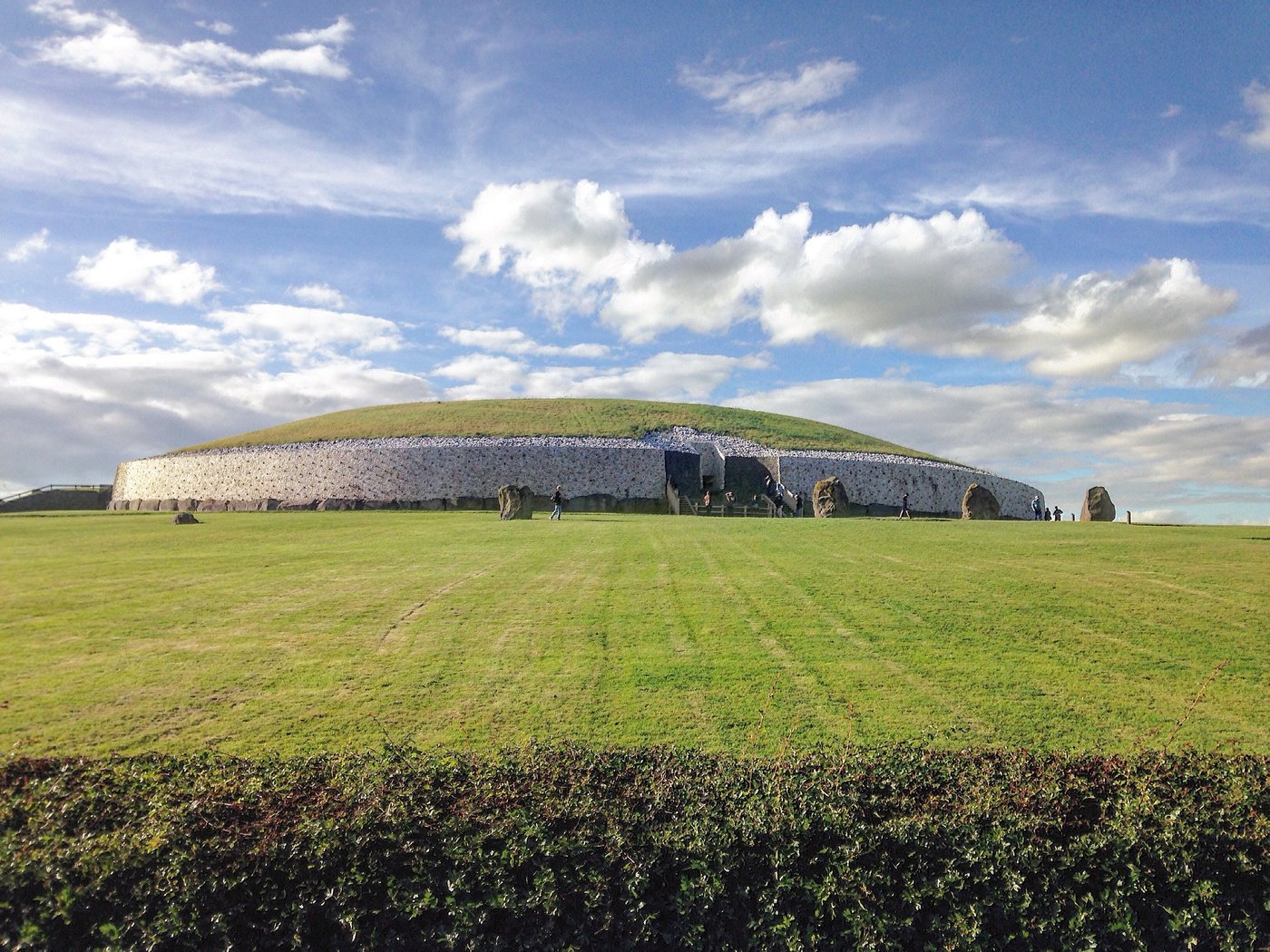
Newgrange — Ireland

Wikimedia Commons (CC BY-SA)

墳丘墓UNESCO注目

Newgrange

Seyfi Cem Baskin

Sí an Bhrú3200 紀元前 – 2900 紀元前

Newgrange is a Neolithic passage tomb in County Meath, Ireland, built c. 3200–2900 BCE, famously aligned to the winter solstice sunrise. Its sophisticated megalithic art and architecture make it one of Europe's most remarkable prehistoric monuments.

322
関心 75

所在地

County Meath · Boyne Valley · Ireland

53.69°N · 6.48°W · ヨーロッパ

Built

c. 3200–2900 BCE

Civilization

Neolithic farming community

Discovered

Recorded by antiquarians in 1699; major excavation 1962–1975

Status

UNESCO World Heritage Site (since 1993)

Winter Solstice Alignment

Illuminates inner chamber at dawn on the shortest day

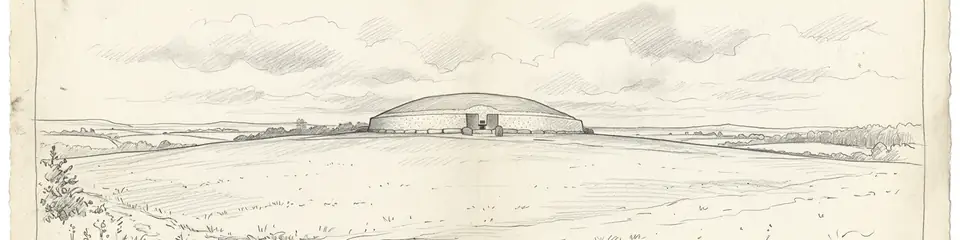
Graphite pencil sketch banner of Newgrange

“Newgrange is among the oldest astronomically aligned structures in the world, predating Stonehenge and the Great Pyramids.”

所在地

概要

Discovery and Early Accounts

Newgrange was first recorded in modern times by antiquarians Thomas Molyneux and Edward Lhuyd in 1699, though it had long been known locally. Their observations, published in early scientific journals, sparked scholarly interest in the monument's age and origin. Subsequent surveys by George Petrie in the 1830s provided detailed drawings and recognized its archaeological significance, but systematic excavation did not occur until the 20th century.

Architecture and Construction

The monument consists of a large circular mound, roughly 85 meters in diameter and 13 meters high, retained by a kerb of 97 massive stones, many adorned with megalithic art including spirals, lozenges, and zigzag motifs. A 19-meter-long passage leads to a cruciform chamber with a corbelled roof that has remained watertight for over 5,000 years. The builders transported and positioned stones weighing up to several tons using Neolithic technology, quarrying from sources as far as the Wicklow Mountains and Dundalk Bay.
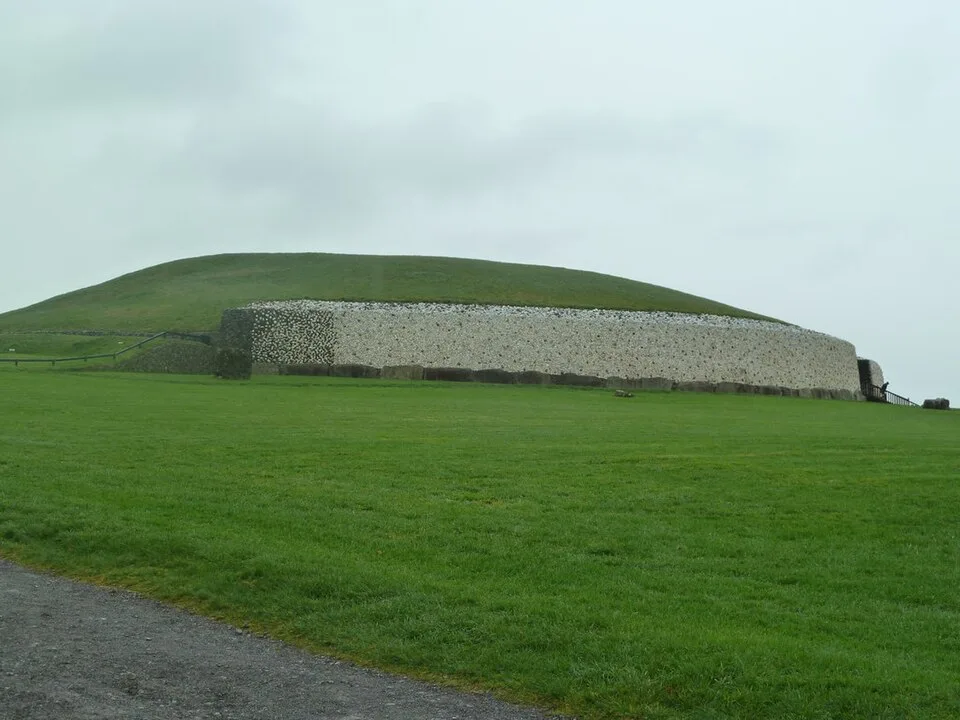
Newgrange Passage Tomb - geograph.org.uk - 2857133
Newgrange Passage Tomb - geograph.org.uk - 2857133 | Graham Hogg  (CC BY-SA 2.0)
"A cave was found at Newgrange, with many things, very strange in appearance, lying in a kind of order: a place very remarkable for the position, the make, and the largeness of the stones."
— Edward Lhuyd, letter to Roderic O'Flaherty describing Newgrange, December 1699

Solar Alignment and Ritual Significance

Newgrange is world-renowned for its winter solstice alignment. At dawn from December 19 to 23, a narrow beam of sunlight enters through a roof-box above the entrance, gradually illuminating the passage and inner chamber. This precise orientation suggests a sophisticated understanding of astronomy. The phenomenon, rediscovered by Michael O'Kelly in 1967, is interpreted as a ritual capture of the returning sun, possibly linked to beliefs in rebirth, ancestor veneration, or agricultural cycles.
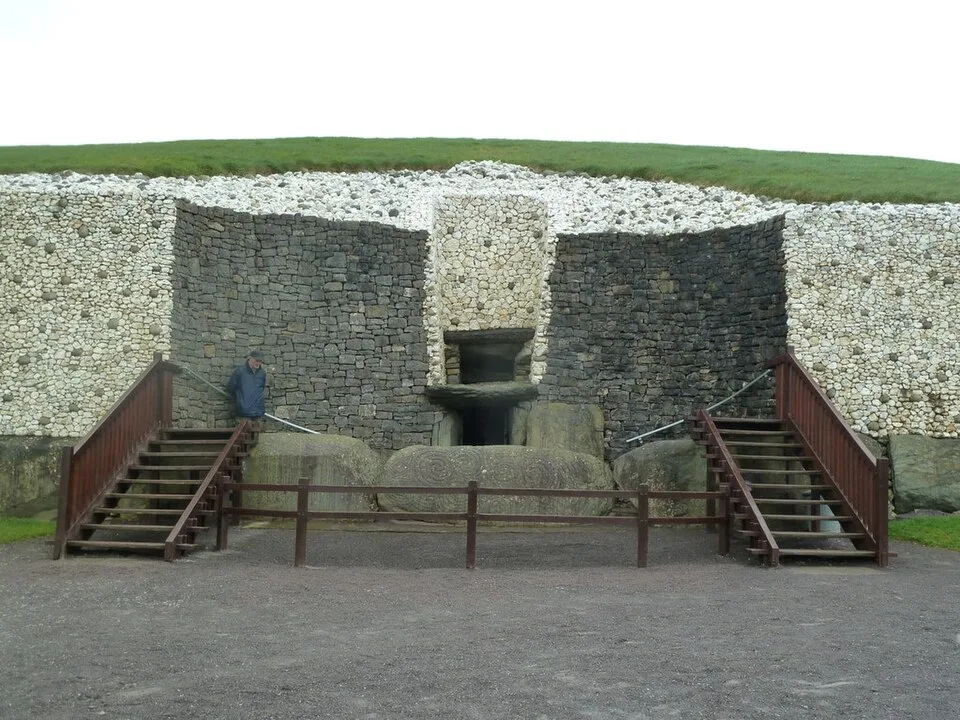
Entrance to the Newgrange Passage Tomb - geograph.org.uk - 2857137
Entrance to the Newgrange Passage Tomb - geograph.org.uk - 2857137 | Graham Hogg  (CC BY-SA 2.0)

Excavation and Reconstruction

Extensive excavations led by Michael J. O'Kelly from 1962 to 1975 revealed the construction sequence, burial deposits, and the secret of the roof-box. O'Kelly found cremated human remains and grave goods such as beads and pendants, indicating collective burial. The controversial reconstruction of the gleaming white quartz façade and granite revetment wall, completed in 1975, was based on excavated materials but remains debated among archaeologists regarding its authenticity and impact on the monument's original appearance.

Wider Context and Significance

Newgrange is part of the Brú na Bóinne complex, a UNESCO World Heritage Site that includes the great tombs of Knowth and Dowth. Together, they represent the pinnacle of Neolithic passage tomb construction in Atlantic Europe. The scale of these monuments implies a highly organized society with shared beliefs, capable of mobilizing large labor forces over generations. Newgrange continues to inspire awe and scholarly investigation into the cosmology and social complexity of prehistoric Europe.

重要性

Newgrange is among the oldest astronomically aligned structures in the world, predating Stonehenge and the Great Pyramids. Its sophisticated design and enduring ritual function illuminate the intellectual and spiritual achievements of Neolithic societies, challenging outdated notions of 'primitive' prehistory. As a focal point of Ireland's ancient heritage, it provides critical insights into monumentality, cosmology, and social organization in fourth-millennium BCE Europe.

証拠と解釈

確立された事実と議論が続く事柄を区別する。

確立された事実

3
  • The passage tomb was constructed using large megalithic kerbstones, many decorated with spirals, lozenges, and other motifs.
  • The entrance and roof-box align precisely with sunrise on the winter solstice, illuminating the inner chamber.
  • Cremated human remains and grave goods were placed in the tomb's recesses, indicating its use for collective burial.

学術的推論

2
  • The monument likely served as a ceremonial and ritual center for a large Neolithic community, possibly linked to ancestor worship.
  • The scale and precision of construction suggest a hierarchical society with specialized knowledge of architecture and astronomy.

議論のある解釈

2
  • The exact religious beliefs and rituals performed at Newgrange remain a subject of debate, with interpretations ranging from solar cults to shamanistic practices.
  • The reconstruction of the white quartz façade in the 1970s is controversial, with some scholars arguing it may not reflect the original appearance.

発見と発掘調査

Modern conservation

指揮 Office of Public Works (Ireland)

The site was consolidated for public access, including the controversial reconstruction of the quartz façade based on O'Kelly's findings.

1699

Antiquarian documentation

指揮 Thomas Molyneux, Edward Lhuyd

Early recorded accounts by antiquarians marked the beginning of scholarly interest in the monument.

1837

Survey and description

指揮 George Petrie

George Petrie conducted a detailed survey and drawing of the site, recognizing its archaeological importance.

1962–1975

Excavation and restoration

指揮 Michael J. O'Kelly

Professor Michael J. O'Kelly led a comprehensive excavation and partial restoration, revealing the construction sequence, winter solstice alignment, and megalithic art.

コミュニティ写真

あなたの体験を共有する

この遺跡を訪れたことがありますか?写真をアップロードして魅力を共有しましょう。

このページの引用方法

Atlas Anatolia. (3200). Newgrange. Atlas Anatolia. https://atlasanatolia.com/ja/site/newgrange

コンテンツはCC BY-SA 4.0ライセンスの下で提供されています — 再利用の際は出典表示が必要です。

出典

  • O'Kelly, Michael J. (1982), Newgrange: Archaeology, Art and Legend — Michael J. O'Kelly (1982)
  • Cooney, Gabriel (2000), Landscapes of Neolithic Ireland — Gabriel Cooney (2000)
  • O'Kelly, M. J. (1972), 'The Winter Solstice Phenomenon at Newgrange, Co. Meath', Nature — Michael J. O'Kelly (1972)
  • Hensey, R. (2008), 'The observance of light: a ritualistic perspective on the winter solstice at Newgrange', Antiquity — Robert Hensey (2008)
  • UNESCO World Heritage entry: Brú na Bóinne - Archaeological Ensemble of the Bend of the Boyneリンク

よくある質問

Newgrangeはどこにありますか?

NewgrangeはCounty Meath, Boyne Valley, Irelandに位置しています。

Newgrangeの年代はいつ頃ですか?

Newgrangeはおよそ3200 紀元前 – 2900 紀元前のものとされています。

Newgrangeはどの文明に関連していますか?

NewgrangeはMegalithic European文明に関連しています。

Newgrangeが重要な理由は何ですか?

Newgrange is among the oldest astronomically aligned structures in the world, predating Stonehenge and the Great Pyramids.

Newgrangeはユネスコ世界遺産ですか?

はい — Newgrangeはユネスコ世界遺産に登録されています。