
コンテンツへスキップ
Atlas Anatolia
ニュースIce Age teeth in Sulawesi push betel-nut use back as far as 25,000 yearsRoman mosaic and Eros head uncovered in the basilica at Pompeiopolis, Kastamonu
Leptis Magna — Libya

Wikimedia Commons (CC BY-SA)

Country Record

Oldest City in Libya

都市UNESCO注目

Leptis Magna

Seyfi Cem Baskin

لَبْدَة700 紀元前 – 650 西暦

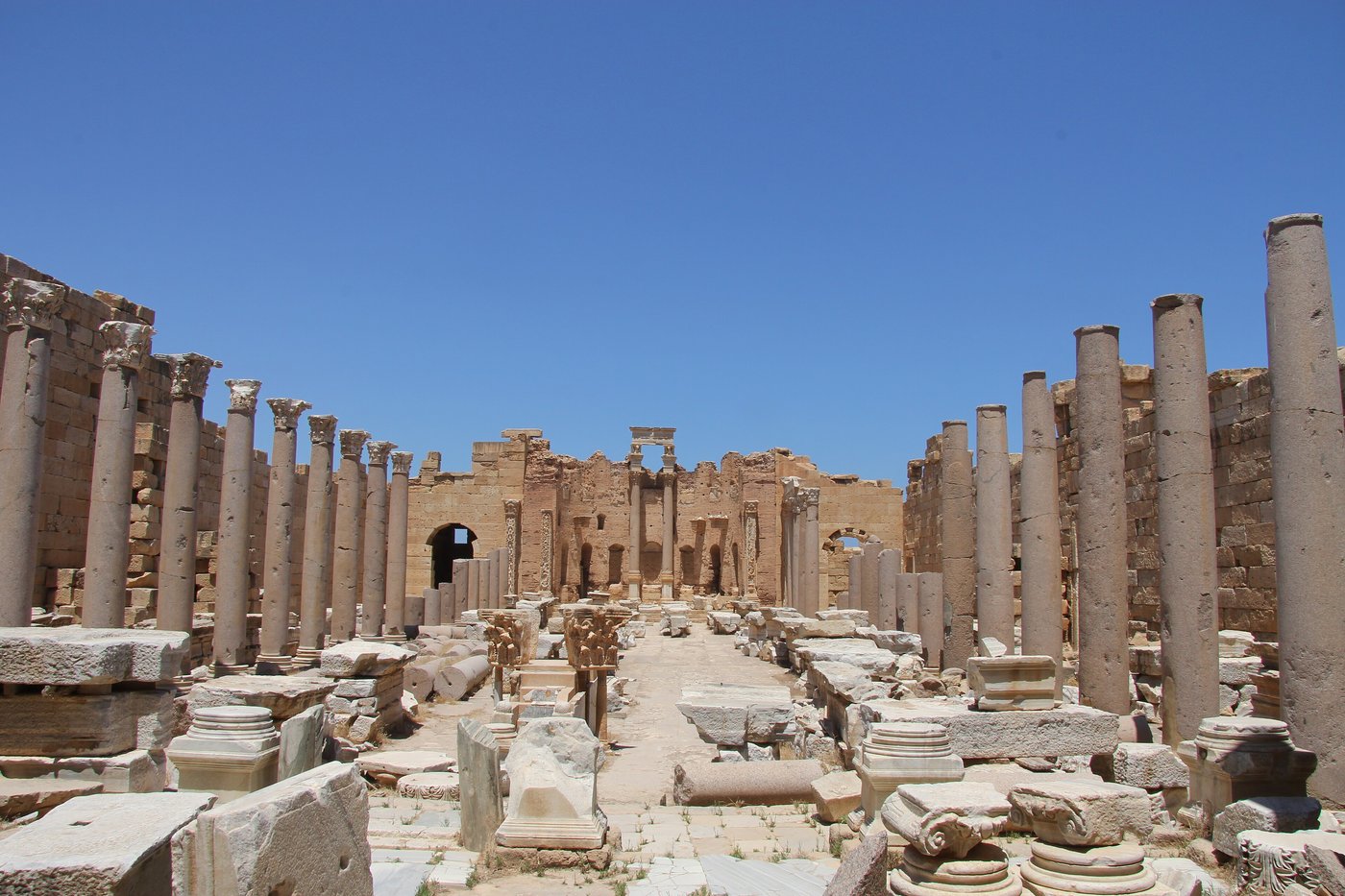
Leptis Magna, a UNESCO World Heritage site on Libya's coast, was a major Phoenician then Roman city, reaching its zenith under Emperor Septimius Severus (r. 193–211 CE).

322
関心 68

所在地

Khoms · Tripolitania · リビア

32.64°N · 14.29°E · アフリカ

Built

7th century BCE (Phoenician foundation); major Roman reconstruction 2nd–3rd century CE

Civilization

Phoenician, Carthaginian, Roman (with local Libyan influence)

Discovered

Early 19th century by Europeans; extensive excavations began in the 1920s

Status

UNESCO World Heritage Site (inscribed 1982)

Location

Khoms, northwestern Libya (Mediterranean coast)

Peak period

Late 2nd – early 3rd century CE under the Severans

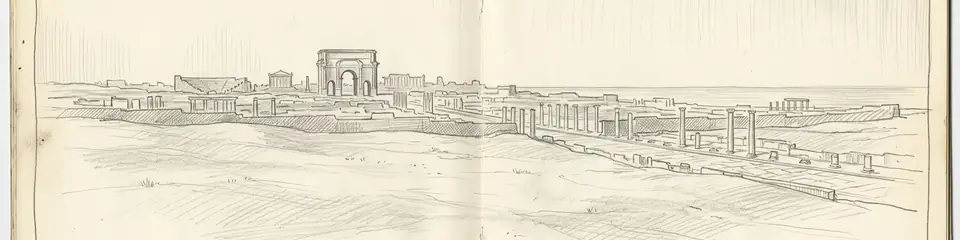
Graphite pencil sketch banner of Leptis Magna

“Leptis Magna is one of the best-preserved Roman cities in the Mediterranean, offering unparalleled insight into urban planning, imperial patronage, and the cultural syncretism of Roman North Africa.”

所在地

概要

Discovery and Excavations

The ruins of Leptis Magna were known to local inhabitants for centuries, but systematic archaeological exploration began only in the early 20th century. Italian colonial officials, recognizing the site's significance, launched large-scale excavations in the 1920s under the direction of Pietro Romanelli and later Renato Bartoccini. These efforts uncovered the city's monumental center, including the Severan forum, basilica, and baths. After World War II, British archaeologists continued the work, and in the 1960s–1970s, a Libyan-Italian mission further mapped the site. Despite periods of political instability, conservation and study have persisted, though many areas remain unexcavated.
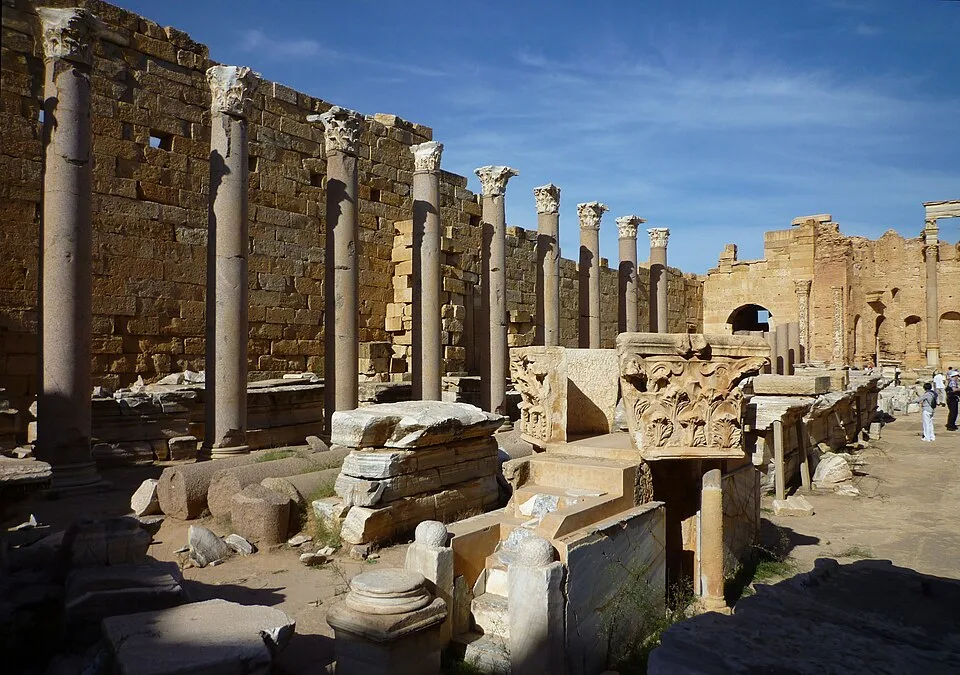
Leptis Magna - Severan Basilika
Leptis Magna - Severan Basilika | Franzfoto (CC BY-SA 3.0)
"Leptis, the home of Septimius Severus, surpassed all the cities of Africa in the magnificence of her public works. The forum, the basilica, and the colonnaded street stand as the gift of an emperor to his birthplace."
— Historia Augusta, Life of Severus 1, on Leptis Magna (4th century CE compilation)

Historical Significance

Leptis Magna originated as a Phoenician trading post in the 7th century BCE, strategically located along the Mediterranean coast. It later fell under Carthaginian influence and then became part of the Roman Empire in 146 BCE. The city's golden age arrived under the Severan dynasty, particularly when native son Septimius Severus became emperor in 193 CE. He endowed his birthplace with lavish public buildings, transforming it into one of the most opulent Roman cities in Africa. The city thrived into the 4th century CE but declined after it was sacked by the Vandals in 439 CE. A brief Byzantine reconquest under Justinian I in the 6th century walled off a reduced core, and the city was finally abandoned after the Arab conquest in the mid-7th century.
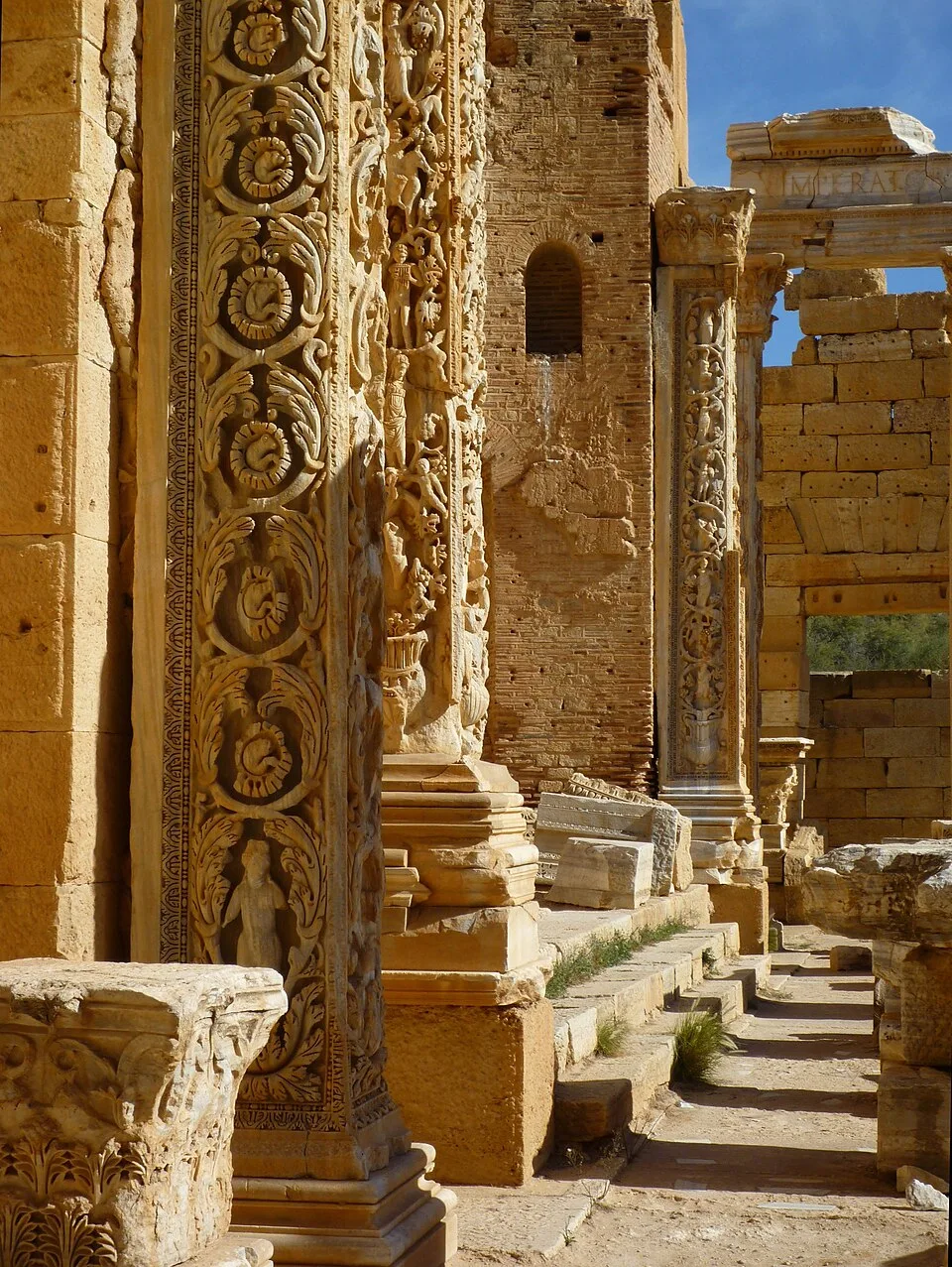
Leptis Magna - Severan Basilika, Reliefpfeiler
Leptis Magna - Severan Basilika, Reliefpfeiler | Franzfoto (CC BY-SA 3.0)

Architectural Marvels

The archaeological remains illustrate a fusion of Roman imperial architecture with local Libyan traditions. The Severan Forum and adjacent basilica, completed in 216 CE, are among the finest examples of classical architecture outside Rome, featuring intricate marble carvings depicting mythological scenes. The Hadrianic Baths, constructed earlier in 126–127 CE, boast a sophisticated hypocaust system and elegant colonnaded palaestra. The theater, built in the 1st century CE and later expanded, seated thousands with a view of the sea. A unique monument is the so-called Hunting Baths, with its remarkable figural mosaics. The city also had a large amphitheater and a circus. The Tetrapylon arch at the crossing of the colonnaded street and the cardo, erected under Septimius Severus, once displayed a quadriga of statuary.
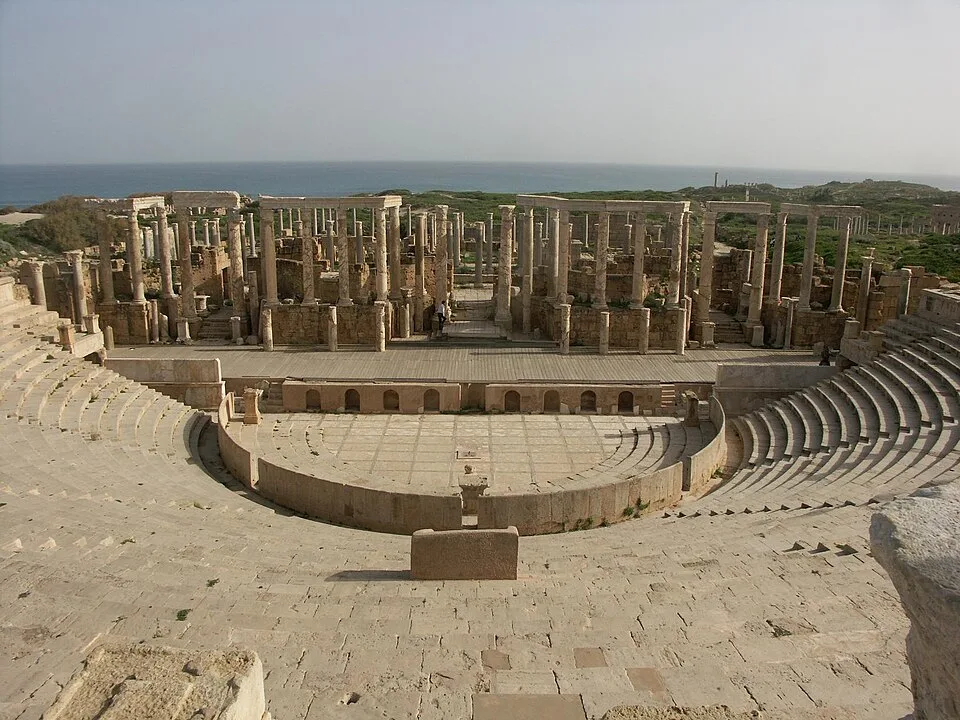
Theatre, Leptis Magna, Libya
Theatre, Leptis Magna, Libya | bobrayner (CC BY 2.0)

Decline and Legacy

Leptis Magna's decline mirrors the broader fate of the Roman Empire. The silting of its harbor and economic shifts reduced its importance. The Vandal sack of 439 CE dealt a severe blow, and although the Byzantines fortified a small enclave, the city never recovered its former extent. By the 11th century it was deserted. Today, the site stands as a testament to the reach and grandeur of Roman North Africa. Its remarkably preserved state, thanks to centuries of sand cover, makes it one of the most complete Roman cities anywhere. It was inscribed as a UNESCO World Heritage Site in 1982, recognized for its outstanding universal value.

重要性

Leptis Magna is one of the best-preserved Roman cities in the Mediterranean, offering unparalleled insight into urban planning, imperial patronage, and the cultural syncretism of Roman North Africa. Its monuments embody the wealth and aspirations of a provincial elite that could rise to the imperial throne, while its decline illustrates the late antique transformations that reshaped the classical world.

証拠と解釈

確立された事実と議論が続く事柄を区別する。

確立された事実

3
  • The city was founded as a Phoenician colony in the 7th century BCE, as attested by ceramic remains and historical texts.
  • The Severan Forum and basilica were dedicated in 216 CE, as recorded in a dedicatory inscription found on site.
  • The city was sacked by the Vandals in 439 CE and later reoccupied by the Byzantines in the 6th century, as documented by Procopius.

学術的推論

2
  • The rapid silting of the harbor contributed to the city’s commercial decline from the 4th century CE, based on sedimentological studies.
  • The elaborate marble carvings in the Severan forum were crafted by sculptors from Aphrodisias in Asia Minor, based on stylistic analysis.

議論のある解釈

2
  • The extent of the city’s population in the Severan period is debated, with estimates ranging from 30,000 to over 80,000.
  • Whether the city’s orthogonal street grid originated in Phoenician times or was a Roman imposition is still discussed.

発見と発掘調査

Modern Conservation and Crisis Response

指揮 UNESCO, Department of Antiquities of Libya

Ongoing documentation and emergency repairs by UNESCO and Libyan authorities amid political instability.

1921–1940

Italian Colonial Excavations

指揮 Pietro Romanelli, Renato Bartoccini

Large-scale clearance and restoration of the forum, theater, and baths under Pietro Romanelli and Renato Bartoccini.

1945–1952

Post-War British Research

指揮 John Ward-Perkins

Survey and selective excavation by the British Military Administration and scholars such as John Ward-Perkins, focusing on urban topography.

1960–1975

Libyan-Italian Mission

指揮 Antonino Di Vita, Libyan Department of Antiquities

Extensive mapping, excavation of the market, and conservation of mosaics.

コミュニティ写真

あなたの体験を共有する

この遺跡を訪れたことがありますか?写真をアップロードして魅力を共有しましょう。

このページの引用方法

Atlas Anatolia. (700). Leptis Magna. Atlas Anatolia. https://atlasanatolia.com/ja/site/leptis-magna

コンテンツはCC BY-SA 4.0ライセンスの下で提供されています — 再利用の際は出典表示が必要です。

出典

  • Ward, P. (1971) Leptis Magna: The Roman city in Libya — Philip Ward (1971)
  • Di Vita, A. (1984) 'Leptis Magna: The Severan Building Program', in Aufstieg und Niedergang der römischen Welt II.10.2 — Antonino Di Vita (1984)
  • Mattingly, D. J. (1995) Tripolitania — David J. Mattingly (1995)
  • UNESCO World Heritage List – Archaeological Site of Leptis Magnaリンク
  • Ward-Perkins, J. B. (1951) 'Excavations at Sabratha 1948-1951', Papers of the British School at Rome 19 — John B. Ward-Perkins (1951)
  • Sears, G. (2011) The Cities of Roman Africa — Gareth Sears (2011)

よくある質問

Leptis Magnaはどこにありますか?

Leptis MagnaはKhoms, Tripolitania, Libyaに位置しています。

Leptis Magnaの年代はいつ頃ですか?

Leptis Magnaはおよそ700 紀元前 – 650 西暦のものとされています。

Leptis Magnaはどの文明に関連していますか?

Leptis MagnaはCarthaginian / Phoenician, Roman, Byzantine文明に関連しています。

Leptis Magnaが重要な理由は何ですか?

Leptis Magna is one of the best-preserved Roman cities in the Mediterranean, offering unparalleled insight into urban planning, imperial patronage, and the cultural syncretism of Roman North Africa.

Leptis Magnaはユネスコ世界遺産ですか?

はい — Leptis Magnaはユネスコ世界遺産に登録されています。