
コンテンツへスキップ
Atlas Anatolia
ニュースIce Age teeth in Sulawesi push betel-nut use back as far as 25,000 yearsRoman mosaic and Eros head uncovered in the basilica at Pompeiopolis, Kastamonu
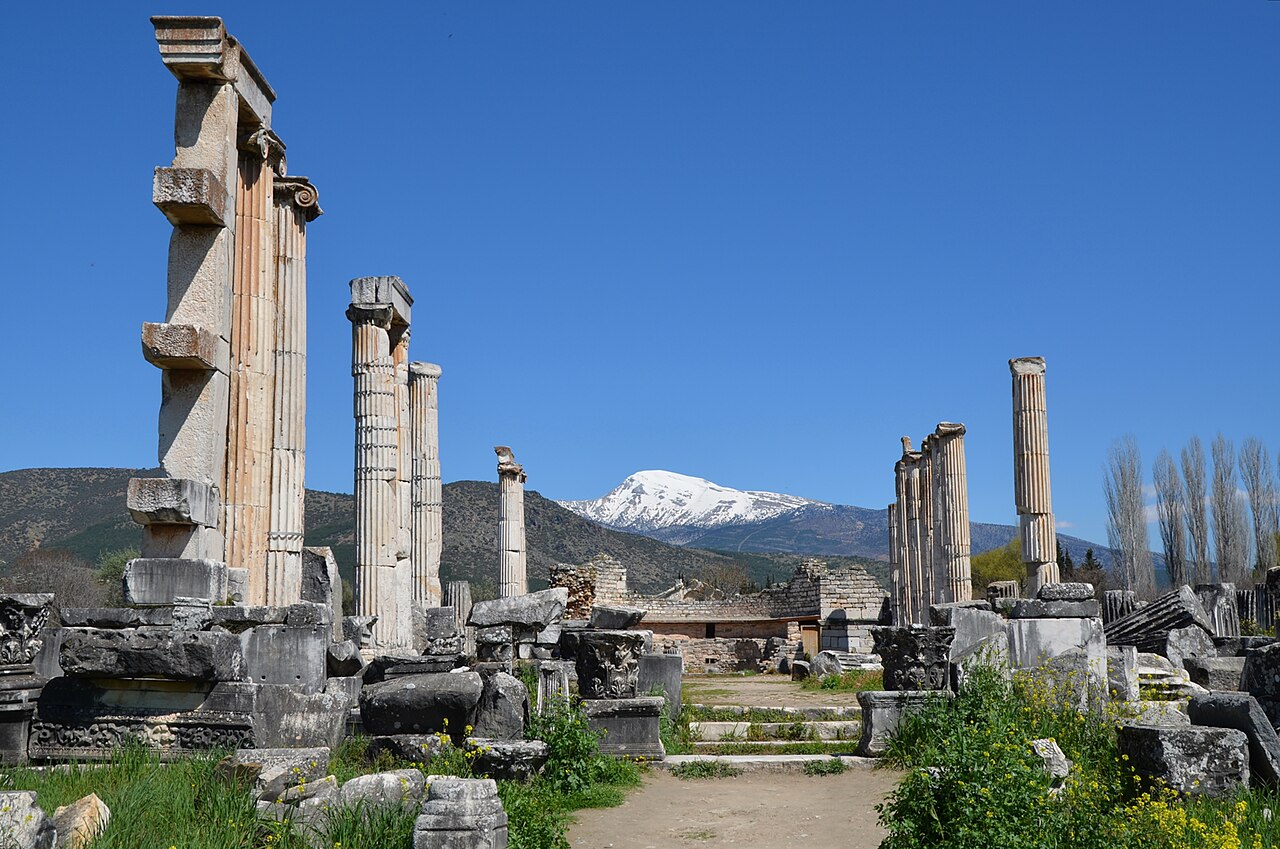
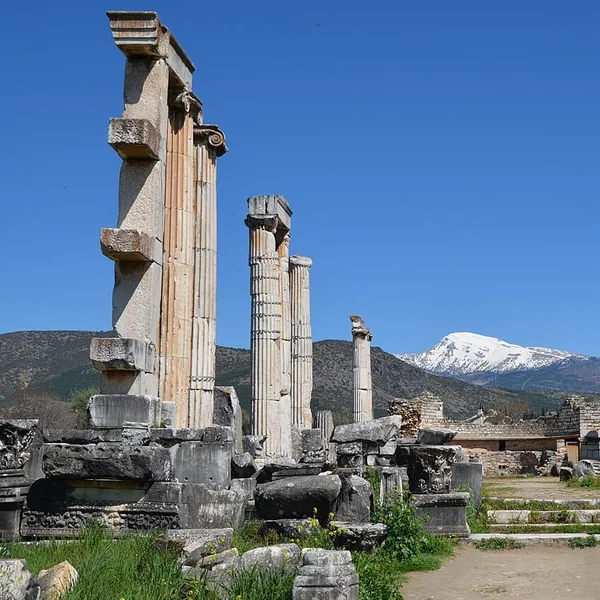
The Temple of Aphrodite at Aphrodisias

Wikimedia Commons (CC BY-SA)

都市UNESCO

Aphrodisias

Seyfi Cem Baskin

Afrodisyas600 紀元前 – 1200 西暦

A Greco-Roman city famed for its marble sculpture workshops, the Temple of Aphrodite, and a remarkably well-preserved stadium seating 30,000.

411
関心 58

所在地

Aydın · Aegean · トルコ

37.71°N · 28.73°E · アジア

Stadium Capacity

~30,000

UNESCO Status

World Heritage Site (2017)

Famous For

Marble sculpture school

Date Range

c. 600 BCE – 1200 CE

Primary Excavating Institution

New York University (NYU), 1961–present

Notable Monument: Tetrapylon

Ornate 2nd-century CE ceremonial gateway, reconstructed in situ

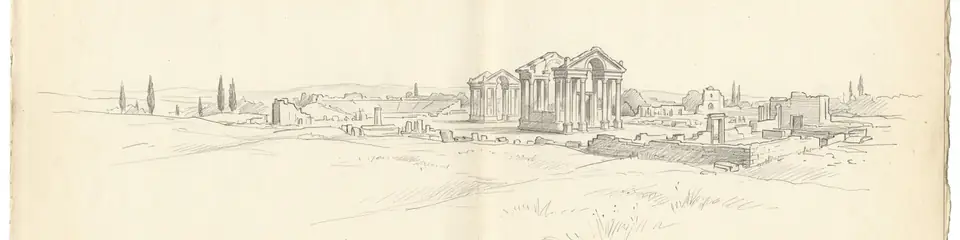
Graphite pencil sketch banner of Aphrodisias

“Aphrodisias was one of the ancient world's most important centers of artistic production.”

Wikipediaより

Aphrodisias was a Hellenistic Greek city in the historic Caria cultural region of western Anatolia, Turkey. It is located near the modern village of Geyre, about 100 km east of the Aegean coast. The city was renowned throughout the Roman world for its school of marble sculpture.

Wikipediaで全文を読む →

所在地

概要

Aphrodisias, located near the village of Geyre in Aydın Province, was one of the most important cities in the Roman province of Asia. Named for Aphrodite, the Greek goddess of love, the city was renowned throughout the Roman world for its school of marble sculpture.

The site includes a remarkably well-preserved stadium (one of the best-surviving ancient stadiums), a temple of Aphrodite later converted into a Christian basilica, an elaborate Sebasteion (a building complex dedicated to Augustus and the Julio-Claudian dynasty), a large agora, and a bouleuterion.

"Aphrodisias, adorned with natural and human excellence, holds pride of place among the cities of Asia."
— Quintus Mucius Scaevola, Roman Governor, 94 BCE

The sculptors of Aphrodisias were famous across the Roman Empire. Numerous signed works have been found as far away as Rome itself. The local marble quarries provided high-quality stone, and the city's workshops produced portrait sculpture, mythological reliefs, and architectural decoration of exceptional quality.

Excavations led by Kenan Erim from 1961 until his death in 1990 transformed understanding of the site. Work continues under R.R.R. Smith of Oxford University.
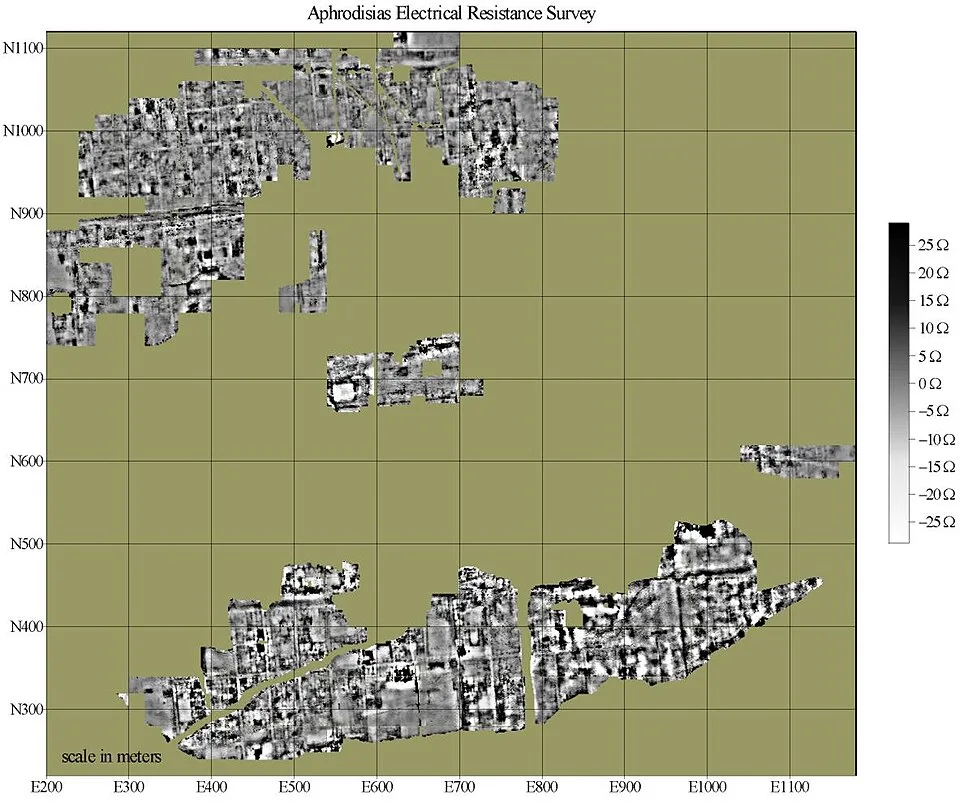
Aphrodisias-res
Aphrodisias-res | The original uploader was Tapatio at English Wikipedia. (Public domain)

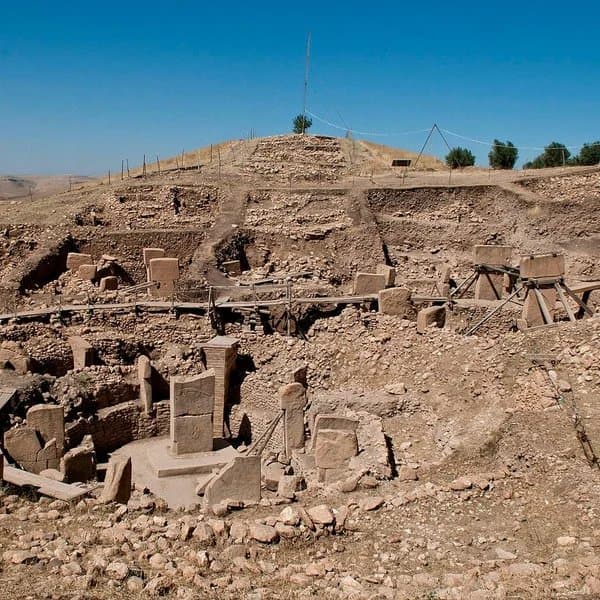
The city's urban plan featured a grand colonnaded street (Tetrastoon) leading to the Temple of Aphrodite, flanked by shops and public buildings. The well-preserved theater, built into a hillside in the 1st century BCE, hosted performances and civic assemblies. A complex of public baths, including the Baths of Hadrian, highlights the importance of social ritual in daily life. Aphrodisias maintained extensive trade connections, exporting its distinctive white and blue-grey marble sculptures across the empire, with signed works found as far as Hadrian's Villa at Tivoli. The city's decline began with a devastating earthquake in the early 7th century CE, which damaged critical infrastructure. It never fully recovered its former grandeur, gradually shrinking to a fortified settlement around the former temple-basilica before being abandoned in the later Byzantine period.
重要性

Aphrodisias was one of the ancient world's most important centers of artistic production. Its marble sculpture school influenced Roman art across the Mediterranean. The Sebasteion reliefs provide one of the most complete surviving programs of imperial Roman propaganda art. The city's exceptional preservation and the quality of its monuments make it one of the most visually impressive classical sites in Türkiye. UNESCO inscribed it in 2017.

証拠と解釈

確立された事実と議論が続く事柄を区別する。

確立された事実

4
  • Aphrodisian sculptors were renowned across the Roman Empire; signed works have been found in Rome.
  • The Sebasteion contained elaborate relief panels depicting imperial mythology and conquered nations.
  • The Temple of Aphrodite was converted into a Christian basilica in the 5th century.
  • The city's marble quarries at nearby İslamlar Dağı provided a fine-grained, white and blue-grey marble highly prized for sculpture.

学術的推論

1
  • The city's wealth was largely based on its marble quarries and sculpture workshops.

議論のある解釈

1
  • The precise function of the 'Bishop's Palace' complex, whether an episcopal residence, a civic administrative center, or a combination of both, is debated.

発見と発掘調査

1904

Early French investigation

指揮 Paul Gaudin

Paul Gaudin conducted the first archaeological work at the site.

1904

First Systematic Excavations

指揮 Paul Gaudin

Initial excavations focused on the Temple of Aphrodite and the Bouleuterion, conducted by French archaeologist Paul Gaudin.

1961–1990

Major NYU excavations

指揮 Kenan Erim / NYU

Kenan Erim dedicated nearly 30 years to excavating Aphrodisias, uncovering its major monuments.

1991

Oxford University continues

指揮 R.R.R. Smith / Oxford University

R.R.R. Smith continues research focusing on sculpture and the Sebasteion.

コミュニティ写真

あなたの体験を共有する

この遺跡を訪れたことがありますか?写真をアップロードして魅力を共有しましょう。

関連記事

このページの引用方法

Atlas Anatolia. (600). Aphrodisias. Atlas Anatolia. https://atlasanatolia.com/ja/site/aphrodisias

コンテンツはCC BY-SA 4.0ライセンスの下で提供されています — 再利用の際は出典表示が必要です。

グラフ

関連する遺跡やストーリーへのつながり。

World History Encyclopediaで全文を読む
World History Encyclopedia · CC BY-NC-SA

出典

  • Aphrodisias: City and Sculpture in Roman Asia — R.R.R. Smith (2006)
  • UNESCO World Heritage — Aphrodisiasリンク

よくある質問

Aphrodisiasはどこにありますか?

AphrodisiasはAydın, Aegean, Türkiyeに位置しています。

Aphrodisiasの年代はいつ頃ですか?

Aphrodisiasはおよそ600 紀元前 – 1200 西暦のものとされています。

Aphrodisiasはどの文明に関連していますか?

AphrodisiasはGreek, Roman, Byzantine, Carian文明に関連しています。

Aphrodisiasが重要な理由は何ですか?

Aphrodisias was one of the ancient world's most important centers of artistic production.

Aphrodisiasはユネスコ世界遺産ですか?

はい — Aphrodisiasはユネスコ世界遺産に登録されています。