
Vai al contenuto
Atlas Anatolia
NotizieIce Age teeth in Sulawesi push betel-nut use back as far as 25,000 yearsRoman mosaic and Eros head uncovered in the basilica at Pompeiopolis, Kastamonu
Myra archaeological site

Wikimedia Commons (CC BY-SA)

Città

Myra

Seyfi Cem Baskin

500 a.C. – 1300 d.C.

An ancient Lycian city famous for its rock-cut tombs carved into cliff faces and the Church of St. Nicholas (Santa Claus). The Lycian rock tombs are among the most dramatic archaeological monuments in Turkey.

411
Interesse 57

Posizione

Antalya · Mediterranean · Turchia

36.26°N · 29.98°E · Asia

Date Range

500 BCE – 1300 CE

Province

Antalya

Location

Modern Demre, Antalya Province, Turkey

Historical Period

Lycian, Roman, Byzantine

Famous Feature

Rock-cut tombs carved into cliff faces, including temple-style facades

Cultural Significance

Major Lycian city; later the bishopric of Saint Nicholas (Santa Claus)

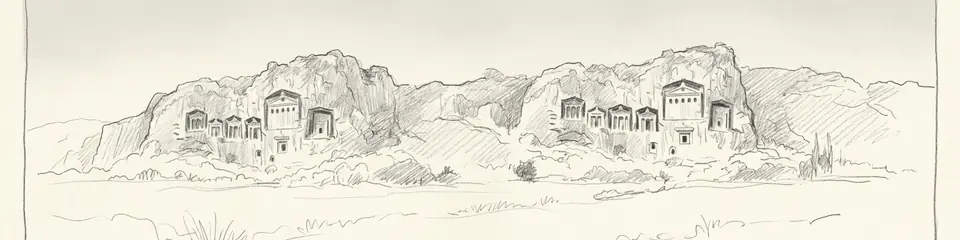
Graphite pencil sketch banner of Myra

Myra matters as a profound archaeological and historical nexus of Lycian civilization, Greco-Roman influence, and early Christian heritage.”

Posizione

Panoramica

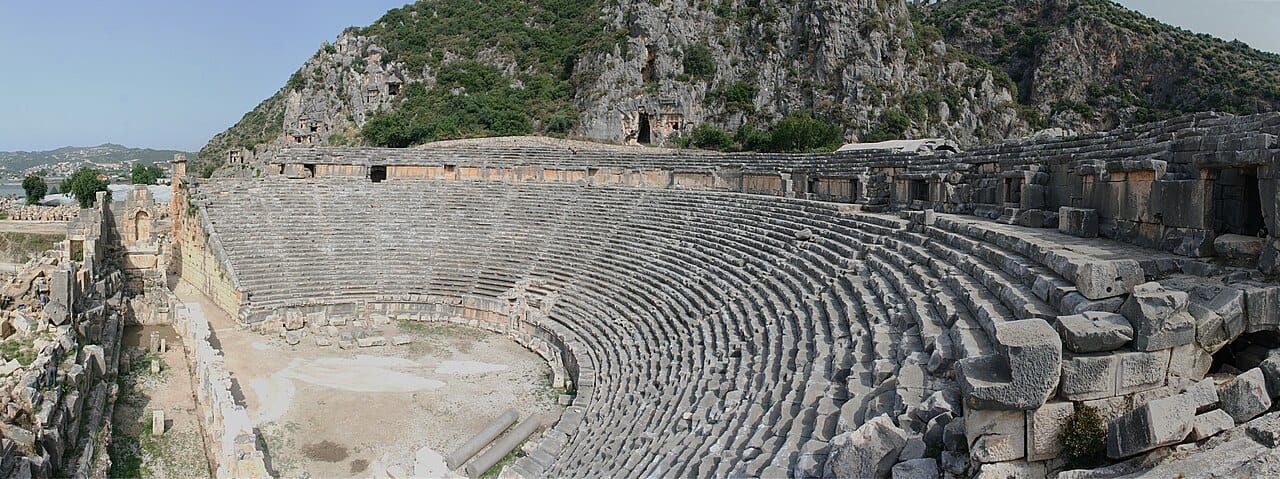
Myra, located in modern-day Demre within Turkey's Antalya Province, presents a striking physical landscape where human ingenuity meets dramatic natural geology. The city's acropolis rises on a plateau overlooking the fertile alluvial plain formed by the Myros River (Demre Çayı), but it is the sheer cliff face below, honeycombed with elaborate façades, that defines its visual impact. These renowned Lycian rock-cut tombs, carved directly into the vertical rock in the 4th century BCE, mimic the wooden architecture of Lycian houses and temples, complete with intricate reliefs and false doors. Across the river, the well-preserved Roman theatre, capable of holding up to 10,000 spectators, sits adjacent to these necropoleis, creating a powerful juxtaposition of spaces for the living and the dead.

Historically, Myra was a major and influential city of the Lycian League, a democratic federation of ancient city-states, and even served as one of its six principal voting members. Its significance continued into the Roman and early Byzantine periods, due in large part to its strategic position along important maritime and overland trade routes. The city's historical prominence is further underscored by the visit of Emperor Hadrian in 131 CE and its role as the metropolitan see of the region of Lycia. This enduring importance is encapsulated in its two primary archaeological complexes: the monumental cliff-side tombs of the ancient Lycian and Roman elite, and the later ecclesiastical structures associated with its most famous bishop.

"The city of Myra is situated on a hill, and has a harbor."
— Pseudo-Scylax, Periplous, c. 4th century BCE

The key structures at Myra are a testament to its layered history. The Lycian necropolis, particularly the "Painted Tomb" and the "Lion Tomb," features elaborate façades adorned with reliefs depicting funeral feasts and mythological scenes. The large Roman theatre, later modified after an earthquake, retains much of its original form, including ornately carved theatrical masks on its proscaenium. However, the site is equally famous for the Church of St. Nicholas, located a short distance from the ancient city center. This Byzantine church, built and rebuilt from the 5th to the 8th centuries over the saint's original burial place, honors Nicholas, the 4th-century bishop of Myra whose legendary generosity evolved into the figure of Santa Claus. His tomb became a major pilgrimage site, drawing visitors from across the Christian world.

Culturally, Myra offers profound insight into Lycian beliefs about the afterlife, where tombs were constructed as eternal houses for the deceased, prominently positioned for visibility. The transition from a major pagan city to an important Christian center is vividly illustrated by the physical coexistence of the pagan rock tombs and the pilgrimage church. This continuity of sacred space underscores the site's enduring spiritual significance. The blend of distinctive Lycian traditions, Roman imperial architecture, and deep Christian heritage makes Myra a unique palimpsest, where the cult of the dead and the veneration of a saint together narrate the long and complex history of Anatolia.
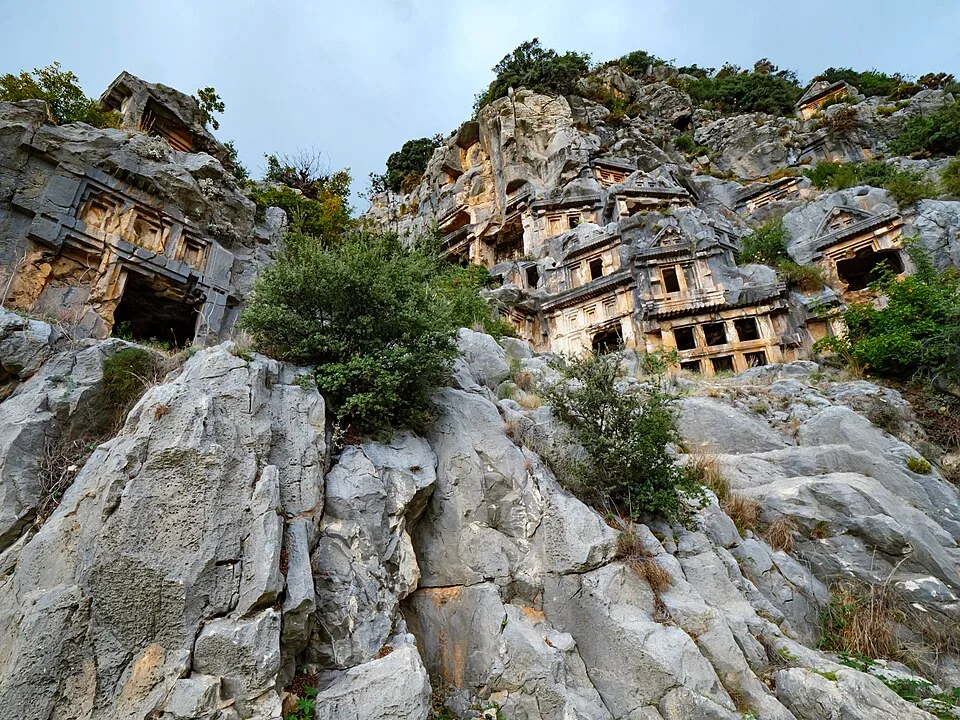
The rock tombs of ancient Myra, carved into the cliffs of Demre, Turkey
The rock tombs of ancient Myra, carved into the cliffs of Demre, Turkey | Buğra Kaan Ersoy (CC BY-SA 4.0)

Perché è importante

Myra matters as a profound archaeological and historical nexus of Lycian civilization, Greco-Roman influence, and early Christian heritage. The city's spectacular cliff-cut tombs, with their elaborate temple-style facades, provide an unparalleled window into Lycian funerary practices, social hierarchy, and artistic syncretism. Archaeologically, the stratified urban site reveals continuous habitation and adaptation from its Lycian zenith through Roman and Byzantine periods. Its significance is magnified by the Church of St. Nicholas, anchoring Myra as a major pilgrimage center and directly linking the ancient world to a global cultural phenomenon—the figure of Santa Claus. This dual legacy makes Myra a critical site for understanding regional continuity and the transformation of cultural heritage across millennia.

Evidenze e interpretazione

Distinguere ciò che è ben consolidato da ciò che rimane dibattuto.

Fatti ben consolidati

4
  • The rock-cut tombs with Lycian inscriptions and reliefs confirm Myra as a major Lycian political and religious center.
  • Archaeological remains of the Roman theater (with later Byzantine modifications) and extensive necropolis are physically present at the site.
  • The Church of St. Nicholas, built in the Byzantine period, contains archaeological and epigraphic evidence linking it to the saint's bishopric.
  • The discovery of the Stadiasmus Patarensis monument in the port of Andriake, a detailed Roman road inscription from the reign of Emperor Claudius (c. 45 CE), confirms Myra's administrative importance and its connection to the wider imperial road network.

Deduzioni accademiche

1
  • Myra's wealth and prominence are inferred from the scale of its monumental tombs, theater, and its status as the capital of the Lycian League under Roman rule.

Interpretazioni dibattute

1
  • The original location and extent of the sacred precinct of the goddess Artemis Eleuthera, Myra's chief deity mentioned in ancient sources, is debated, with some scholars placing it on the acropolis and others near the theater.

Scoperta e scavo

1965

Initial Systematic Excavations

Diretto da Prof. Dr. Jürgen Borchhardt (German Archaeological Institute)

First major systematic excavations of the site, focusing on the Roman theater and surrounding structures.

1990

Excavations at the Church of St. Nicholas

Diretto da Turkish Ministry of Culture and Tourism

Large-scale excavations and restoration work at the Byzantine church associated with Saint Nicholas.

2009

Andriake (Port of Myra) Excavations

Diretto da Prof. Dr. Nevzat Çevik (Akdeniz University)

Excavations at the ancient harbor of Myra, revealing granaries, a synagogue, and commercial structures.

2020

Acropolis and Theater Excavations

Diretto da Prof. Dr. Nevzat Çevik (Akdeniz University)

Systematic excavations on the acropolis and the cavea of the Roman theater aimed at clarifying the city's Hellenistic and Roman urban development and stratigraphy.

Foto della comunità

Condividi la tua esperienza

Hai visitato questo sito? Carica le tue foto per aiutare gli altri a scoprirlo.

Storie correlate

Come citare questa pagina

Atlas Anatolia. (500). Myra. Atlas Anatolia. https://atlasanatolia.com/it/site/myra

Contenuto con licenza CC BY-SA 4.0 — è richiesta l'attribuzione in caso di riutilizzo.

Grafico

Collegamenti a siti e storie correlati.

Leggi l'articolo completo su World History Encyclopedia
World History Encyclopedia · CC BY-NC-SA

Fonti

Domande frequenti

Dove si trova Myra?

Myra si trova in Antalya, Mediterranean, Türkiye.

A quando risale Myra?

Myra risale all'incirca al 500 a.C. – 1300 d.C..

Quali civiltà sono associate a Myra?

Myra è associato alla civiltà Lycian, Greek, Roman, Byzantine.

Perché Myra è importante?

Myra matters as a profound archaeological and historical nexus of Lycian civilization, Greco-Roman influence, and early Christian heritage.

Myra è un sito Patrimonio Mondiale dell'UNESCO?

Myra non è attualmente iscritto nella lista del Patrimonio Mondiale dell'UNESCO.