2000 a.C. – 1500 d.C. · 10 siti
500 a.C. – 1300 d.C.
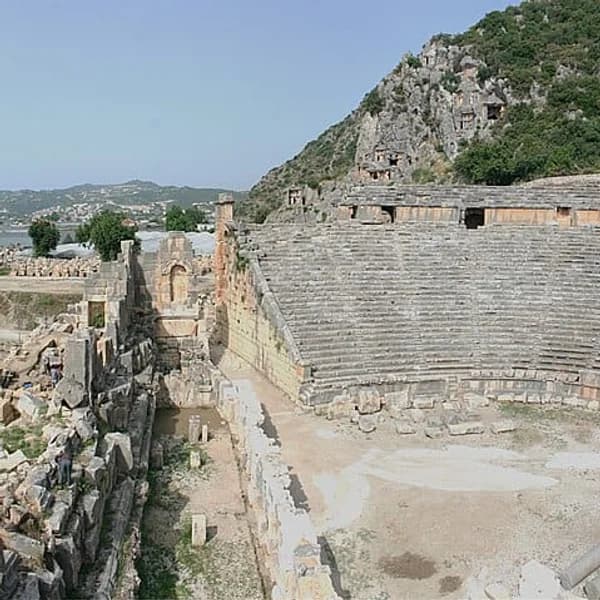
An ancient Lycian city famous for its rock-cut tombs carved into cliff faces and the Church of St. Nicholas (Santa Claus). The Lycian rock tombs are among the most dramatic archaeological monuments in Turkey.
800 a.C. – 700 d.C.
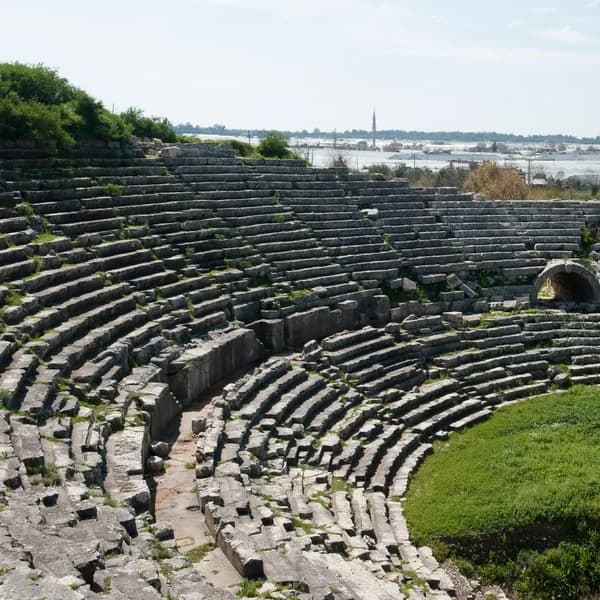
Capital of the Lycian League and birthplace of St. Nicholas, Patara housed the oldest known lighthouse in the world and served as the political heart of one of antiquity's earliest democratic federations.
400 a.C. – 700 d.C.
A partially sunken Lycian city whose ruins shimmer beneath crystal-clear Mediterranean waters, destroyed by a 2nd century earthquake and now one of Turkey's most haunting archaeological seascapes.
700 a.C. – 1500 d.C.
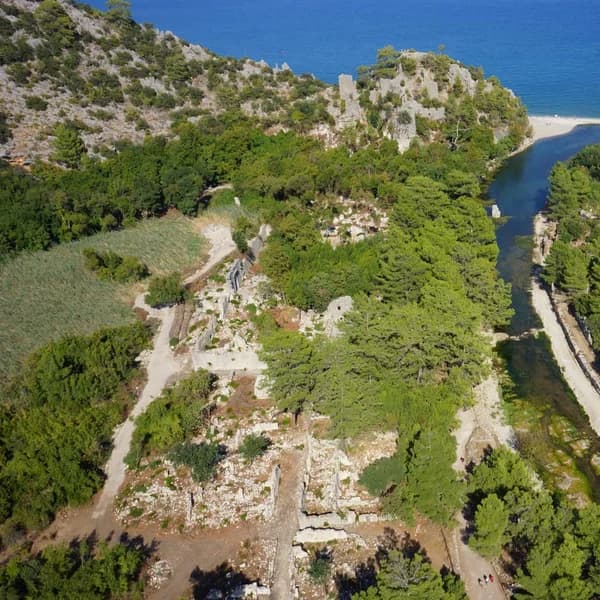
An ancient Lycian city hidden within a lush river gorge, where the ruins of Roman baths and Byzantine churches meet the Mediterranean shore — and nearby, the eternal flames of the Chimera have burned from the mountainside for at least 2,500 years.
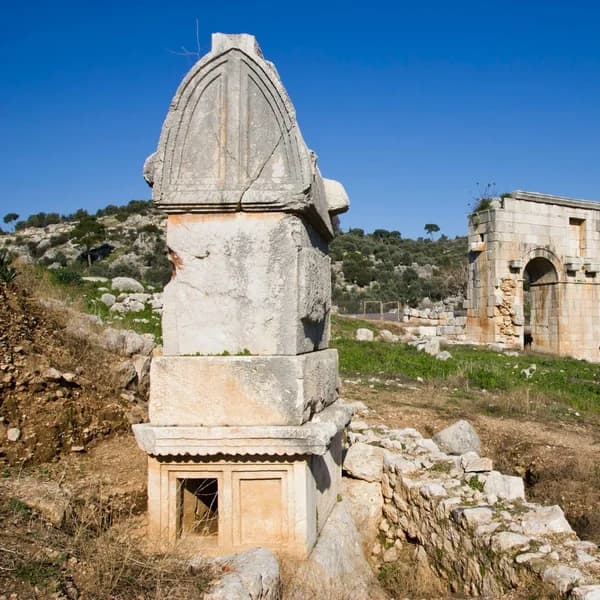
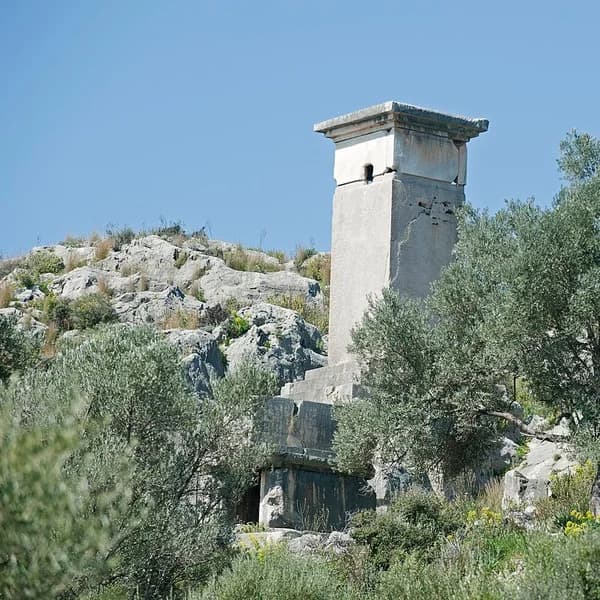
Capital of ancient Lycia, famous for its monumental pillar tombs and the Nereid Monument. The city was twice destroyed by its own inhabitants rather than surrendered to invaders.
900 a.C. – 400 d.C.
An ancient harbor city famous for its magnificent Lycian rock-cut tombs carved into cliff faces above the Dalyan River — one of the most iconic archaeological vistas in Turkey.
690 a.C. – 700 d.C.
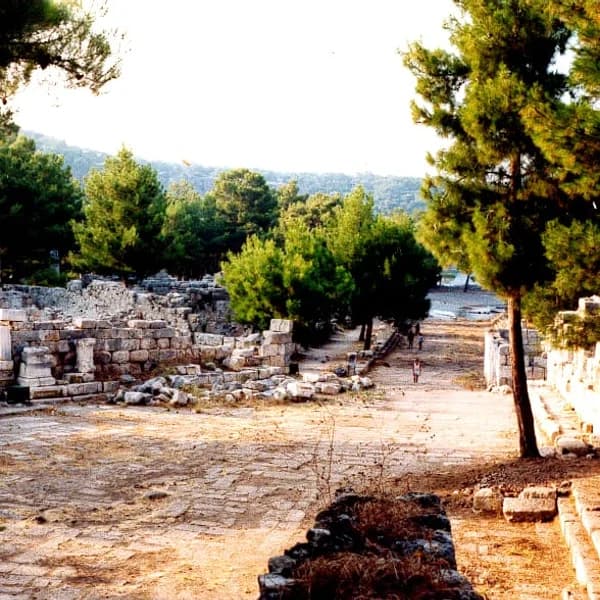
A scenic Lycian-Greek harbor city nestled between three bays on a wooded peninsula, where Alexander the Great wintered in 334 BCE and the ruins of aqueducts, a colonnaded main street, and Roman baths meet pine forests and turquoise sea.
600 a.C. – 300 d.C.
The federal sanctuary of the Lycian League, dedicated to the goddess Leto, mother of Apollo and Artemis. This UNESCO World Heritage Site near Xanthos yielded the crucial trilingual inscription that helped decipher the Lycian language.
2000 a.C. – 1400 d.C.
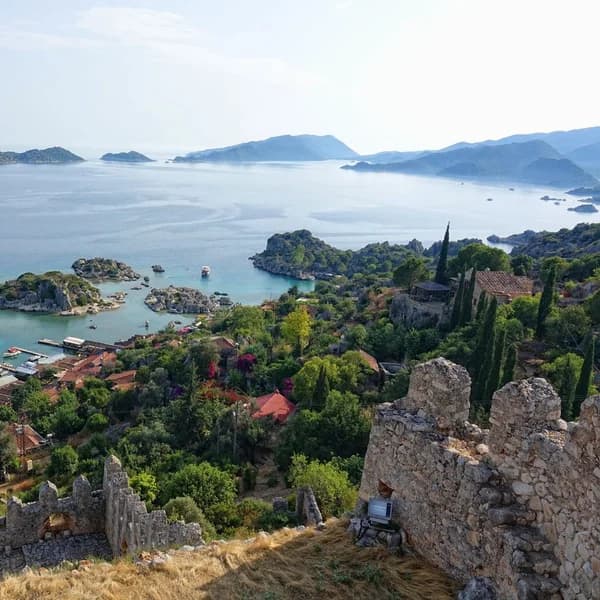
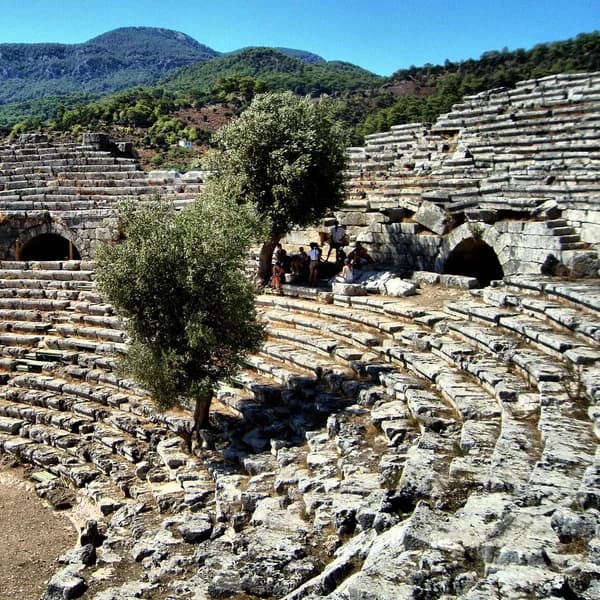
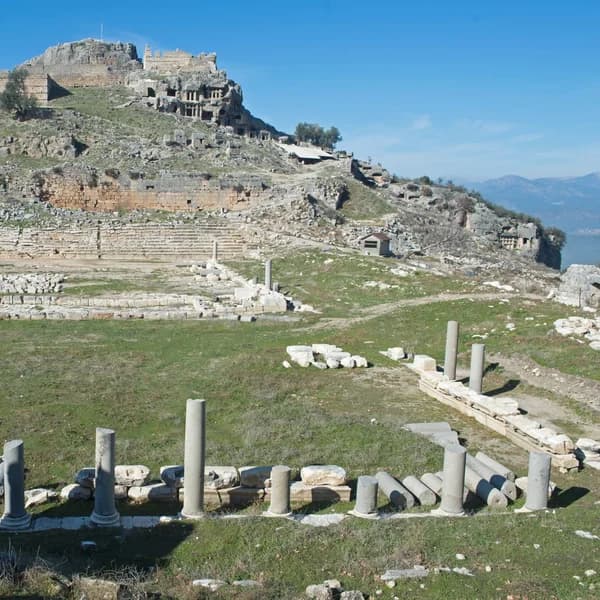
One of the oldest and most important cities of Lycia, dominated by a dramatic rocky acropolis with Lycian rock tombs, a Roman theatre, and an Ottoman fortress crowning its summit.
300 a.C. – 700 d.C.
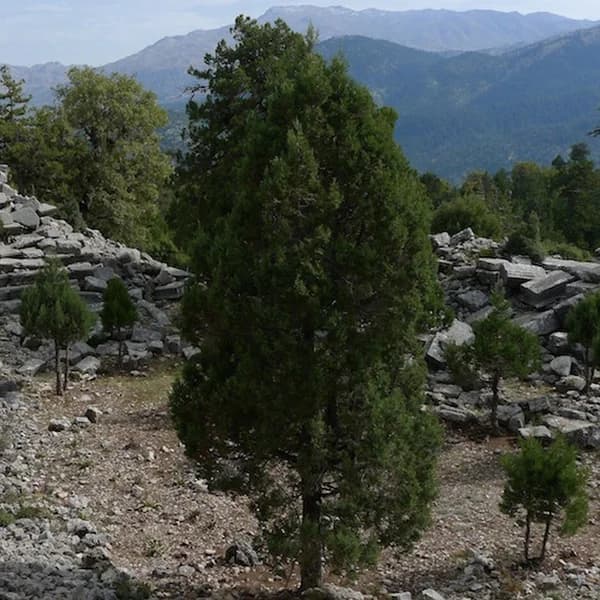
A remote mountain city in northern Lycia where a 2nd century CE philosopher named Diogenes carved the world's largest known ancient philosophical inscription — an entire Epicurean treatise spanning over 25,000 words across a massive stone wall.