
Vai al contenuto
Atlas Anatolia
NotizieIce Age teeth in Sulawesi push betel-nut use back as far as 25,000 yearsRoman mosaic and Eros head uncovered in the basilica at Pompeiopolis, Kastamonu
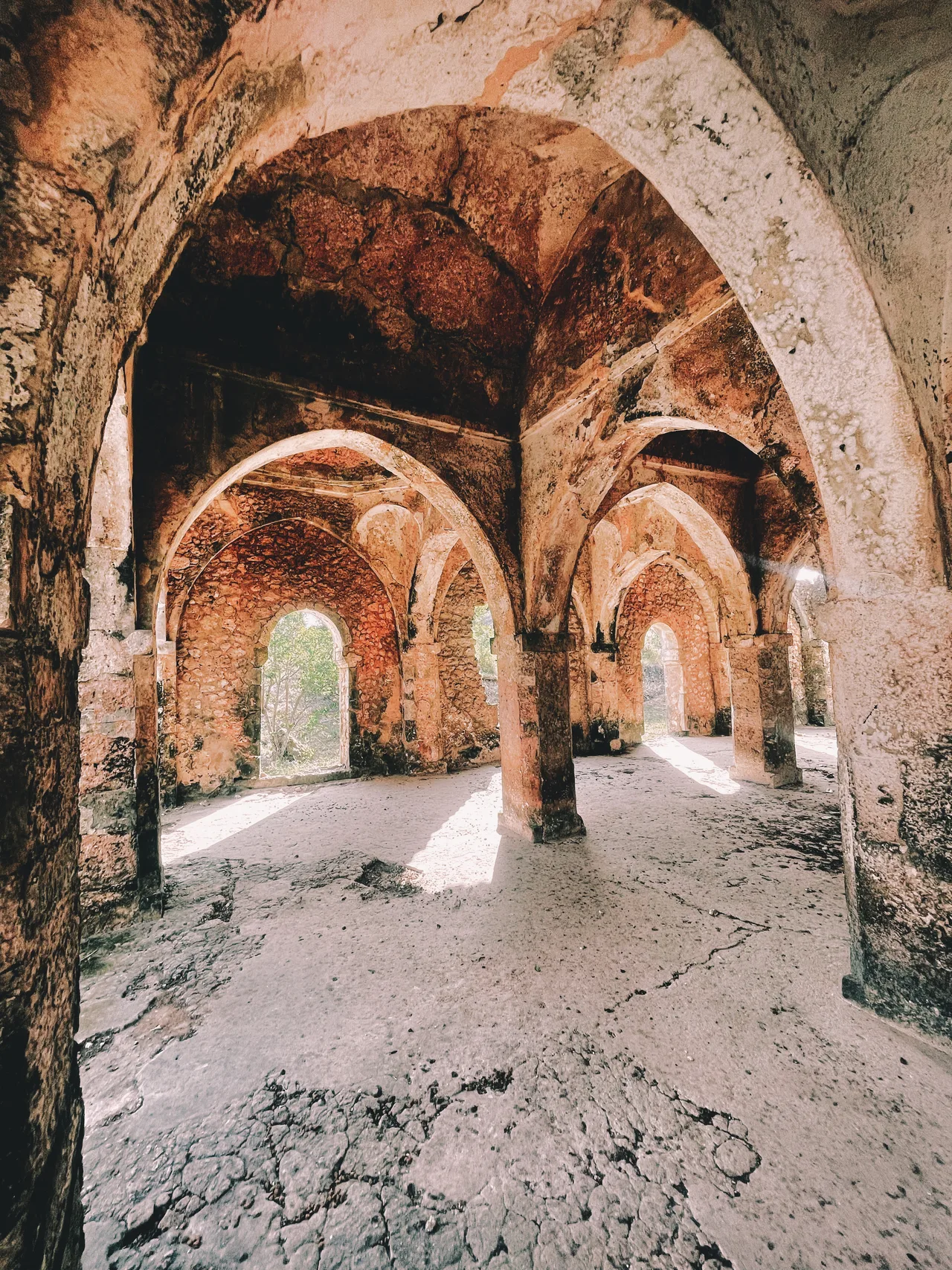
The vaulted coral-stone nave of the Great Mosque of Kilwa Kisiwani, Tanzania

Wikimedia Commons

Record nazionale

Longest Continuously Occupied Site in Tanzania

CittàUNESCOIn evidenza

Kilwa Kisiwani

Seyfi Cem Baskin

800 d.C. – 1520 d.C.

The greatest medieval trading city on the East African coast — an island sultanate whose coral-stone mosques and palaces dominated the Indian Ocean gold trade from the 9th to the 16th century. Ibn Battuta visited in 1331 and called it one of the most beautiful cities in the world.

41
Interesse 58

Posizione

Tanzania

8.93°S · 39.51°E · Africa

Founded

c. 9th century CE by Shirazi settlers

Peak

13th-14th century; main gold-trade entrepot of East Africa

Great Mosque

Largest pre-European mosque in sub-Saharan Africa

Currency

Earliest locally minted coinage in sub-Saharan Africa

Famous visitor

Ibn Battuta (1331): "one of the most beautiful cities in the world"

UNESCO

World Heritage Site 1981

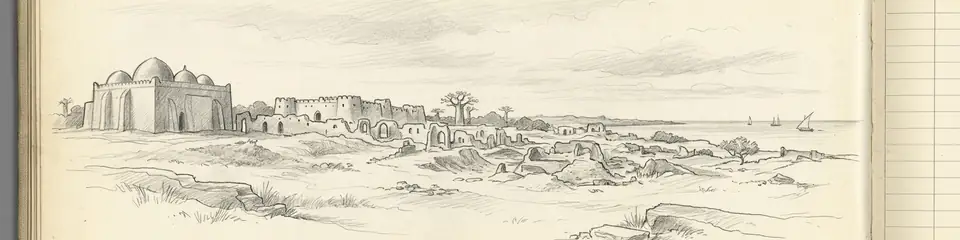
Graphite pencil sketch banner of Kilwa Kisiwani

Kilwa Kisiwani is the finest surviving testimony to the Swahili civilisation that flourished along the East African coast for more than a millennium.”

Posizione

Panoramica

Kilwa Kisiwani ("Kilwa on the island") occupies a small island in the Indian Ocean off the southern coast of modern Tanzania. Founded by Shirazi settlers from the Persian Gulf around the 9th century CE, it grew into the most powerful city-state on the Swahili Coast, commanding trade routes that linked the gold-producing interior of southern Africa to merchants from Arabia, Persia, India, and China.

At its commercial peak in the 13th and 14th centuries, Kilwa controlled the export of gold, ivory, iron, and copper across the western Indian Ocean. The wealth this generated built the Great Mosque of Kilwa — the largest pre-European mosque in sub-Saharan Africa — whose vaulted coral-rag nave survives largely intact. Adjacent stood Husuni Kubwa, an extraordinary 14th-century palace complex covering nearly a hectare with a sunken octagonal swimming pool and over a hundred rooms — the largest medieval building in sub-Saharan Africa.

The town minted its own copper and gold coins — the earliest locally struck coinage in sub-Saharan Africa — and finds of Chinese porcelain and Persian glazed-ware confirm participation in Asia-wide trade networks. In 1505 the Portuguese bombarded Kilwa and established a fort (the Gereza, whose ruins survive), breaking the city's commercial power. UNESCO inscribed the site in 1981.

Perché è importante

Kilwa Kisiwani is the finest surviving testimony to the Swahili civilisation that flourished along the East African coast for more than a millennium. It demonstrates the sophistication of African maritime trade and urban culture long before European contact — building in coral stone, minting coins, and maintaining commercial relationships across the entire Indian Ocean world. Its Great Mosque and Husuni Kubwa palace are architectural achievements that rival contemporary Islamic buildings anywhere in the world, built by Africans from local materials. The site overturns persistent misconceptions about sub-Saharan Africa as isolated from global networks of commerce and culture.

Evidenze e interpretazione

Distinguere ciò che è ben consolidato da ciò che rimane dibattuto.

Fatti ben consolidati

4
  • The Great Mosque, built in coral rag and lime mortar, contains a vaulted nave dated by architectural analysis and radiocarbon dating to the 11th-14th centuries — the largest such structure in pre-colonial sub-Saharan Africa.
  • Kilwa minted its own copper and silver coins — the earliest locally produced coinage in sub-Saharan Africa; hundreds of examples have been excavated on the island and at trading-partner sites.
  • Chinese celadon and blue-and-white porcelain, Persian glazed pottery, and glass beads from South Asia found in excavations confirm direct participation in Indian Ocean trade networks from the 9th century onward.
  • Husuni Kubwa palace, dated to the early 14th century, covers approximately one hectare and includes a sunken octagonal pool — its scale demonstrates the wealth of the Kilwa sultanate at its peak.

Deduzioni accademiche

1
  • Kilwa's control of the Zimbabwe gold trade is inferred from the strong correlation between Kilwa coin finds and southern African gold-producing regions, though direct written records of the trade mechanism are sparse.

Foto della comunità

Condividi la tua esperienza

Hai visitato questo sito? Carica le tue foto per aiutare gli altri a scoprirlo.

Come citare questa pagina

Atlas Anatolia. (800). Kilwa Kisiwani. Atlas Anatolia. https://atlasanatolia.com/it/site/kilwa-kisiwani

Contenuto con licenza CC BY-SA 4.0 — è richiesta l'attribuzione in caso di riutilizzo.

Fonti

  • The Swahili: The Social Landscape of a Mercantile SocietyHorton, Mark & Middleton, John (2000)
  • Horn and Crescent: Cultural Change and Traditional Islam on the East African CoastPouwels, Randall (1987)

Domande frequenti

Dove si trova Kilwa Kisiwani?

Kilwa Kisiwani si trova in Tanzania.

A quando risale Kilwa Kisiwani?

Kilwa Kisiwani risale all'incirca al 800 d.C. – 1520 d.C..

Quali civiltà sono associate a Kilwa Kisiwani?

Kilwa Kisiwani è associato alla civiltà Islamic / Medieval, Swahili.

Perché Kilwa Kisiwani è importante?

Kilwa Kisiwani is the finest surviving testimony to the Swahili civilisation that flourished along the East African coast for more than a millennium.

Kilwa Kisiwani è un sito Patrimonio Mondiale dell'UNESCO?

Sì — Kilwa Kisiwani è iscritto nella lista del Patrimonio Mondiale dell'UNESCO.