
सामग्री पर जाएँ
Atlas Anatolia
समाचारसुलावेसी में हिमयुगीन दाँतों से सुपारी के उपयोग का प्रमाण 25,000 वर्ष पुरानापोम्पेइओपोलिस, कस्तमोनू के बेसिलिका में रोमन मोज़ेक और इरोस का सिर मिला
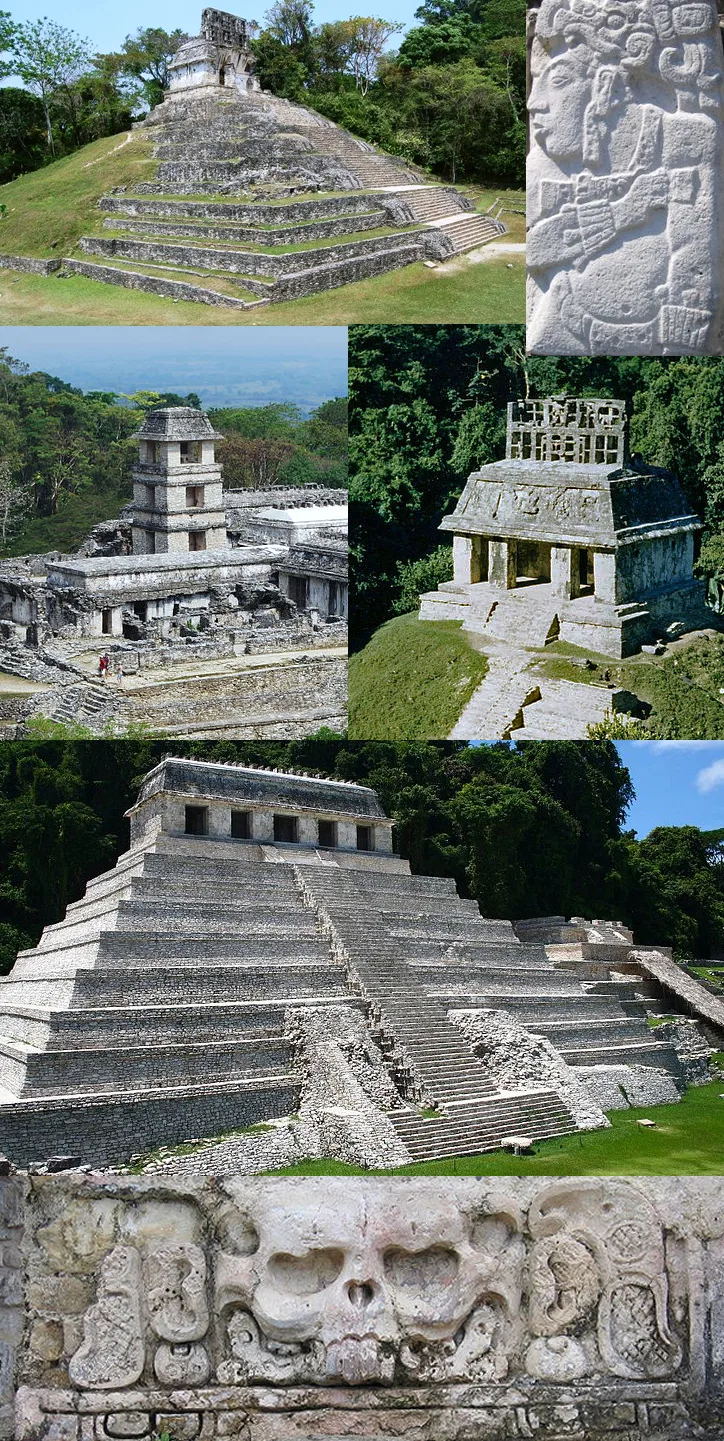
Temple of the Inscriptions at Palenque, tomb of K'inich Janaab' Pakal

Wikimedia Commons

Country Record

Longest Continuously Occupied Site in Mexico

प्राचीन नगरयूनेस्कोविशेष रुप से प्रदर्शित

Palenque

Seyfi Cem Baskin

Bàak'226 ई.पू. – 900 ईस्वी

A Classic Maya city in the Chiapas jungle whose Palace, Temple of the Inscriptions, and exquisite carved reliefs make it one of the greatest Maya sites — home to the undisturbed tomb of the ruler K'inich Janaab' Pakal, discovered in 1952.

311
रुचि 76

स्थान

मेक्सिको

17.48°N · 92.05°W · उत्तरी अमेरिका

Greatest ruler

K'inich Janaab' Pakal (r. 615–683 CE, 68 years)

Tomb discovery

1952, by Alberto Ruz Lhuillier — first intact Maya royal burial

Temple of Inscriptions text

617 hieroglyphs, one of the longest Maya inscriptions

Site area explored

~2.5 km² out of estimated 15 km² under jungle

UNESCO

World Heritage Site since 1987

Annual rainfall

~2,000 mm — one of the wettest Maya sites

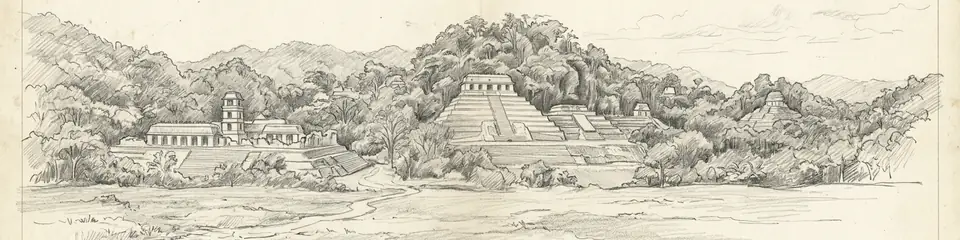
Graphite pencil sketch banner of Palenque

“Palenque transformed understanding of the Maya.”

स्थान

अवलोकन

Palenque stands at the foot of the Chiapas highlands in southern Mexico, where the jungle escarpment drops to the Gulf coastal plain. The site name is Spanish; the ancient Maya name was Lakamha' ("wide waters") or Bàak' ("bone" — the meaning is debated). The city flourished from roughly 226 CE, reached its apogee between 615 and 800 CE under a sequence of rulers beginning with K'inich Janaab' Pakal (Pakal the Great, r. 615–683 CE), and was largely abandoned by 900 CE.

At its height Palenque controlled a large territory in the western Maya lowlands, fighting intermittent wars with Calakmul and Toniná. The architectural canon of the site differs visibly from other Maya centers: buildings are lower and more horizontal, with mansard-style upper floors, large windows and doorways, and roof combs of open lattice rather than solid mass. The Palace — a large multistorey administrative and residential complex built over 200 years — features a four-story tower unique in Classic Maya architecture, the function of which remains debated: astronomical observatory, watchtower, or dynastic monument.

The Temple of the Inscriptions, the largest pyramid at Palenque, takes its name from three panels of hieroglyphic text covering its interior walls — 617 glyphs, among the longest Maya texts known. In 1952 the Mexican archaeologist Alberto Ruz Lhuillier discovered a sealed staircase descending 25 meters into the pyramid's base, leading to a burial chamber containing the intact sarcophagus of Pakal the Great. The stone lid, covered with a dense carved scene of Pakal descending into the underworld (misidentified by some as an astronaut), is the most discussed single object in Maya iconography. Pakal's jade mosaic funerary mask and burial goods confirm a royal interment of extraordinary wealth. Excavations since 2019 have located a second, still-sealed royal tomb beneath the Temple of the Red Queen.

Palenque's hieroglyphic texts were central to the decipherment of Maya writing: the site's dynastic sequence was the first to be fully reconstructed from inscriptions, largely through the work of Merle Greene Robertson and Linda Schele.
यह क्यों महत्वपूर्ण है

Palenque transformed understanding of the Maya. Before the decipherment of its inscriptions in the 1970s–80s, Maya rulers were thought to be abstract priestly figures. The texts at Palenque — naming specific kings, recording births, accessions, battles, and deaths — proved the Maya had a complex political history of named individuals, dynastic struggles, and military conquest directly comparable to the Old World. Pakal's tomb, found in 1952 when no royal Maya burial had yet been discovered intact, established that Maya pyramids served as dynastic mausoleums rather than merely ceremonial platforms. The quality of Palenque's stucco sculpture — the modeled portrait heads, the relief panels of the Cross Group — represents the apex of Classic Maya figural art. The site sits in active jungle, receives mist, and has a texture of living ruin that no other Maya site matches.

साक्ष्य और व्याख्या

जो सुस्थापित है और जो विवादास्पद है, उनमें अंतर करना।

सुस्थापित तथ्य

3
  • Pakal's tomb was sealed in 683 CE: the limestone sarcophagus lid bears a death date of 8 Ahau 13 Pax, corresponding to 28 August 683 CE in the Goodman-Martínez-Thompson correlation, consistent with the skeletal aging of the adult male interred.
  • The Temple of the Inscriptions hieroglyphs record the dynastic history of Palenque from the mythological founding king to Pakal's son K'inich Kan Bahlam II, constituting the most complete royal genealogy in the Classic Maya world.
  • The Triad of deities worshipped at Palenque — GI, GII, and GIII — is documented in the Cross Group temples (Temple of the Cross, Temple of the Foliated Cross, Temple of the Sun), which together form a coherent cosmological narrative of creation and dynastic legitimacy.

विद्वानों के अनुमान

1
  • The four-story tower of the Palace has windows aligned with astronomical events. Researchers have documented that the setting sun on the winter solstice aligns with the top of the Temple of the Inscriptions as seen from the tower, suggesting an intentional astronomical relationship.

विवादित व्याख्याएँ

1
  • The famous sarcophagus lid scene — showing Pakal descending into the underworld's maw at the World Tree — was described in Erich von Däniken's 1968 Chariots of the Gods as depicting an astronaut in a cockpit. This interpretation is rejected by every specialist in Maya iconography; every element of the scene corresponds to documented Classic Maya funerary symbolism.

समुदाय तस्वीरें

अपना अनुभव साझा करें

क्या आपने इस स्थल का दौरा किया है? दूसरों को इसे खोजने में मदद करने के लिए अपनी तस्वीरें अपलोड करें।

संबंधित कहानियाँ

इस पृष्ठ को कैसे उद्धृत करें

Atlas Anatolia. (226). Palenque. Atlas Anatolia. https://atlasanatolia.com/hi/site/palenque

सामग्री CC BY-SA 4.0 के अंतर्गत लाइसेंस प्राप्त है — पुनः उपयोग करते समय श्रेय देना आवश्यक है।

ग्राफ़

संबंधित स्थलों और कहानियों से जुड़ाव।

स्रोत

  • The Blood of Kings: Dynasty and Ritual in Maya Art — Linda Schele and Mary Ellen Miller (1986)
  • Palenque: Recent Investigations at the Classic Maya Center — Damien B. Marken (ed.) (2007)
  • INAH Zona Arqueológica de Palenqueलिंक

अक्सर पूछे जाने वाले प्रश्न

Palenque कहाँ स्थित है?

Palenque, Mexico में स्थित है।

Palenque कितना पुराना है?

Palenque लगभग 226 ई.पू. – 900 ईस्वी काल का है।

Palenque किन सभ्यताओं से जुड़ा है?

Palenque, Maya सभ्यता से संबंधित है।

Palenque क्यों महत्वपूर्ण है?

Palenque transformed understanding of the Maya.

क्या Palenque एक यूनेस्को विश्व धरोहर स्थल है?

हाँ — Palenque यूनेस्को विश्व धरोहर स्थल के रूप में सूचीबद्ध है।