Aller au contenu
Atlas Anatolia
ActualitésIce Age teeth in Sulawesi push betel-nut use back as far as 25,000 yearsRoman mosaic and Eros head uncovered in the basilica at Pompeiopolis, Kastamonu
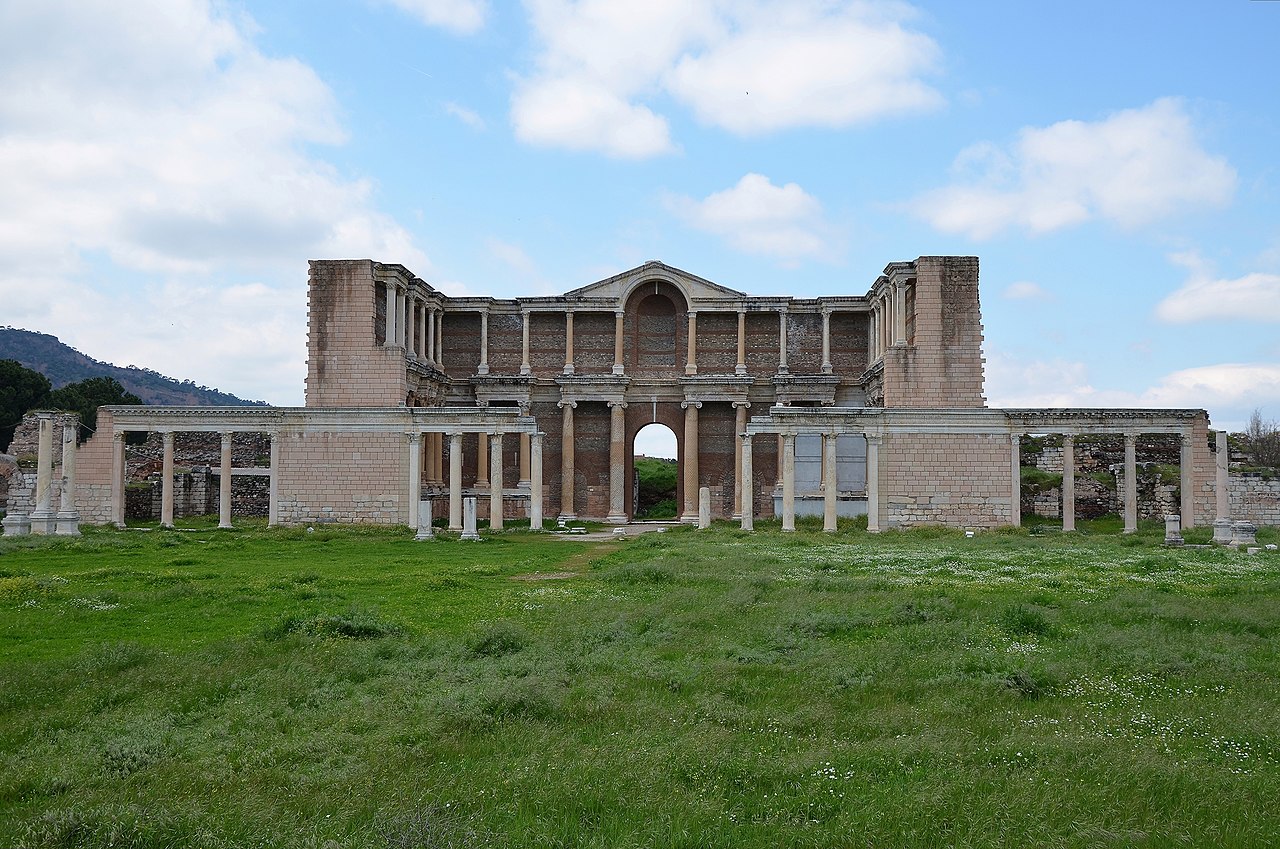
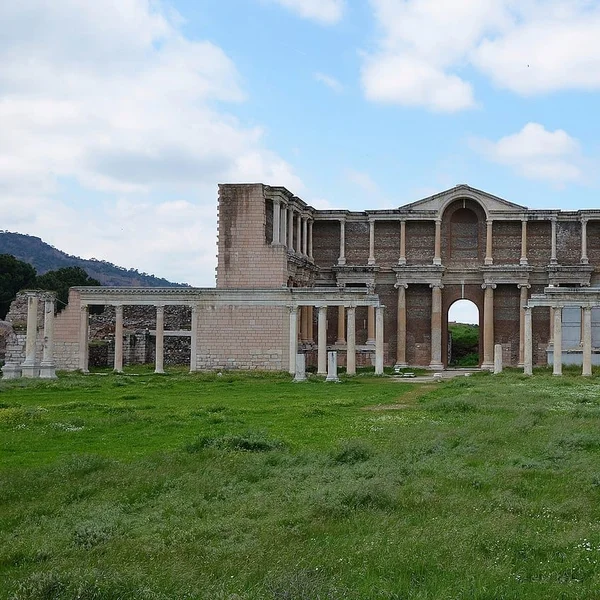
The Bath-Gymnasium complex at Sardis

Wikimedia Commons (CC BY-SA)

Cité

Sardis

Seyfi Cem Baskin

Sart1200 av. J.-C. – 1402 apr. J.-C.

Capital of the Lydian Kingdom, where coinage was likely invented. Home to King Croesus and his legendary wealth, with a massive Temple of Artemis and an impressive synagogue.

312
Intérêt 63

Localisation

Manisa · Aegean · Turquie

38.49°N · 28.04°E · Asie

Key Innovation

Invention of coinage

Famous King

Croesus (c. 560–546 BCE)

Temple Style

Ionic (one of the largest)

Date Range

c. 1200 BCE – 1402 CE

Major Destruction Event

Sacked by the Cimmerians c. 652 BCE and by Cyrus the Great in 546 BCE.

Notable Finds

Royal Lydian burial mounds (tumuli) at Bin Tepe, including the 'Tomb of Alyattes', one of the largest in Anatolia.

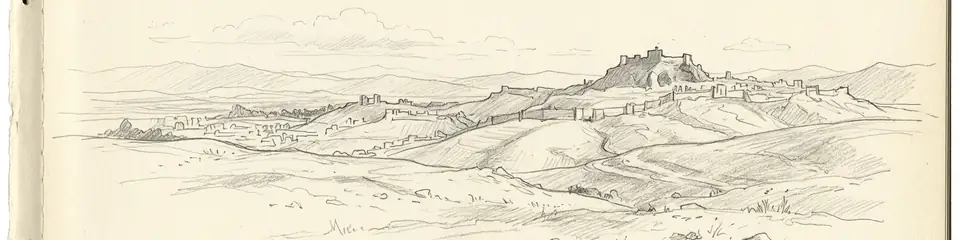
Graphite pencil sketch banner of Sardis

“Sardis was the birthplace of coinage — one of the most consequential innovations in economic history.”

De Wikipédia

Sardis was an ancient city best known as the capital of the Lydian Empire. The Lydians of Sardis are credited with being among the first people to mint coins, around 600 BCE. After the fall of the Lydian Empire, it became the capital of the Persian satrapy of Lydia.

Lire l'article complet sur Wikipédia →

Localisation

Aperçu

Sardis (modern Sart) in Manisa Province was the capital of the Lydian Kingdom from approximately the 7th to the 6th century BCE. Under King Croesus (reigned c. 560–546 BCE), Sardis was one of the wealthiest cities in the ancient world.

The Lydians of Sardis are credited with being among the first people to mint coins, around 600 BCE, using electrum (a natural gold-silver alloy) found in the nearby Pactolus River. This innovation transformed commerce across the ancient Mediterranean.

"Sardis is a great city, and the Lydians are the first people we know of to have struck and used gold and silver coinage."
— Herodotus, c. 440 BCE

The site's most prominent surviving monument is the Temple of Artemis, one of the largest Ionic temples ever built. Though never completed, its standing columns remain impressive. The city also contains a remarkably well-preserved Roman-era synagogue, one of the largest ancient synagogues known, with elaborate mosaic floors and marble decoration.

Sardis continued as an important city through the Roman and Byzantine periods before its destruction during Tamerlane's campaigns in 1402.
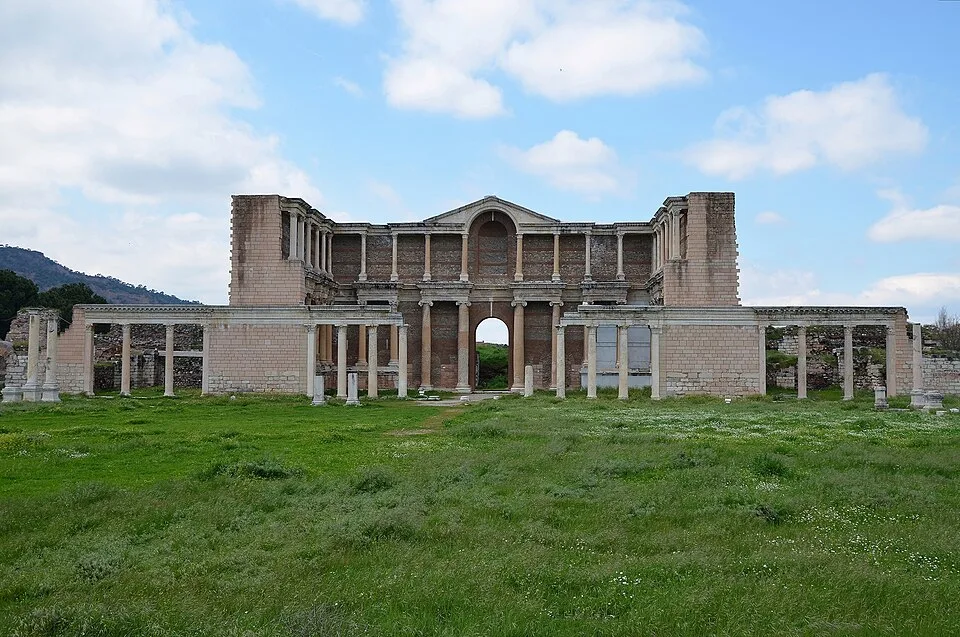
The Bath-Gymnasium complex at Sardis, late 2nd - early 3rd century AD, Sardis, Turkey (17098680002)
The Bath-Gymnasium complex at Sardis, late 2nd - early 3rd century AD, Sardis, Turkey (17098680002) | Carole Raddato from FRANKFURT, Germany (CC BY-SA 2.0)

The city's urban fabric reveals a sophisticated society. Excavations have uncovered extensive Lydian residential and industrial quarters, including workshops for pottery, metalworking, and textile production, particularly the dyeing of wool, a major Lydian industry. The city's fortifications, including a massive mudbrick wall on the Acropolis, attest to its strategic importance. Following its capture by Alexander the Great in 334 BCE, Sardis became a major Hellenistic and later Roman provincial capital. This later phase is marked by monumental construction, including a vast bath-gymnasium complex and a marble-paved colonnaded avenue, transforming the city into a classic example of Roman urbanism in Asia Minor. Sardis remained a significant Byzantine center until its decline following its capture by the Turco-Mongol ruler Timur in 1402 CE, after which it was largely abandoned.
Pourquoi c'est important

Sardis was the birthplace of coinage — one of the most consequential innovations in economic history. The Lydian electrum coins minted here around 600 BCE established the concept of standardized, state-guaranteed currency. The legendary wealth of King Croesus and the phrase "rich as Croesus" entered Western culture directly from Sardis. The site's large synagogue also provides important evidence for Jewish communities in Late Roman Asia Minor.

Preuves et interprétation

Distinguer ce qui est bien établi de ce qui reste débattu.

Faits bien établis

3
  • Lydian electrum coins from Sardis are among the earliest known coins in history, dating to c. 600 BCE.
  • The Sardis synagogue is one of the largest known ancient synagogues.
  • Croesus was the last king of Lydia before the Persian conquest by Cyrus the Great in 546 BCE.

Inférences savantes

1
  • The wealth of Sardis was partly based on gold-bearing deposits in the Pactolus River.

Interprétations débattues

2
  • Whether Sardis or another Lydian city was the absolute first to mint coins remains a point of scholarly discussion.
  • Whether the large 'House of Bronzes' complex at Sardis was a royal palace, an administrative center, or a wealthy merchant's residence.

Découverte et fouilles

1910–1914

Princeton expedition

Dirigé par Howard Crosby Butler / Princeton

Howard Crosby Butler led the first major excavation, uncovering the Temple of Artemis.

1958

Harvard-Cornell project

Dirigé par George Hanfmann / Harvard-Cornell

George M.A. Hanfmann began a long-term project that uncovered the Roman gymnasium complex and synagogue.

1969

Synagogue Excavation

Dirigé par Harvard-Cornell Expedition under George M.A. Hanfmann

Full-scale excavation of the monumental Late Roman synagogue, revealing its intricate mosaic floors and marble furnishings.

2008

Pactolus North Excavations

Dirigé par Archaeological Exploration of Sardis, Harvard Art Museums

Major excavations in the 'Pactolus North' sector uncovered extensive Lydian domestic and industrial quarters, including a gold refinery.

Photos de la communauté

Partagez votre expérience

Avez-vous visité ce site ? Téléchargez vos photos pour aider les autres à le découvrir.

Récits liés

Comment citer cette page

Atlas Anatolia. (1200). Sardis. Atlas Anatolia. https://atlasanatolia.com/fr/site/sardis

Contenu sous licence CC BY-SA 4.0 — attribution requise en cas de réutilisation.

Graphique

Connexions avec des sites et récits associés.

Lire l'article complet sur World History Encyclopedia
World History Encyclopedia · CC BY-NC-SA

Sources

  • Sardis from Prehistoric to Roman Times — George M.A. Hanfmann (1983)
  • The Origins of Coinage in Lydia — Robert Wallace (2006)

Questions fréquentes

Où se trouve Sardis ?

Sardis est situé à/en Manisa, Aegean, Türkiye.

De quand date Sardis ?

Sardis remonte approximativement à 1200 av. J.-C. – 1402 apr. J.-C..

Quelles civilisations sont associées à Sardis ?

Sardis est associé à la civilisation Roman, Lydian, Byzantine, Greek.

Pourquoi Sardis est-il important ?

Sardis was the birthplace of coinage — one of the most consequential innovations in economic history.

Sardis est-il inscrit au patrimoine mondial de l'UNESCO ?

Sardis n'est pas actuellement inscrit sur la liste du patrimoine mondial de l'UNESCO.