
Aller au contenu
Atlas Anatolia
ActualitésIce Age teeth in Sulawesi push betel-nut use back as far as 25,000 yearsRoman mosaic and Eros head uncovered in the basilica at Pompeiopolis, Kastamonu
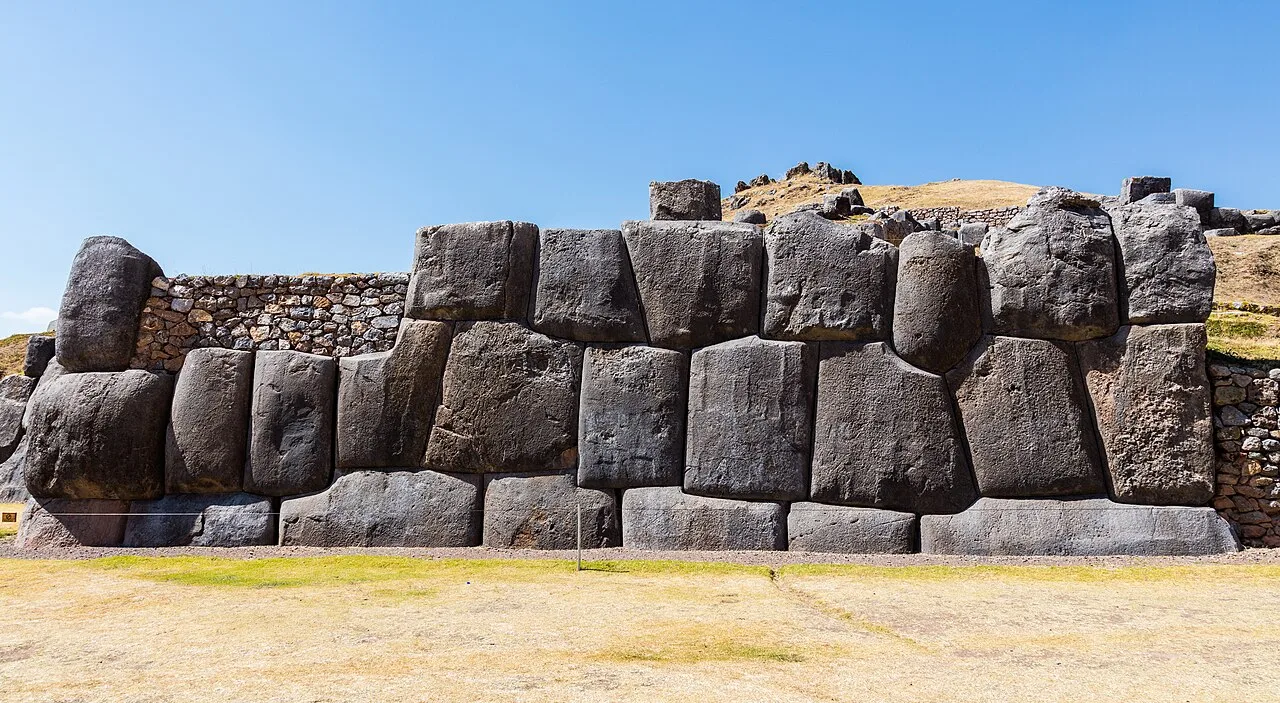
The megalithic zigzag walls of Sacsayhuamán above Cusco, Peru

Wikimedia Commons

Country Record

Oldest Fortress in Peru

ForteresseUNESCO

Sacsayhuamán

Seyfi Cem Baskin

Saqsaywaman1100 apr. J.-C. – 1536 apr. J.-C.

A monumental Inca complex on the hill above Cusco, famous for three tiers of zigzagging defensive walls built from limestone blocks so vast — some weighing over 100 tonnes — and cut so precisely that they fit together without mortar, with joints a knife blade cannot penetrate. It is the supreme example of Inca megalithic masonry.

311
Intérêt 79

Localisation

Pérou

13.51°S · 71.98°W · Amérique du Sud

Built

15th century CE (Pachacuti and successors); over earlier Killke site

Walls

Three tiers of zigzag terraces, ~400 m long, up to 8–9 m high

Largest blocks

Limestone, over 100 tonnes, fitted without mortar

Precision

Joints too tight for a knife blade or sheet of paper

Siege of Cusco

Key stronghold in Manco Inca's 1536 uprising

UNESCO

Part of the "City of Cusco" World Heritage Site (1983)

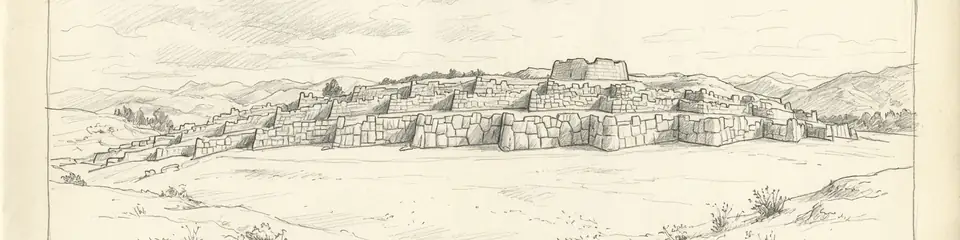
Graphite pencil sketch banner of Sacsayhuamán

“Sacsayhuamán is the greatest surviving monument of Inca engineering and the definitive example of the megalithic stonework for which the Inca are renowned.”

Localisation

Aperçu

Sacsayhuamán occupies a steep hill overlooking the Inca capital of Cusco in the southern Peruvian Andes, at an altitude of about 3,700 metres. Construction is attributed primarily to the Inca emperor Pachacuti and his successors in the 15th century, during the period when the Inca transformed Cusco into an imperial capital, though the site overlies earlier occupation by the local Killke culture. The Spanish chronicler Garcilaso de la Vega, himself of Inca descent, recorded a tradition that the works employed tens of thousands of labourers over several decades.

The most celebrated feature is the series of three parallel terrace walls that zigzag across the northern side of the complex for some 400 metres, rising in tiers up the slope. These walls are built from colossal blocks of limestone in the distinctive Inca polygonal style: irregular many-sided stones, each individually shaped to lock against its neighbours without any mortar. The largest blocks are estimated to weigh well over 100 tonnes — some figures range up to 125 tonnes or more — and stand up to 8 or 9 metres high. The precision of the fit, with adjoining faces ground to match each other exactly, is such that a sheet of paper or a knife blade cannot be inserted into the joints. The zigzag plan both braced the walls and, in some interpretations, evoked the teeth of a puma, an animal associated with Cusco, whose urban plan some scholars believe was laid out in the form of a great cat with Sacsayhuamán as its head.
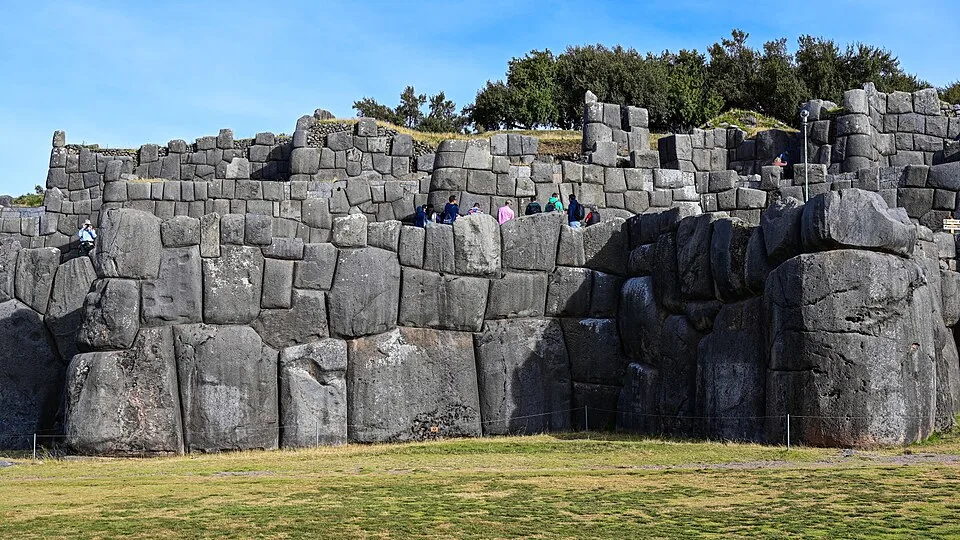
Saqsaywaman, Section of Megalithic Walls
Saqsaywaman, Section of Megalithic Walls | Steve FUNG (CC BY-SA 4.0)
"The fortress of Sacsayhuamán is the greatest work the Incas ever made — walls of stones so large that the Spaniards believed demons must have placed them."
— Pedro Pizarro, Relación del descubrimiento y conquista del Perú, c. 1571 (paraphrase)

The function of the complex is debated. The Spanish, encountering its massive walls, described it as a fortress, and it did serve a decisive military role: during the Inca uprising of 1536, the rebel leader Manco Inca used Sacsayhuamán as a stronghold in the siege of Spanish-held Cusco, and the bitter battle for its towers was one of the turning points of the conquest. However, many scholars now argue that its primary purpose was religious and ceremonial, serving as a sacred precinct and venue for major state rituals, with the defensive aspect secondary.
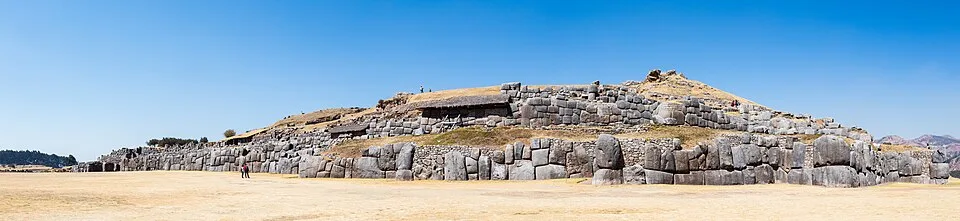
Sacsayhuamán, Cusco, Perú, 2015-07-31, DD 28-30 PAN
Sacsayhuamán, Cusco, Perú, 2015-07-31, DD 28-30 PAN | Diego Delso (CC BY-SA 4.0)

After the conquest, the Spanish systematically dismantled the upper structures and three great towers that once stood on the summit, carting away the smaller, more easily handled stones to build colonial Cusco — its churches and mansions are partly constructed from Sacsayhuamán's masonry. The largest blocks, too heavy to move, were left in place, which is why the megalithic terrace walls survive while the rest of the complex is largely reduced to foundations.
Pourquoi c'est important

Sacsayhuamán is the greatest surviving monument of Inca engineering and the definitive example of the megalithic stonework for which the Inca are renowned. The scale and precision of its walls — multi-tonne irregular blocks fitted seamlessly without mortar, by a civilisation that had no iron tools, no wheel, and no draft animals capable of hauling such loads — pose questions about Andean quarrying, transport, and stone-shaping techniques that continue to drive archaeological research. The site is central to understanding the Inca capital: Cusco was the cosmological and political heart of the largest empire in the pre-Columbian Americas, and Sacsayhuamán was its crowning monument. Its role in the 1536 siege also makes it a key site of the Spanish conquest. It lies within the UNESCO World Heritage Site of the "City of Cusco," inscribed in 1983, and is one of the most visited archaeological sites in Peru.

Preuves et interprétation

Distinguer ce qui est bien établi de ce qui reste débattu.

Faits bien établis

3
  • The megalithic polygonal walls survive in situ with their characteristic mortarless precision fit, directly demonstrating the Inca stone-shaping technique. The largest in-place blocks have been measured and weigh well in excess of 100 tonnes.
  • The role of Sacsayhuamán in the 1536 siege of Cusco is documented by Spanish eyewitness chroniclers, who describe the battle for the towers as a decisive engagement; the event is one of the best-recorded episodes of the conquest period.
  • Excavation has confirmed earlier Killke-culture occupation of the hill predating the Inca construction, establishing that the Inca monumentalised a site already in use.

Inférences savantes

1
  • The blocks are believed to have been quarried nearby and moved using ramps, levers, ropes, and large labour gangs, with final shaping done by abrasion and pounding in place — reconstructed from quarry evidence, unfinished stones, and experimental archaeology, since no Inca written records survive.

Interprétations débattues

1
  • Whether Sacsayhuamán was primarily a fortress or a ceremonial and religious complex is debated. The Spanish called it a fortress, and it functioned defensively in 1536, but the absence of typical fortification features and the presence of ritual spaces lead many scholars to argue its main role was sacred, with military use opportunistic.

Photos de la communauté

Partagez votre expérience

Avez-vous visité ce site ? Téléchargez vos photos pour aider les autres à le découvrir.

Récits liés

Comment citer cette page

Atlas Anatolia. (1100). Sacsayhuamán. Atlas Anatolia. https://atlasanatolia.com/fr/site/sacsayhuaman

Contenu sous licence CC BY-SA 4.0 — attribution requise en cas de réutilisation.

Graphique

Connexions avec des sites et récits associés.

Sources

  • Inca Architecture and Construction at Ollantaytambo — Protzen, Jean-Pierre (1993)
  • The Conquest of the Incas — Hemming, John (1970)

Questions fréquentes

Où se trouve Sacsayhuamán ?

Sacsayhuamán est situé à/en Peru.

De quand date Sacsayhuamán ?

Sacsayhuamán remonte approximativement à 1100 apr. J.-C. – 1536 apr. J.-C..

Quelles civilisations sont associées à Sacsayhuamán ?

Sacsayhuamán est associé à la civilisation Inca.

Pourquoi Sacsayhuamán est-il important ?

Sacsayhuamán is the greatest surviving monument of Inca engineering and the definitive example of the megalithic stonework for which the Inca are renowned.

Sacsayhuamán est-il inscrit au patrimoine mondial de l'UNESCO ?

Oui — Sacsayhuamán est inscrit sur la liste du patrimoine mondial de l'UNESCO.