
Aller au contenu
Atlas Anatolia
ActualitésIce Age teeth in Sulawesi push betel-nut use back as far as 25,000 yearsRoman mosaic and Eros head uncovered in the basilica at Pompeiopolis, Kastamonu
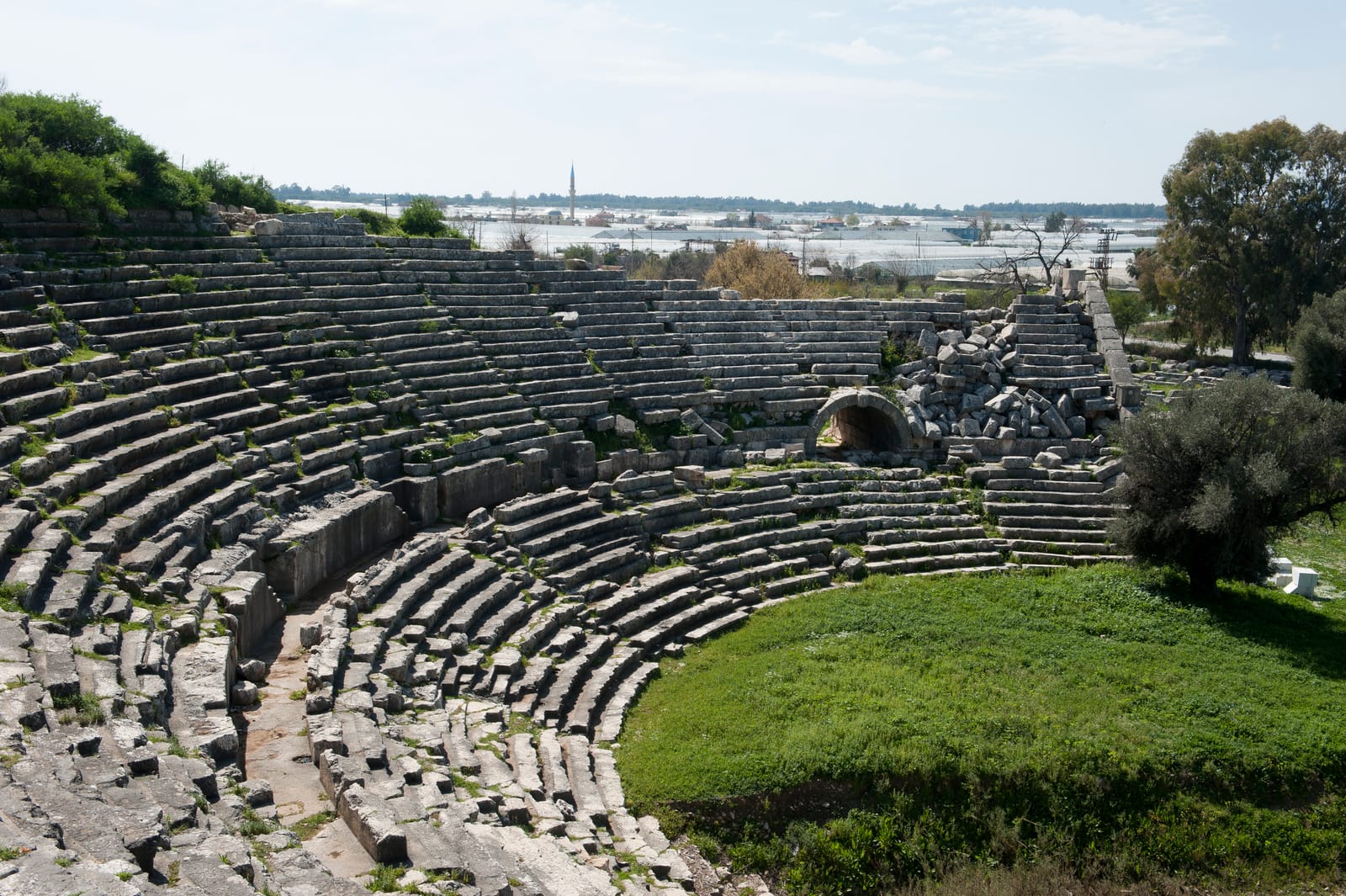
Hellenistic theatre ruins at Letoon sanctuary

Wikimedia Commons (CC BY-SA)

SanctuaireUNESCO

Letoon

Seyfi Cem Baskin

600 av. J.-C. – 300 apr. J.-C.

The federal sanctuary of the Lycian League, dedicated to the goddess Leto, mother of Apollo and Artemis. This UNESCO World Heritage Site near Xanthos yielded the crucial trilingual inscription that helped decipher the Lycian language.

321
Intérêt 45

Localisation

Antalya · Mediterranean · Turquie

36.34°N · 29.32°E · Asie

UNESCO Status

World Heritage Site (1988, with Xanthos)

Key Discovery

Trilingual Inscription (Lycian/Greek/Aramaic)

Temples

Three temples to Leto, Apollo, and Artemis

Political Role

Federal sanctuary of the Lycian League

Theatre Capacity

Approximately 5,000-6,000 spectators, indicating its role for large federal gatherings.

Later Christian Use

A basilica was constructed within the sanctuary precinct in the 5th-6th centuries CE, reusing spolia.

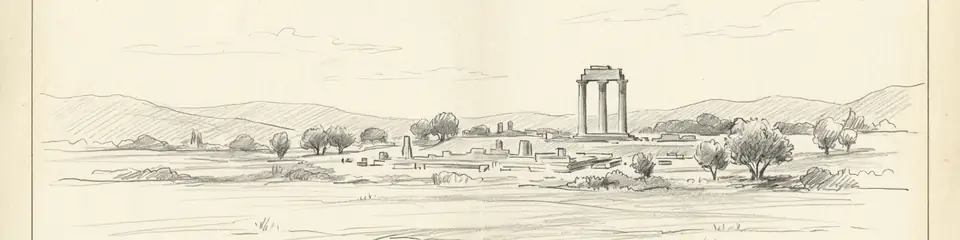
Graphite pencil sketch banner of Letoon

“Letoon's trilingual inscription is one of the key documents in the study of Anatolian languages, providing the parallel texts that enabled scholars to decode the Lycian script.”

De Wikipédia

Letoon is the federal sanctuary of the Lycian League, a UNESCO World Heritage Site near Xanthos, dedicated to Leto and famous for its trilingual inscription.

Lire l'article complet sur Wikipédia →

Localisation

Aperçu

Letoon was the sacred center of the Lycian Federation — the political and religious heart of the Lycian world. Situated in a lush valley near the Xanthos River, the sanctuary was dedicated to the goddess Leto and her divine children Apollo and Artemis. Three temples arranged side by side form the core of the sacred precinct, surrounded by a nymphaeum (fountain house), a large portico, and a Hellenistic theatre.

The largest temple, dedicated to Leto, dates to the late 5th or early 4th century BCE and stands on a raised podium with Ionic columns. The smaller temples to Apollo and Artemis complete the divine triad that was central to Lycian religious identity.

"The Lycians have a temple of Leto, which is the most sacred of all their temples."
— Herodotus, c. 440 BCE

The site's most significant archaeological discovery was the Trilingual Inscription (c. 337 BCE), written in Lycian, Greek, and Aramaic. This text — recording the establishment of a cult — was instrumental in the decipherment of the Lycian language, much as the Rosetta Stone was for Egyptian hieroglyphs.

A large nymphaeum fed by a natural spring remains partially submerged, creating a hauntingly beautiful scene where ancient mosaics depicting birds and geometric patterns lie beneath shallow water — a reminder of the site's connection to water and the goddess's mythology.
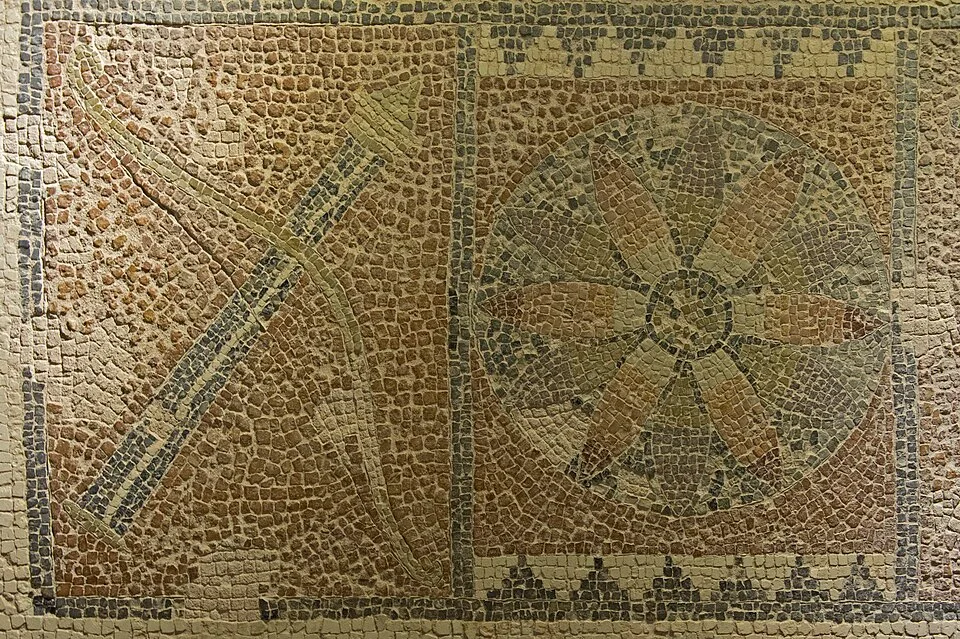
Fethiye museum 7050
Fethiye museum 7050 | Dosseman (CC BY-SA 4.0)

The sanctuary's infrastructure reveals its importance as a bustling federal center. The large nymphaeum, with its elaborate basin and statues, provided water for rituals and visitors, while the adjacent portico (stoa) likely served as a covered market and meeting place during federal gatherings. The theatre, dating to the 2nd century BCE, hosted performances during religious festivals in honor of Leto and her children, which would have drawn citizens from across the Lycian League's member cities.

The site's prosperity continued into the Roman Imperial period, evidenced by repairs and dedications. However, like many pagan sanctuaries, Letoon declined with the rise of Christianity. The temples were systematically abandoned and quarried for building materials. The site was ultimately buried by alluvial deposits from the Xanthos River, which paradoxically helped preserve its remains until their rediscovery by modern archaeology.
Pourquoi c'est important

Letoon's trilingual inscription is one of the key documents in the study of Anatolian languages, providing the parallel texts that enabled scholars to decode the Lycian script. Without this inscription, our understanding of Lycian civilization would be far more limited. As the federal sanctuary of the Lycian League — one of the ancient world's earliest democratic federations — Letoon represents a unique intersection of religion and democratic governance. UNESCO inscribed Letoon alongside Xanthos in 1988, recognizing the paired sites as essential records of Lycian civilization.

Preuves et interprétation

Distinguer ce qui est bien établi de ce qui reste débattu.

Faits bien établis

3
  • The trilingual inscription (c. 337 BCE) in Lycian, Greek, and Aramaic was crucial for deciphering the Lycian language and confirms the sanctuary's federal religious role.
  • Architectural remains of three temples dedicated to Leto, Apollo, and Artemis have been excavated and dated from the 5th to 2nd centuries BCE.
  • Ancient literary sources (Strabo, Appian) identify Letoon as the principal federal sanctuary of the Lycian League.

Inférences savantes

2
  • The natural spring at the site suggests the location may have been considered sacred before the construction of the Lycian temples, given the widespread worship of water sources in Anatolian religions.
  • The large, well-preserved nymphaeum (fountain house) was likely a central feature for ritual purification and votive offerings, given its prominent location and connection to the sacred spring.

Interprétations débattues

1
  • The chronological relationship between the three temples and whether they were part of a unified building program or built incrementally remains debated.

Découverte et fouilles

1962–1990

French Archaeological Mission

Dirigé par Henri Metzger

Henri Metzger led systematic excavations uncovering the temple complex, nymphaeum, and the trilingual inscription.

1990–2010

Continued French-Turkish excavations

Dirigé par Jacques des Courtils

Christian Le Roy and then Jacques des Courtils continued excavations, focusing on the theatre and peripheral structures.

2000

Theatre and Nymphaeum Excavations

Dirigé par French Archaeological Mission (led by Prof. Jacques des Courtils)

Major excavations focused on the Hellenistic theatre and the monumental nymphaeum, clarifying their architectural phases and relationship to the temples.

2010

Conservation work

Ongoing conservation and water management efforts to protect the partially submerged nymphaeum mosaics.

Photos de la communauté

Partagez votre expérience

Avez-vous visité ce site ? Téléchargez vos photos pour aider les autres à le découvrir.

Récits liés

Comment citer cette page

Atlas Anatolia. (600). Letoon. Atlas Anatolia. https://atlasanatolia.com/fr/site/letoon

Contenu sous licence CC BY-SA 4.0 — attribution requise en cas de réutilisation.

Graphique

Connexions avec des sites et récits associés.

Lire l'article complet sur World History Encyclopedia
World History Encyclopedia · CC BY-NC-SA

Sources

  • Le sanctuaire de Letoon et la civilisation lycienne — Henri Metzger (1979)
  • The Lycians in Literary and Epigraphic Sources — Trevor Bryce (1986)
  • Wikipedia — LetoonLien

Questions fréquentes

Où se trouve Letoon ?

Letoon est situé à/en Antalya, Mediterranean, Türkiye.

De quand date Letoon ?

Letoon remonte approximativement à 600 av. J.-C. – 300 apr. J.-C..

Quelles civilisations sont associées à Letoon ?

Letoon est associé à la civilisation Lycian, Greek, Roman.

Pourquoi Letoon est-il important ?

Letoon's trilingual inscription is one of the key documents in the study of Anatolian languages, providing the parallel texts that enabled scholars to decode the Lycian script.

Letoon est-il inscrit au patrimoine mondial de l'UNESCO ?

Oui — Letoon est inscrit sur la liste du patrimoine mondial de l'UNESCO.