
Aller au contenu
Atlas Anatolia
ActualitésIce Age teeth in Sulawesi push betel-nut use back as far as 25,000 yearsRoman mosaic and Eros head uncovered in the basilica at Pompeiopolis, Kastamonu
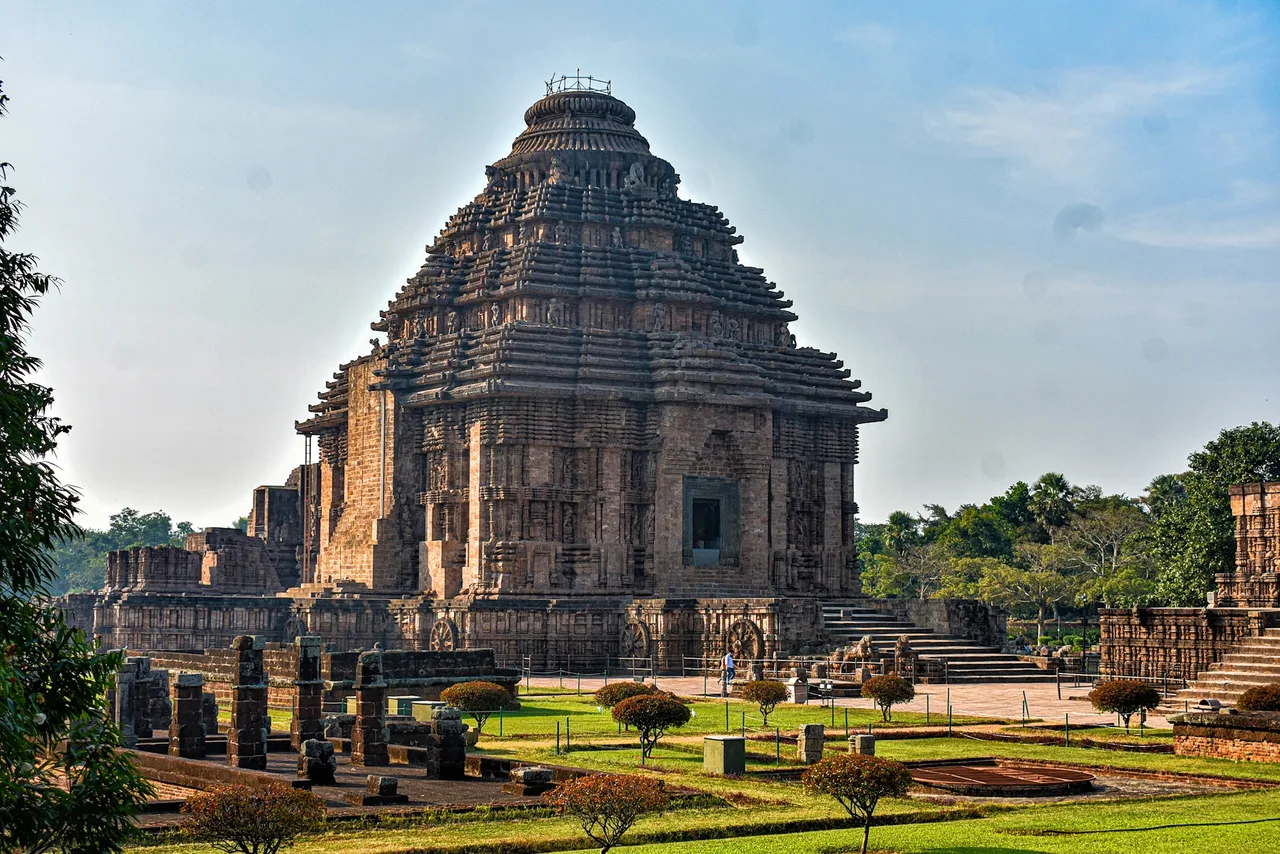
The stone chariot wheels and jagamohana of Konark Sun Temple, Odisha, India

Wikimedia Commons

Country Record

Known by the Most Names in India

TempleUNESCOEn vedette

Konark Sun Temple

Seyfi Cem Baskin

ਕੋਣਾਰਕ ਸੂਰਜ ਮੰਦਰ1244 apr. J.-C. – 1264 apr. J.-C.

A 13th-century masterpiece of Odishan temple architecture conceived as the cosmic chariot of the sun god Surya — its massive stone wheels, rearing horses, and intricate sculptural programme covering every surface make it one of the most extraordinary religious monuments ever built.

31
Intérêt 75

Localisation

Inde

19.89°N · 86.09°E · Asie

Built

c. 1244-1264 CE, by King Narasimhadeva I

Concept

Entire temple conceived as Surya's cosmic chariot

Wheels

24 stone wheels (~3 m diameter each), intricately carved

Sailors' name

"Black Pagoda" — used as a navigation landmark from the sea

Original height

Estimated 70 m (main deul, now collapsed)

UNESCO

World Heritage Site 1984

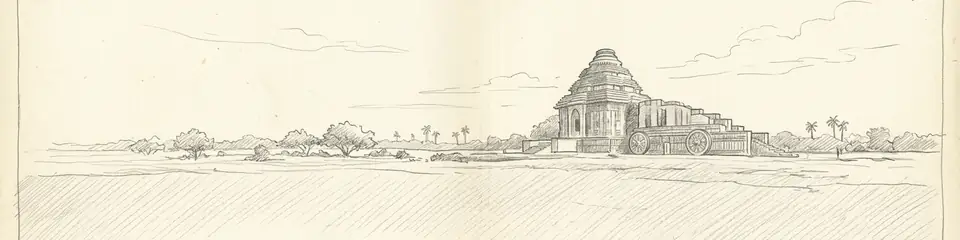
Graphite pencil sketch banner of Konark Sun Temple

“The Konark Sun Temple is the supreme achievement of the Kalinga school of temple architecture and one of the most ambitious architectural conceptions of the medieval world: an entire temple designed as a divine chariot moving through the sky.”

Localisation

Aperçu

Konark Sun Temple stands on the Bay of Bengal coast in Odisha (Orissa), eastern India, approximately 65 kilometres from the state capital Bhubaneswar. It was constructed around 1250 CE by King Narasimhadeva I of the Eastern Ganga dynasty, one of the most powerful rulers of medieval India. The temple was conceived as a colossal stone chariot of the sun god Surya: the entire platform rides on 24 intricately carved stone wheels (each about 3 metres in diameter) pulled by seven rearing horses, representing the seven days of the week.

The scale of the original structure was extraordinary. The main sanctuary (deul) once rose to an estimated height of 70 metres and was visible from the sea — European sailors called it the "Black Pagoda" and used it as a navigation landmark. The dancing hall (jagamohana) still stands at about 40 metres. The temple's exterior is covered from base to top with a dense programme of sculpture: solar deities, celestial musicians and dancers, erotic couples (mithuna), animals, mythological scenes, and an extraordinary series of images of everyday life. The precision and vitality of the carving is unmatched in Indian stone sculpture.

The main deul collapsed at some point between the 16th and 18th centuries — possibly from structural instability, an earthquake, or the removal of the lodestone that reportedly held the central idol in suspension. The surviving jagamohana and subsidiary shrines were designated a UNESCO World Heritage Site in 1984.

Pourquoi c'est important

The Konark Sun Temple is the supreme achievement of the Kalinga school of temple architecture and one of the most ambitious architectural conceptions of the medieval world: an entire temple designed as a divine chariot moving through the sky. Its 24 stone wheels — each a masterpiece of decorative carving — have become one of India's most recognisable symbols, reproduced on the national flag of India's neighbor and inspiring the Ashoka Chakra. The density and quality of the sculptural programme at Konark is without parallel in Indian art: thousands of figures covering every surface, ranging from the cosmic to the erotic to the everyday, constitute an encyclopaedia of medieval Odishan life and religious thought. That such a monument was built in the 13th century — at a time when much of northern India was under the Delhi Sultanate — in a deliberately chosen coastal site visible from the sea speaks to the ambition and confidence of the Eastern Ganga dynasty.

Preuves et interprétation

Distinguer ce qui est bien établi de ce qui reste débattu.

Faits bien établis

3
  • An inscription from the reign of Narasimhadeva I confirms the temple's construction in the mid-13th century; the Eastern Ganga royal chronicles also reference the building.
  • The 24 stone chariot wheels and the bases of the seven horses survive in place, confirming the chariot-temple conception; the wheels are dated by art-historical and contextual analysis to c. 1250 CE.
  • European accounts from the 16th century onward refer to the "Black Pagoda" as a navigation landmark, confirming the main tower's visibility from the Bay of Bengal.

Inférences savantes

1
  • The collapse of the main deul (sanctuary tower) occurred between the 16th and 18th centuries; the cause is debated — structural instability from the removal of the finial, an earthquake, or deliberate demolition are all proposed but unconfirmed.

Photos de la communauté

Partagez votre expérience

Avez-vous visité ce site ? Téléchargez vos photos pour aider les autres à le découvrir.

Comment citer cette page

Atlas Anatolia. (1244). Konark Sun Temple. Atlas Anatolia. https://atlasanatolia.com/fr/site/konark-sun-temple

Contenu sous licence CC BY-SA 4.0 — attribution requise en cas de réutilisation.

Sources

  • Konarak: The Sun Temple of Orissa — Donaldson, Thomas E. (1985)
  • Konarak — Mitra, Debala (1968)

Questions fréquentes

Où se trouve Konark Sun Temple ?

Konark Sun Temple est situé à/en India.

De quand date Konark Sun Temple ?

Konark Sun Temple remonte approximativement à 1244 apr. J.-C. – 1264 apr. J.-C..

Quelles civilisations sont associées à Konark Sun Temple ?

Konark Sun Temple est associé à la civilisation Eastern Ganga Dynasty.

Pourquoi Konark Sun Temple est-il important ?

The Konark Sun Temple is the supreme achievement of the Kalinga school of temple architecture and one of the most ambitious architectural conceptions of the medieval world: an entire temple designed as a divine chariot moving through the sky.

Konark Sun Temple est-il inscrit au patrimoine mondial de l'UNESCO ?

Oui — Konark Sun Temple est inscrit sur la liste du patrimoine mondial de l'UNESCO.