
Aller au contenu
Atlas Anatolia
ActualitésIce Age teeth in Sulawesi push betel-nut use back as far as 25,000 yearsRoman mosaic and Eros head uncovered in the basilica at Pompeiopolis, Kastamonu
Didyma archaeological site

Wikimedia Commons (CC BY-SA)

Country Record

Oldest Temple in Türkiye

Temple

Didyma

Seyfi Cem Baskin

Didim700 av. J.-C. – 400 apr. J.-C.

Site of one of the most important oracles of the ancient world and the colossal Temple of Apollo — one of the largest Greek temples ever attempted, though never completed.

312
Intérêt 57

Localisation

Aydın · Aegean · Turquie

37.39°N · 27.26°E · Asie

Date Range

700 BCE – 400 CE

Province

Aydın

Primary Deity

Apollo

Type of Site

Sanctuary and Oracle

Construction Period

Main temple construction began c. 300 BCE, following earlier archaic structures

Notable Feature

Hellenistic Temple of Apollo, one of the largest Greek temples ever built (c. 118m x 60m), though never completed

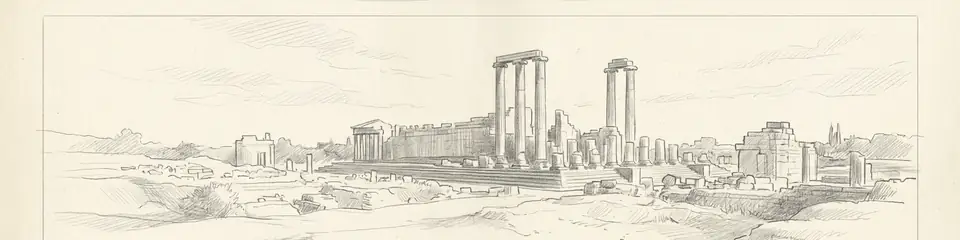
Graphite pencil sketch banner of Didyma

“Didyma matters as one of the most significant sacred landscapes of the ancient Greek world.”

Localisation

Aperçu

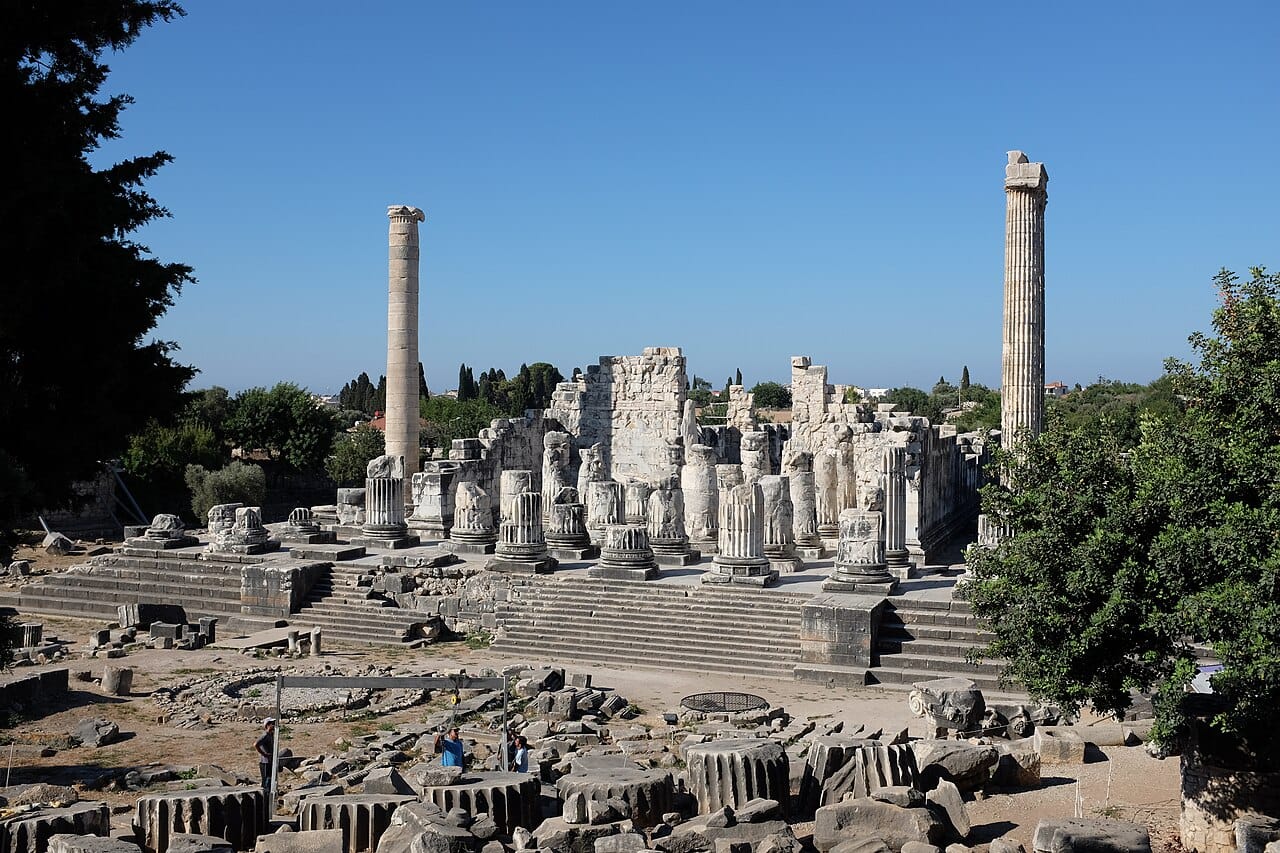
Located on the western coast of Anatolia, near the modern town of Didim, the archaeological site of Didyma was not a city but a sacred sanctuary, part of the great Ionian cultural sphere and administratively linked to the nearby polis of Miletus. Its core is the awe-inspiring Temple of Apollo, the Didymaion, a colossal structure that ranks among the largest and most ambitious Greek temples ever conceived. Built on a vast raised platform, its ruins still convey staggering scale: the temple was dipteral, with a double colonnade of 120 enormous Ionic columns, each standing nearly 20 meters high. Ten of these giants remain upright today. The sanctuary was approached via a monumental sacred way from Miletus, leading to a grand staircase. Unusually, the temple was hypaethral (open to the sky), with a small inner shrine, or naiskos, nestled within a vast, walled courtyard accessible through a towering portal. This architectural complexity, alongside the famous oracular spring and sacred laurel grove within the adyton, created a dramatic setting for prophecy.

Didyma's historical significance stems from its role as one of the most revered oracular centers of the ancient Greek world, standing alongside Delphi and Claros. The oracle of Apollo, delivered by a priestess (the prophetess) who would utter responses while in a trance-like state, guided colonists, influenced political decisions, and drew pilgrims, rulers, and city-states from across the Mediterranean seeking divine counsel. The original Archaic temple was destroyed by the Persians in 494 BC, but the oracle continued in a diminished capacity. Its greatest revival came after Alexander the Great's conquest, when he liberated the sanctuary, and the construction of the present Hellenistic temple began under the Seleucid kings around 300 BC. Work continued for centuries under Roman patronage but was never fully completed, leaving parts of the column drums unfluted and the temple without a conventional roof.

"The temple of Apollo at Didyma is the largest and most magnificent of all temples in Ionia."
— Strabo, Geography (c. 20 CE)

Key structures beyond the main temple include the remains of the lengthy Sacred Way, lined with statues of seated priests and priestesses, which connected the sanctuary to Miletus. Within the temple precinct, one finds the well-preserved foundations of a smaller Temple of Artemis, sister to Apollo. The heart of the oracular ritual was the adyton, a sunken, labyrinthine chamber beneath the temple's eastern porch, accessible only to the priests, which housed the sacred spring. A narrow, vaulted tunnel connected this inner sanctum to the naiskos, allowing the prophetess to descend and the priests to process. The temple's walls and even the column bases are covered in intricate inscriptions and graffiti, including detailed construction accounts and the so-called "oracle texts," providing invaluable insight into its administration and function.

The cultural context of Didyma is deeply rooted in the Ionian Renaissance, a period of immense intellectual and artistic flourishing in western Anatolia. The sanctuary was a central religious and cultural node, its grandeur a statement of Milesian prestige and Hellenistic ambition. The ongoing, centuries-long construction project itself became a form of devotion and a source of local identity. While fundamentally Greek in its deity and practice, the site's deep Anatolian location suggests it may have succeeded an earlier local cult, a common syncretism in the region. Under the Roman Empire, Didyma maintained its prestige, with emperors like Trajan and Hadrian consulting the oracle, ensuring its role as a potent symbol of pagan tradition until its final closure by Christian decree in the late 4th century AD.
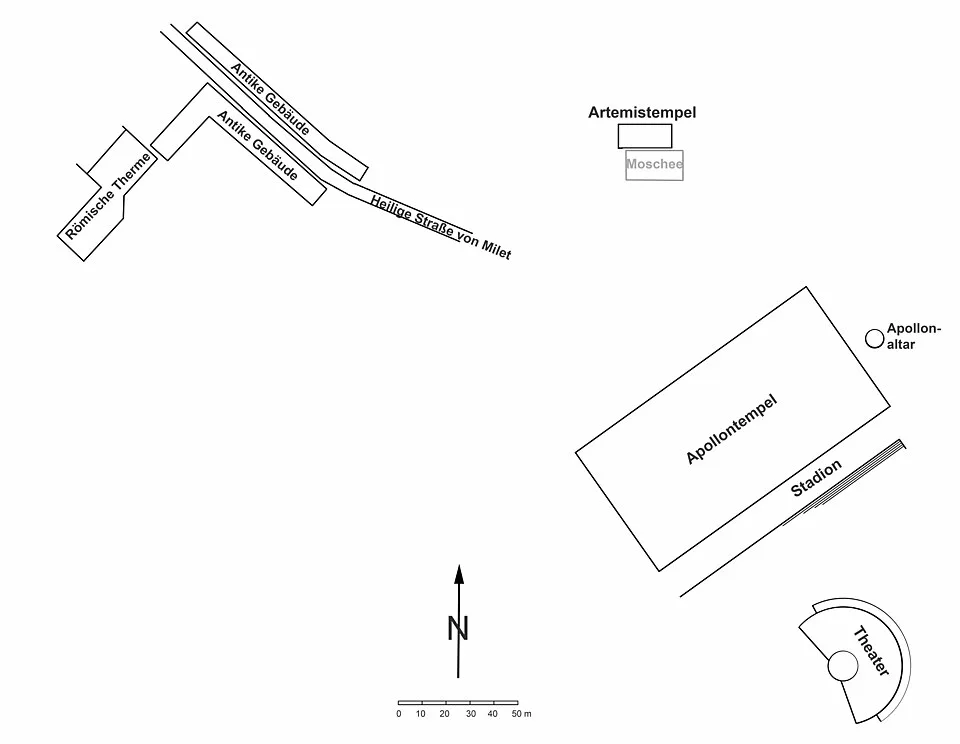
Didyma Map
Didyma Map | Hekataios von Milet (CC BY-SA 4.0)

Pourquoi c'est important

Didyma matters as one of the most significant sacred landscapes of the ancient Greek world. The colossal Temple of Apollo, with its famed oracle, was not just a religious center but a key political and cultural hub, influencing decisions across the Mediterranean for centuries. Its unprecedented scale and innovative architecture, left unfinished, provide archaeologists with a unique "open-air manual" of advanced Hellenistic construction techniques and ritual practice. Its significance extends to cultural heritage, representing the ambition and spiritual reach of Greek civilization in Asia Minor. The site's well-preserved ruins, including the iconic standing columns and sacred way, offer a powerful, tangible connection to ancient prophecy, pilgrimage, and monumental engineering, securing its status as a world-class historical monument.

Preuves et interprétation

Distinguer ce qui est bien établi de ce qui reste débattu.

Faits bien établis

3
  • The colossal Hellenistic Temple of Apollo was constructed on the site of an earlier, smaller Archaic temple destroyed by the Persians in 494 BCE, as confirmed by architectural remains and historical accounts.
  • Didyma functioned as a major oracular sanctuary, with a priestess (prophetess) delivering prophecies, attested by extensive inscriptions detailing oracular responses and the sanctuary's administrative procedures.
  • The Sacred Way connecting Didyma to Miletus, a processional route approximately 17 km long, is archaeologically confirmed by its surviving pavement, milestones, and statues, as excavated by German teams.

Inférences savantes

1
  • The temple's adyton (inner sanctuary) contained a sacred spring or well, inferred from ancient descriptions and the presence of a subterranean chamber, which likely played a role in the oracular ritual.

Interprétations débattues

2
  • The exact reasons why the colossal Hellenistic temple was never fully completed and roofed are debated, with theories ranging from financial and engineering challenges to a decline in the oracle's importance or political instability.
  • The function and symbolic meaning of the two monumental, vaulted staircases within the temple's adyton are debated, with interpretations ranging as a purely architectural feature for structural support to a ritual pathway for the prophetess.

Découverte et fouilles

1765

First Modern Documentation

Dirigé par Richard Chandler (Society of Dilettanti)

The English Society of Dilettanti sponsored an expedition led by Richard Chandler, who produced the first detailed architectural drawings and descriptions of the temple's standing ruins for the Western scholarly world.

1858

Initial Systematic Excavations

Dirigé par Charles Thomas Newton (British Museum)

First systematic excavations at the Temple of Apollo, led by the British, focusing on clearing the temple's interior and uncovering inscriptions.

1905

German Excavations Begin

Dirigé par Theodor Wiegand (Berlin Museums)

Long-term archaeological project initiated by German teams, involving extensive clearing, architectural study, and excavation of the sanctuary's surrounding structures.

1962

Resumption of Major Excavations

Dirigé par German Archaeological Institute (DAI)

Renewed, ongoing excavations by the German Archaeological Institute, leading to major discoveries about the site's layout, earlier phases, and the sacred way.

Photos de la communauté

Partagez votre expérience

Avez-vous visité ce site ? Téléchargez vos photos pour aider les autres à le découvrir.

Récits liés

Comment citer cette page

Atlas Anatolia. (700). Didyma. Atlas Anatolia. https://atlasanatolia.com/fr/site/didyma

Contenu sous licence CC BY-SA 4.0 — attribution requise en cas de réutilisation.

Graphique

Connexions avec des sites et récits associés.

Lire l'article complet sur World History Encyclopedia
World History Encyclopedia · CC BY-NC-SA

Sources

  • Wikipedia — DidymaLien

Questions fréquentes

Où se trouve Didyma ?

Didyma est situé à/en Aydın, Aegean, Türkiye.

De quand date Didyma ?

Didyma remonte approximativement à 700 av. J.-C. – 400 apr. J.-C..

Quelles civilisations sont associées à Didyma ?

Didyma est associé à la civilisation Greek, Roman.

Pourquoi Didyma est-il important ?

Didyma matters as one of the most significant sacred landscapes of the ancient Greek world.

Didyma est-il inscrit au patrimoine mondial de l'UNESCO ?

Didyma n'est pas actuellement inscrit sur la liste du patrimoine mondial de l'UNESCO.