
Aller au contenu
Atlas Anatolia
ActualitésIce Age teeth in Sulawesi push betel-nut use back as far as 25,000 yearsRoman mosaic and Eros head uncovered in the basilica at Pompeiopolis, Kastamonu
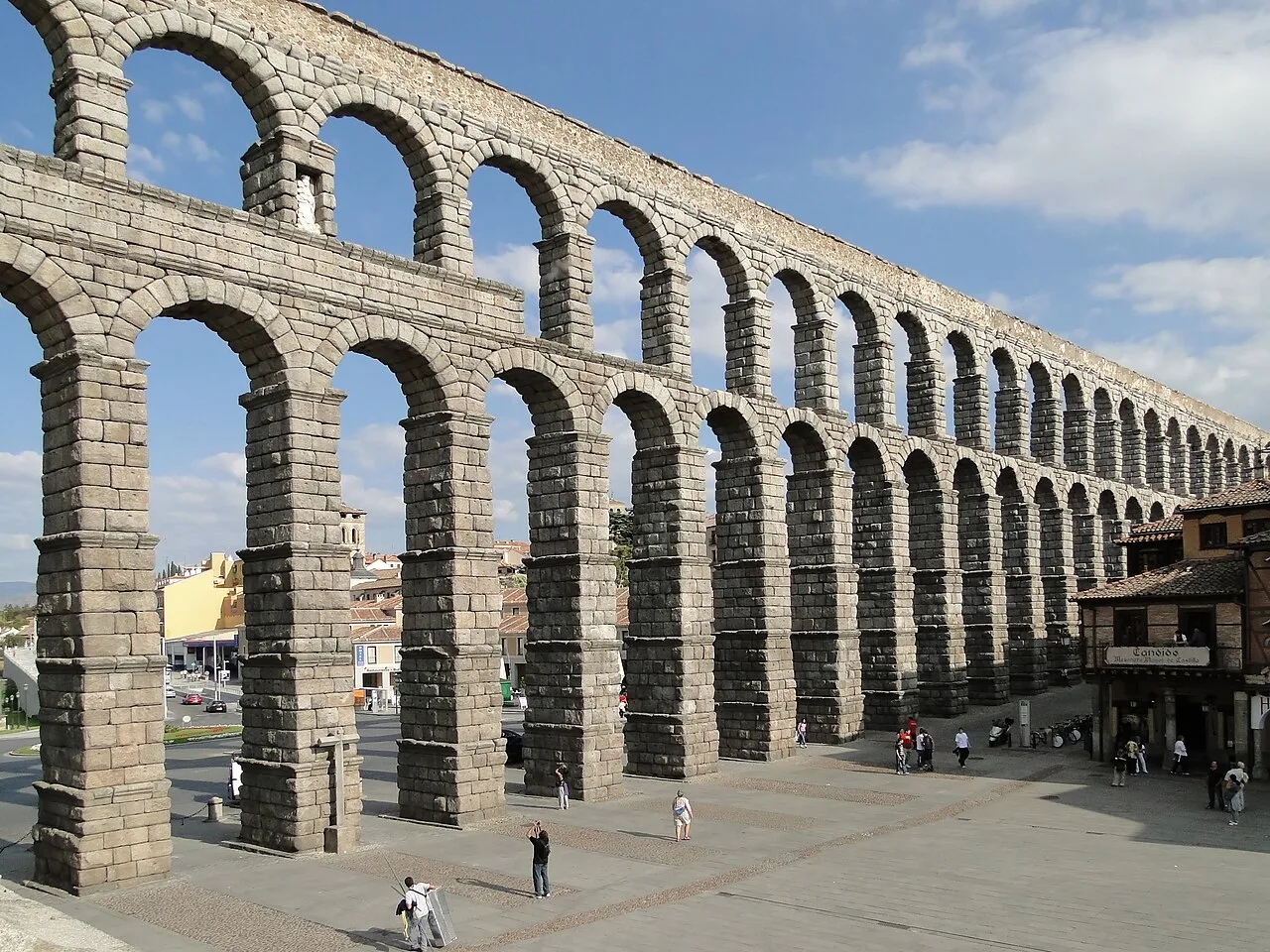
The double-tiered arches of the Roman Aqueduct of Segovia, Spain

Wikimedia Commons

Country Record

Longest Recorded History in Spain

MonumentUNESCOEn vedette

Aqueduct of Segovia

Seyfi Cem Baskin

Acueducto de Segovia50 apr. J.-C. – 120 apr. J.-C.

One of the best-preserved Roman aqueducts anywhere — a towering double-tiered arcade of some 25,000 unmortared granite blocks striding across the heart of Segovia in central Spain. Built around the late 1st century CE, it carried water more than 15 kilometres from the Frío River and remained in use into the 20th century.

311
Intérêt 66

Localisation

Espagne

40.95°N · 4.12°W · Europe

Built

Late 1st – early 2nd century CE (Flavian/Trajanic)

Height

Up to 28.5 m at the Plaza del Azoguejo

Construction

~25,000 unmortared granite blocks; 167 arches in the main run

Source

Frío River, ~17 km away

In use until

Carried water into the 19th–20th century

UNESCO

Old Town of Segovia and its Aqueduct (1985)

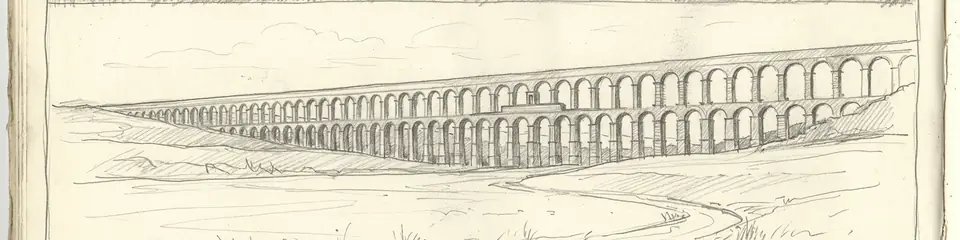
Graphite pencil sketch banner of Aqueduct of Segovia

“The Aqueduct of Segovia is among the supreme surviving achievements of Roman hydraulic engineering and one of the most spectacular Roman structures still standing in Europe.”

Localisation

Aperçu

The Aqueduct of Segovia spans the Plaza del Azoguejo in the centre of the old city of Segovia, in the Castile and León region of central Spain. It is the most monumental and best-preserved Roman aqueduct on the Iberian Peninsula, and one of the most complete to survive anywhere in the former Roman world. The structure carried water from the Frío River in the Guadarrama mountains, gathering it about 17 kilometres away and channelling it by a gently sloping conduit to the city.

The visible monument is the elevated section that crosses the valley at the city's edge: a two-tiered arcade of superimposed arches that reaches a maximum height of about 28.5 metres above the lowest point of the plaza. It is built of roughly 25,000 blocks of local unmortared granite, held in place by nothing but their own weight and precise cutting — there is no mortar, clamp, or cement anywhere in the arcade. The longest and tallest stretch comprises 167 arches.

The aqueduct's exact construction date is debated but is generally placed in the late 1st or early 2nd century CE, under the Flavian emperors or Trajan. A monumental inscription once ran along the attic in bronze letters, now lost, leaving only the holes that anchored them; attempts to reconstruct the text have not produced a secure date. Two niches on the structure later held Christian statues, including one of the Virgin.

Remarkably, the aqueduct continued to deliver water to Segovia until the second half of the 19th century, and parts of the system functioned into the 20th. Its survival is owed both to the quality of its engineering and to continuous maintenance through the medieval and modern periods, including repairs under the Catholic Monarchs in the late 15th century that rebuilt arches damaged during Moorish rule.

Pourquoi c'est important

The Aqueduct of Segovia is among the supreme surviving achievements of Roman hydraulic engineering and one of the most spectacular Roman structures still standing in Europe. That it was built entirely of dry-laid granite — tens of thousands of blocks balanced without mortar — and remained functional for some eighteen centuries is a testament to the precision and durability of Roman civil engineering. As a monument it has become the very emblem of Segovia, dominating the city it was built to serve. It is the centrepiece of the UNESCO World Heritage Site "Old Town of Segovia and its Aqueduct," inscribed in 1985.

Preuves et interprétation

Distinguer ce qui est bien établi de ce qui reste débattu.

Faits bien établis

3
  • The arcade is built of dry-laid granite ashlar with no mortar, confirmed by direct examination — the blocks are held by their own weight and precise cutting.
  • The attic once carried a bronze dedicatory inscription, evidenced by the surviving anchor holes for the letters; the text itself is lost.
  • Late-15th-century repairs under the Catholic Monarchs rebuilt a series of arches, documented in records and visible in the masonry of the reconstructed section.

Inférences savantes

1
  • The water was gathered from the Frío River and conducted via a long channel with settling tanks (such as the Caserón) before reaching the elevated arcade — reconstructed from the surviving conduit remains.

Interprétations débattues

1
  • The precise construction date is debated. Lacking the inscription, scholars place it variously under Domitian, Nerva, or Trajan (late 1st to early 2nd century CE) on stylistic and archaeological grounds.

Photos de la communauté

Partagez votre expérience

Avez-vous visité ce site ? Téléchargez vos photos pour aider les autres à le découvrir.

Comment citer cette page

Atlas Anatolia. (50). Aqueduct of Segovia. Atlas Anatolia. https://atlasanatolia.com/fr/site/aqueduct-of-segovia

Contenu sous licence CC BY-SA 4.0 — attribution requise en cas de réutilisation.

Sources

  • The Aqueduct of Segovia — Hauck, George F. W. (1988)
  • Roman Aqueducts and Water Supply — Hodge, A. Trevor (2002)

Questions fréquentes

Où se trouve Aqueduct of Segovia ?

Aqueduct of Segovia est situé à/en Spain.

De quand date Aqueduct of Segovia ?

Aqueduct of Segovia remonte approximativement à 50 apr. J.-C. – 120 apr. J.-C..

Quelles civilisations sont associées à Aqueduct of Segovia ?

Aqueduct of Segovia est associé à la civilisation Roman.

Pourquoi Aqueduct of Segovia est-il important ?

The Aqueduct of Segovia is among the supreme surviving achievements of Roman hydraulic engineering and one of the most spectacular Roman structures still standing in Europe.

Aqueduct of Segovia est-il inscrit au patrimoine mondial de l'UNESCO ?

Oui — Aqueduct of Segovia est inscrit sur la liste du patrimoine mondial de l'UNESCO.