
Saltar al contenido
Atlas Anatolia
NoticiasIce Age teeth in Sulawesi push betel-nut use back as far as 25,000 yearsRoman mosaic and Eros head uncovered in the basilica at Pompeiopolis, Kastamonu
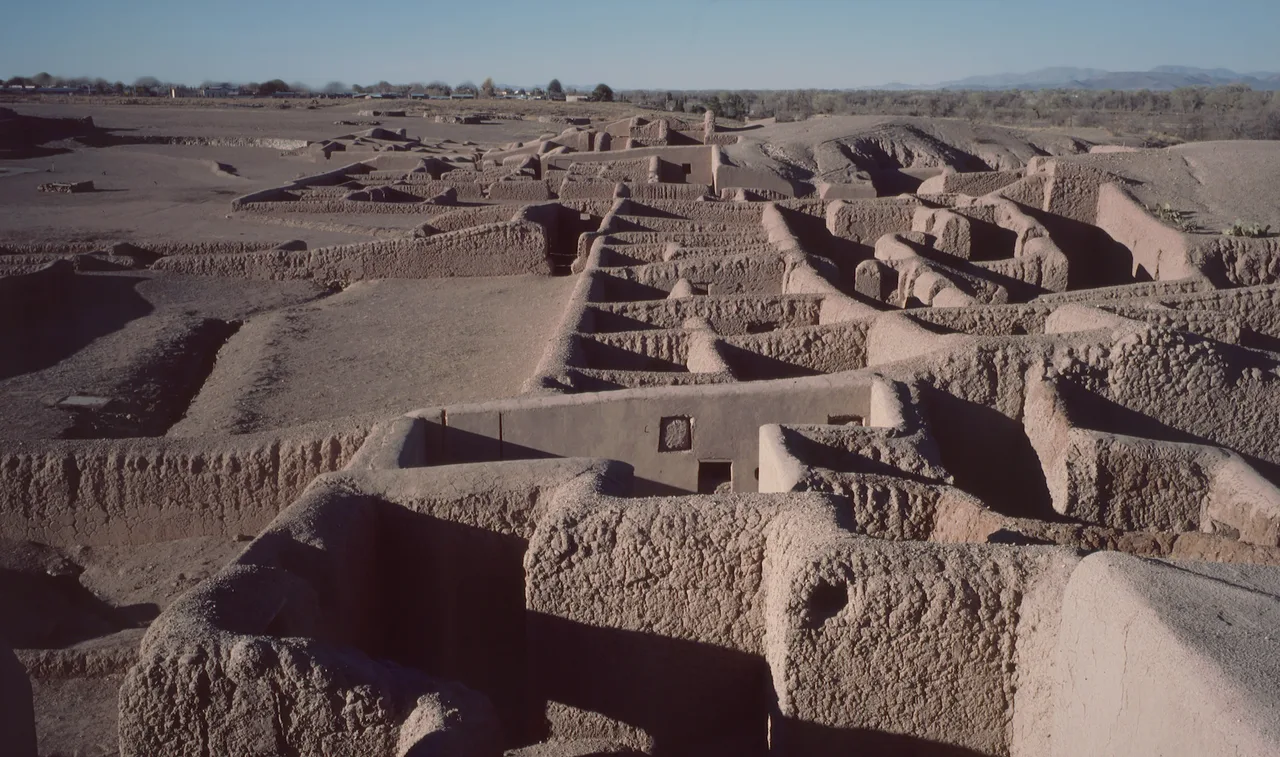
Multi-storey adobe ruins at Paquime (Casas Grandes), Chihuahua, Mexico

Wikimedia Commons

Récord continental

Oldest Settlement in North America

AsentamientoUNESCO

Paquime (Casas Grandes)

Seyfi Cem Baskin

Paquime700 d. C. – 1450 d. C.

The most spectacular prehistoric city in northern Mexico and the American Southwest — a multi-storey adobe complex in Chihuahua that served as a trading metropolis connecting the Pueblo cultures of the north with Mesoamerica to the south, famous for its macaw aviaries, ball courts, and extraordinary pottery.

31
Interés 55

Ubicación

México

30.37°N · 107.95°W · América del Norte

Period

c. 700-1450 CE; peak c. 1200-1450

Role

Trading hub linking Pueblo Southwest to Mesoamerica

Macaws

Large-scale aviaries for raising scarlet macaws for feather trade

Pottery

Casas Grandes polychrome — among the finest ceramics in North America

Water

3 km stone-lined aqueduct supplying fresh water to the city

UNESCO

World Heritage Site 1998

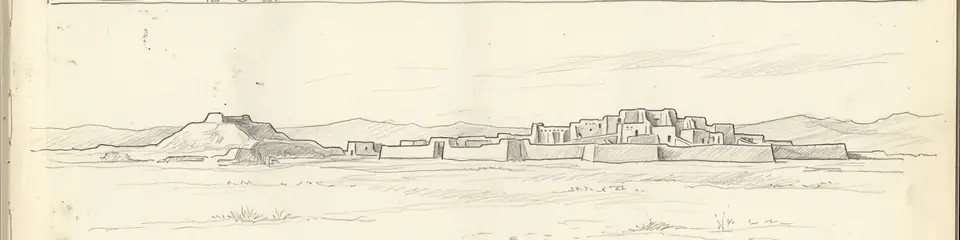
Graphite pencil sketch banner of Paquime (Casas Grandes)

Paquime is the critical missing link in understanding the cultural corridor between Mesoamerica and the American Southwest.”

Ubicación

Resumen

Paquime, also known as Casas Grandes, stands in the Casas Grandes River valley in the northern Mexican state of Chihuahua, about 300 kilometres south of the US border. Inhabited from approximately 700 to 1450 CE, it reached its greatest importance between 1200 and 1450 CE, when it functioned as a major commercial and ceremonial hub connecting the Ancestral Pueblo cultures of the American Southwest to Mesoamerican civilisations further south.

At its peak, Paquime was a multi-storey adobe compound covering many hectares and housing several thousand people. The architecture — tall mud-brick buildings with T-shaped doorways, interior plazas, and interconnected rooms — resembles the Pueblo great houses of Chaco Canyon and Mesa Verde but on a grander scale. The city had an elaborate water supply system: stone-lined aqueducts and drainage channels brought water from a spring 3 kilometres away. Remnants of large pens for keeping scarlet macaws have been identified — these tropical birds, native to southern Mexico, were evidently raised at Paquime and their feathers traded north for use in Pueblo ceremonial regalia.

Paquime is also famous as the origin of Casas Grandes polychrome pottery — among the most beautiful and technically accomplished ceramics in the pre-Columbian world. The pots feature bold geometric designs and effigy forms painted in black, white, and red on a cream slip with extraordinary precision. The city was destroyed around 1450 CE, possibly by warfare with neighbouring groups, and was inscribed as a UNESCO World Heritage Site in 1998.

Por qué es importante

Paquime is the critical missing link in understanding the cultural corridor between Mesoamerica and the American Southwest. It explains how turquoise from New Mexico reached Teotihuacan and the Aztec capital, how copper bells, macaw feathers, and shell ornaments moved north to Chaco Canyon and Mesa Verde, and how ideas about ballcourts and plaza architecture diffused between the two great cultural areas of North America. The Casas Grandes polychrome pottery produced here represents the highest achievement of ceramic art in northern Mexico and the Southwest — a tradition so distinctive that its sherds serve as chronological and cultural markers across a thousand kilometres. Paquime also challenges the narrative that north of the Rio Grande, pre-Columbian cultures were simple compared to Mesoamerica: this city was a sophisticated, cosmopolitan commercial centre by any standard.

Evidencia e interpretación

Distinguir lo bien establecido de lo que sigue en debate.

Hechos bien establecidos

3
  • Large adobe pens with perches identified as macaw aviaries have been excavated; scarlet macaw bones (Ara macao, native to tropical Mexico) confirm the birds were raised at the site for feather production.
  • A 3-kilometre stone-lined aqueduct bringing water from a spring to the city has been traced by archaeological survey; associated cisterns and drainage channels confirm a planned water management system.
  • Casas Grandes polychrome pottery is found at sites across the Southwest (Arizona, New Mexico, Texas) and in Mesoamerica, confirming the city's role as a trading centre; copper bells, turquoise, and shell ornaments document the direction and content of exchange.

Inferencias académicas

1
  • Destruction of the city around 1450 CE shows evidence of burning and violence, suggesting attack rather than gradual abandonment; the identity of the attackers is unknown.

Fotos de la comunidad

Comparte tu experiencia

¿Has visitado este sitio? Sube tus fotos para ayudar a otros a descubrirlo.

Cómo citar esta página

Atlas Anatolia. (700). Paquime (Casas Grandes). Atlas Anatolia. https://atlasanatolia.com/es/site/paquime

Contenido bajo licencia CC BY-SA 4.0 — se requiere atribución al reutilizar.

Fuentes

  • Casas Grandes: A Fallen Trading Center of the Gran Chichimeca (8 vols)Di Peso, Charles C. (1974)
  • Casas Grandes and the Greater SouthwestMinnis, Paul & Whalen, Michael (eds) (2015)

Preguntas frecuentes

¿Dónde se encuentra Paquime (Casas Grandes)?

Paquime (Casas Grandes) se encuentra en Mexico.

¿Qué antigüedad tiene Paquime (Casas Grandes)?

Paquime (Casas Grandes) se fecha aproximadamente en 700 d. C. – 1450 d. C..

¿Qué civilizaciones se relacionan con Paquime (Casas Grandes)?

Paquime (Casas Grandes) se relaciona con Mogollon.

¿Por qué es importante Paquime (Casas Grandes)?

Paquime is the critical missing link in understanding the cultural corridor between Mesoamerica and the American Southwest.

¿Paquime (Casas Grandes) es Patrimonio Mundial de la UNESCO?

Sí. Paquime (Casas Grandes) está inscrito en la Lista del Patrimonio Mundial de la UNESCO.