There is a paradox at the heart of Hittite history. The Hittites were, by any reasonable measure, one of the great powers of the ancient world. They signed treaties with Egypt, defeated armies from Mesopotamia, and controlled one of the largest territories of the second millennium BCE. Yet they were so completely forgotten after their collapse that, as recently as the 1880s, most scholars had never heard of them.
The Forgotten Empire
"The Sun-goddess of Arinna is queen of all lands. In the land of Hatti she bears the name Sun-goddess of Arinna."
— Hittite Prayer Text, c. 1400 BCE
The reason is simple: the Hittites left no direct successors who preserved their memory. When their empire collapsed around 1200 BCE as part of the broader Bronze Age Collapse, it vanished so thoroughly that three thousand years of history simply ceased to exist in collective memory. Egyptian records mentioned a people called the Kheta. The Hebrew Bible referenced the Hittites as one of the peoples of Canaan. But no one connected these scattered references to a major power that had once challenged Egypt at the Battle of Kadesh.
The rediscovery began in 1906, when German archaeologist Hugo Winckler excavated a site in north-central Anatolia called Boğazköy and found a royal archive of over ten thousand clay tablets. The tablets were written in a language no one had seen before. By 1915, the Czech scholar Bedřich Hrozný had decoded enough of the tablets to announce an astonishing conclusion: the Hittites had spoken an Indo-European language, making them among the earliest known speakers of the family that would produce Greek, Latin, Sanskrit, and most modern European tongues.
Hattusha: The Imperial Capital
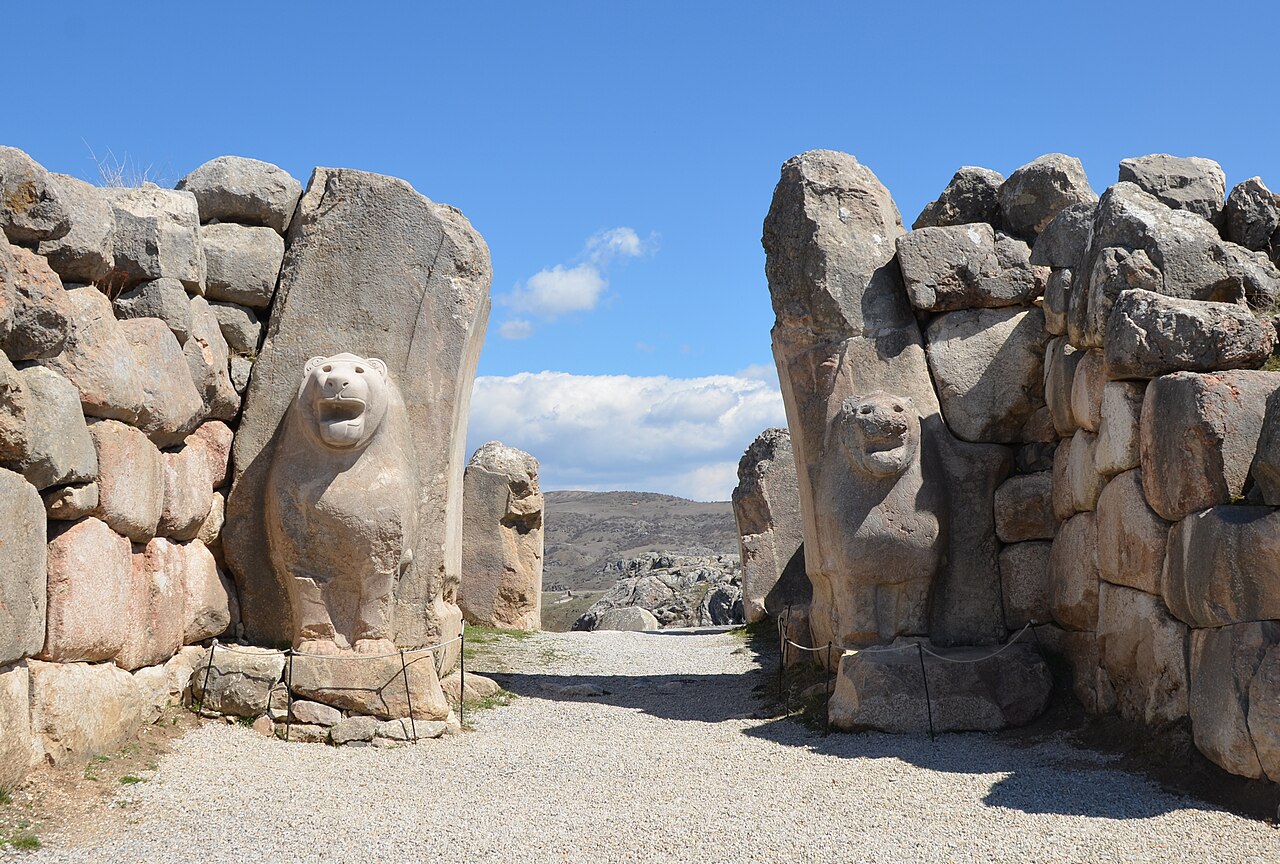
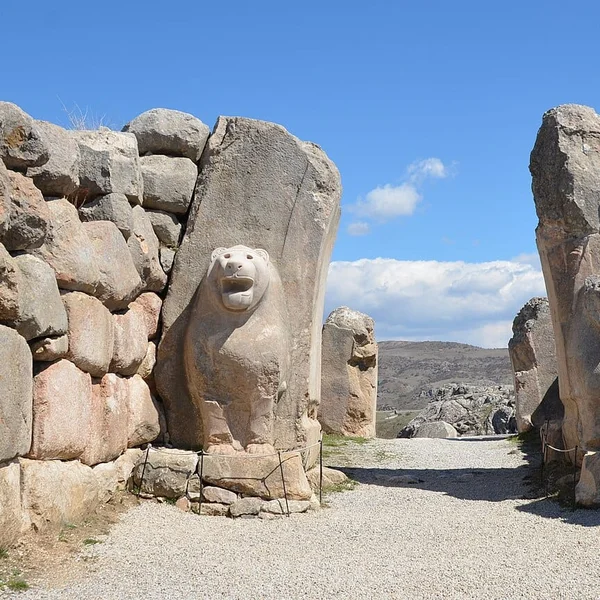
!The Lion Gate at Hattusha, capital of the Hittite Empire")
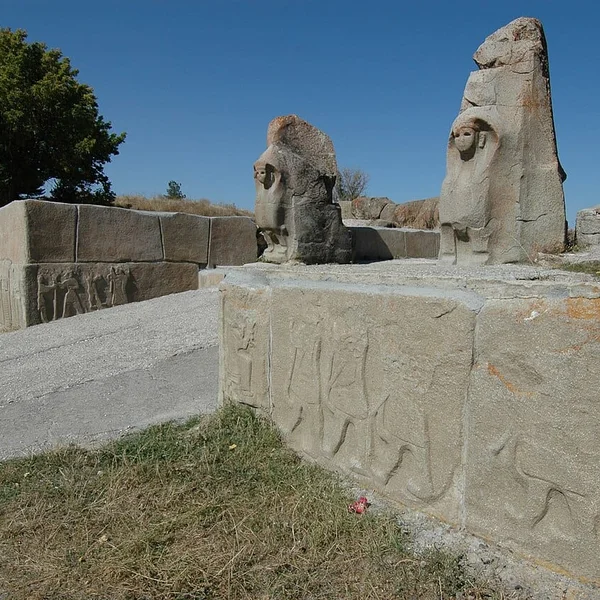
The site at Boğazköy is ancient Hattusha, the Hittite capital. It is one of the most atmospheric archaeological sites in the world — not because it is well-preserved in the conventional sense, but because of the scale of what remains. The city walls once enclosed more than 1,800 hectares. The Lion Gate, with its massive carved lion protomes flanking the entrance, still stands. The Sphinx Gate commands a view over the landscape that suggests something of the original monumentality.
The archive that Winckler found tells us an enormous amount about how the Hittite empire functioned. There are administrative records, correspondence with foreign kings including letters in Akkadian to the Egyptian pharaoh, diplomatic treaties, and mythological texts that contain some of the earliest known narrative literature in any language.
The Battle of Kadesh and the Earliest Surviving Peace Treaty
In 1274 BCE, the Hittite king Muwatalli II led an army into battle against Ramesses II of Egypt at Kadesh in modern Syria. The battle was fought to a draw — each side claimed victory — but its aftermath produced something remarkable: the earliest surviving bilateral peace treaty in recorded history.
The Treaty of Kadesh, signed around 1259 BCE between Muwatalli's successor Hattusili III and Ramesses, established a non-aggression pact, provided for the extradition of refugees, and included clauses about mutual aid in case of third-party attack. Copies of the treaty were found both in the Hittite archives and in the Egyptian records at Karnak. A reproduction hangs today in the United Nations headquarters in New York, chosen as a symbol of early international diplomacy.
Yazilikaya: The Sacred Landscape
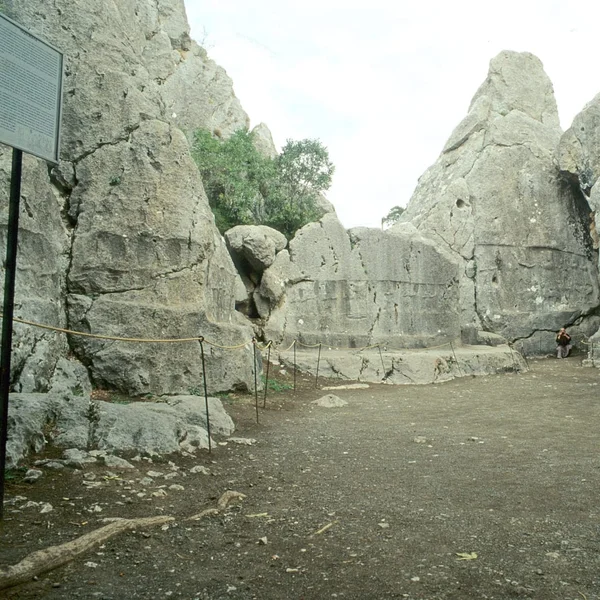
!Rock relief carvings in Chamber A at Yazılıkaya")
A few kilometers from Hattusha lies Yazilikaya — a rock sanctuary where the Hittites carved one of the most remarkable religious tableaus in the ancient world. Two natural rock chambers contain processions of gods in relief: more than sixty divine figures in the main chamber, led toward the central meeting of the storm god Teshub and the sun goddess Arinniti. In the smaller chamber, a relief shows King Tudhaliya IV embraced by his protective deity.
Walking among the carvings, you move through a Hittite conception of the divine world — a pantheon so large that Hittite texts describe it as containing "a thousand gods." This cosmological plurality, drawn from Hurrian, Mesopotamian, and older Anatolian traditions, is one of the Hittites' most distinctive features. They were, to an unusual degree, religious synthesizers.
Troy: The Western Frontier
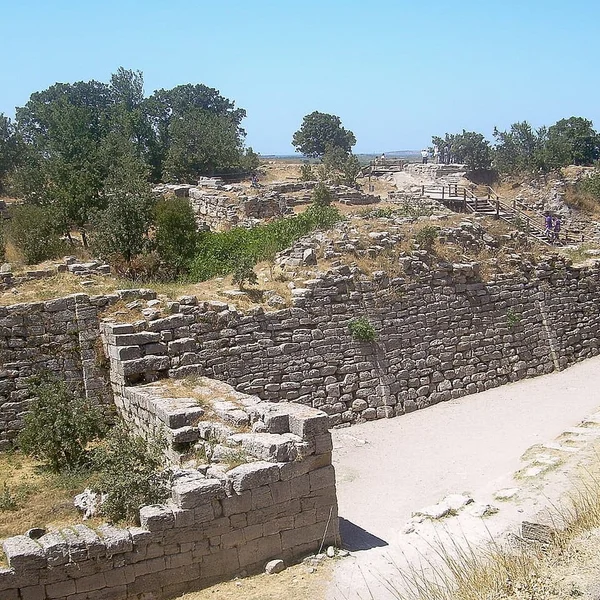
!Fortification walls at Troy (Hisarlık)")
Whether the Trojan War was historical has been debated since antiquity. What is clear is that the site of Hisarlik on the Aegean coast was a prosperous Bronze Age city — Troy VI and Troy VIIa, the layers most plausibly connected to any historical conflict, date to the right period. Hittite records mention a powerful western neighbor called Wilusa, which many scholars identify with Ilios, the Greek name for Troy. A letter from a Hittite king to the king of Ahhiyawa, probably Mycenaean Greece, discusses political tensions over Wilusa.
The Hittites were at the edge of the world they knew. To the west lay the Greek world. To the east, Assyria and Mesopotamia. To the south, Egypt. The empire managed its frontiers through diplomacy, marriage alliances, and occasional warfare for three centuries before the cascade of the Bronze Age Collapse swept it away.
After the Fall
The Hittite empire did not disappear entirely. In southeastern Anatolia and northern Syria, a group of kingdoms emerged that preserved Hittite artistic and cultural traditions for several more centuries. These Neo-Hittite states — Carchemish, Malatya, Karatepe — kept the Luwian hieroglyphic script alive and produced some of the finest relief carving of the Iron Age before being absorbed by the Assyrian empire.
The Hittites remind us how much of the ancient world is still in the process of being rediscovered. A major empire, contemporary with the height of Mycenaean Greece and New Kingdom Egypt, was simply lost for three millennia. What else remains beneath the ground, waiting for the equivalent of another Hugo Winckler?
Türkiye
Troy
Nine settlement layers at Hisarlık in northwestern Türkiye, where Heinrich Schliemann dug for Homer's Troy and
Türkiye
Hattusha
Capital of the Hittite Empire, one of the great powers of the Late Bronze Age. Features massive fortifications
Türkiye
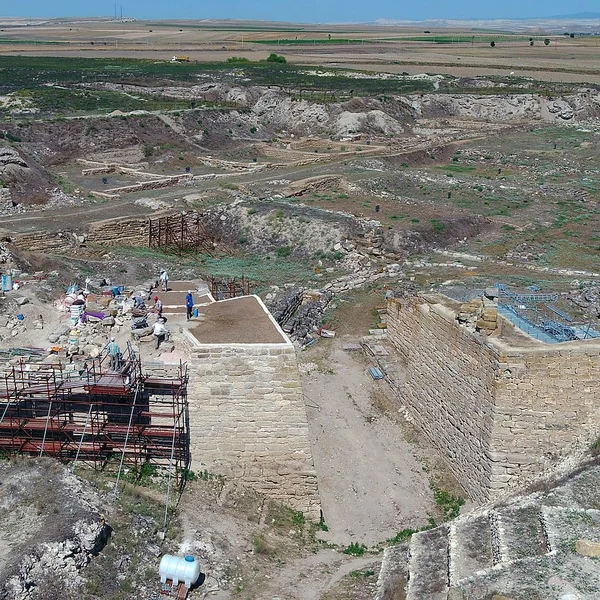
Gordion
Capital of ancient Phrygia, famous for the legend of the Gordian Knot and the monumental tumulus believed to b
Türkiye
Yazilikaya
The most important Hittite open-air rock sanctuary, featuring elaborate relief carvings of the entire Hittite
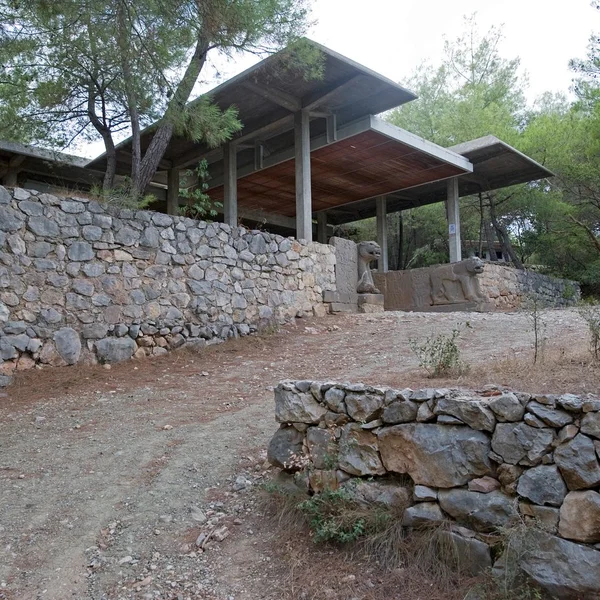
Türkiye
Karatepe-Aslantas
A Neo-Hittite fortress guarding the Cilician Gates whose bilingual inscription in Phoenician and Hieroglyphic