
Skip to content
Atlas AnatoliaAtlas Anatolia
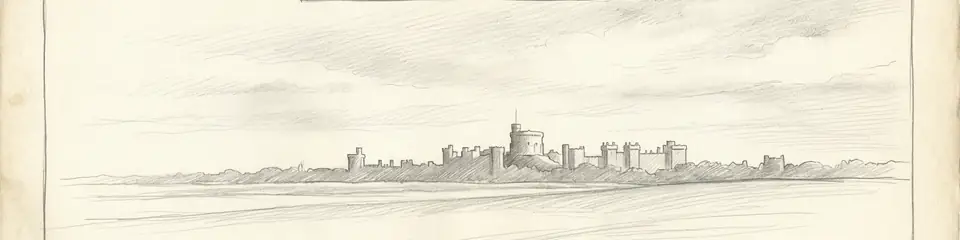
Windsor Castle Round Tower and Upper Ward above the Thames valley

Wikimedia Commons (CC BY-SA 2.0)

HeritageFortressFeatured

Windsor Castle

1070 CE – 2024 CE

The oldest and largest inhabited castle in the world — Norman motte, Gothic St George’s Chapel, and continuously occupied royal apartments west of London — ranks second among monument pageview gaps after St. Peter’s in our EN/DE/TR/ZH audit.

21
Interest 86

Location

United Kingdom

51.48°N · 0.60°W · Europe

Founded

c. 1070, William the Conqueror

St George’s Chapel

Perpendicular Gothic; Order of the Garter

Fire

1992; apartments restored by 1997

Status

Official residence of the British monarch

Windsor encapsulates almost a millennium of English royal architecture without abandoning continuous habitation — rare among European fortresses.”

Location

Overview

Windsor Castle crowning a chalk bluff above the Thames began as a motte-and-bailey under William the Conqueror c. 1070. Henry II rebuilt the stone Round Tower; Edward III founded the Order of the Garter and remodelled the Upper Ward; the late-medieval St George’s Chapel became England’s finest Perpendicular royal chapel. George IV and later Victorian restorations fused medieval silhouette with State Apartments still used by the British monarchy.

The 1992 fire destroyed several State Apartments, prompting a major reconstruction completed by 1997. The castle remains an official residence and a working ceremonial stage for Garter Day and royal weddings. Pair with the Tower of London and Westminster Abbey for the Norman-to-Gothic arc of English state power.

Why It Matters

Windsor encapsulates almost a millennium of English royal architecture without abandoning continuous habitation — rare among European fortresses. St George’s Chapel and the Round Tower are primary documents for medieval chivalric and later constitutional monarchy.

Stay curious

New stories and sites, once a month. No spam.

Evidence & Interpretation

Distinguishing what is well-established from what remains debated.

Well-Established Facts

2
  • Domesday-era and Pipe Roll references, masonry phasing, and Garter chapel accounts document continuous royal use from the Norman period.
  • Post-1992 archaeological watching briefs and restoration records map fire damage and reconstruction fabrics.

Scholarly Inferences

1
  • Edward III’s works deliberately tied the castle’s image to Arthurian and chivalric propaganda after Crécy.

More Photos

Museum Artifacts

Community Photos

Share your experience

Have you visited this site? Upload your photos to help others discover it.

How to cite this page

Atlas Anatolia. (1070). Windsor Castle. Atlas Anatolia. https://atlasanatolia.com/site/windsor-castle

Content licensed CC BY-SA 4.0 — attribution required when reusing.

Sources

  • Windsor Castle: A Short HistoryRobinson, John Martin (1996)
  • The Royal Palaces of Tudor EnglandThurley, Simon (1993)

Research Papers

Frequently Asked Questions

Where is Windsor Castle located?

Windsor Castle is located in United Kingdom.

How old is Windsor Castle?

Windsor Castle dates to approximately 1070 CE – 2024 CE.

Which civilizations are associated with Windsor Castle?

Windsor Castle is associated with the British.

Why is Windsor Castle important?

Windsor encapsulates almost a millennium of English royal architecture without abandoning continuous habitation — rare among European fortresses.

Is Windsor Castle a UNESCO World Heritage Site?

Windsor Castle is not currently inscribed on the UNESCO World Heritage List.