
Skip to content
Atlas AnatoliaAtlas Anatolia
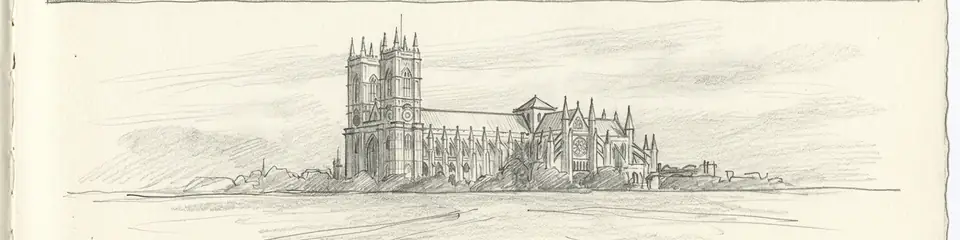
The Gothic west front of Westminster Abbey, London

Wikimedia Commons (CC BY-SA 4.0)

Country Record

Oldest Monument in United Kingdom

HeritageMonumentUNESCOFeatured

Westminster Abbey

1245 CE – 2023 CE

The coronation church beside the Palace of Westminster — Gothic nave, Poets' Corner, and royal tombs from Edward the Confessor to Elizabeth II — among the highest combined pageviews of any UK monument in our EN/DE/TR/ZH audit.

21
Interest 90

Location

United Kingdom

51.50°N · 0.13°W · Europe

Gothic rebuild

Henry III from 1245; choir and transepts 13th century

Coronations

Every English/British monarch since 1066 (except two)

Poets' Corner

Burials and memorials from Chaucer onward

UNESCO

Palace of Westminster and Westminster Abbey (1987)

Westminster Abbey is where English monarchy is sacramentally renewed — coronation liturgy, royal burials, and national memory in one Gothic fabric.”

Location

Overview

Westminster Abbey stands on Thorney Island by the River Thames in the City of Westminster, London. A monastery existed from the 10th century; Edward the Confessor rebuilt it in Romanesque style (consecrated 1065). Henry III began the present Gothic abbey in 1245, creating one of England's finest French-inspired interiors with soaring choir, triforium, and nave completed over centuries.

British coronations have taken place here since William the Conqueror (1066). The abbey is a royal peculiar outside diocesan control. Poets' Corner memorialises writers from Chaucer to Ted Hughes; scientists including Newton and Darwin lie buried or commemorated. Recent royal weddings and funerals keep the church in global news cycles.

The adjacent Westminster Palace (Houses of Parliament) and St Margaret's Church share the UNESCO World Heritage Site "Palace of Westminster and Westminster Abbey" (1987). The 2020s restoration of the exterior continues conservation of soft Caen stone.

Why It Matters

Westminster Abbey is where English monarchy is sacramentally renewed — coronation liturgy, royal burials, and national memory in one Gothic fabric. Its Poets' Corner and scientist graves make it a pilgrimage site for literature and science as much as for crown and church.

Stay curious

New stories and sites, once a month. No spam.

Evidence & Interpretation

Distinguishing what is well-established from what remains debated.

Well-Established Facts

2
  • Coronation orders, royal tombs, and building accounts document Gothic phases and liturgical use.
  • Edward the Confessor's shrine and later royal burials excavated and recorded across centuries.

Scholarly Inferences

1
  • Henry III's French-inspired design reflects post-1226 Capetian court contacts — inferred from patronage networks.

More Photos

Museum Artifacts

Community Photos

Share your experience

Have you visited this site? Upload your photos to help others discover it.

How to cite this page

Atlas Anatolia. (1245). Westminster Abbey. Atlas Anatolia. https://atlasanatolia.com/site/westminster-abbey

Content licensed CC BY-SA 4.0 — attribution required when reusing.

Sources

  • Westminster AbbeyMortimer, Richard (2010)
  • UNESCO — Palace of Westminster and Westminster AbbeyLink

Research Papers

Frequently Asked Questions

Where is Westminster Abbey located?

Westminster Abbey is located in United Kingdom.

How old is Westminster Abbey?

Westminster Abbey dates to approximately 1245 CE – 2023 CE.

Which civilizations are associated with Westminster Abbey?

Westminster Abbey is associated with the British.

Why is Westminster Abbey important?

Westminster Abbey is where English monarchy is sacramentally renewed — coronation liturgy, royal burials, and national memory in one Gothic fabric.

Is Westminster Abbey a UNESCO World Heritage Site?

Yes — Westminster Abbey is inscribed as a UNESCO World Heritage Site.