Skip to content
Atlas AnatoliaAtlas Anatolia
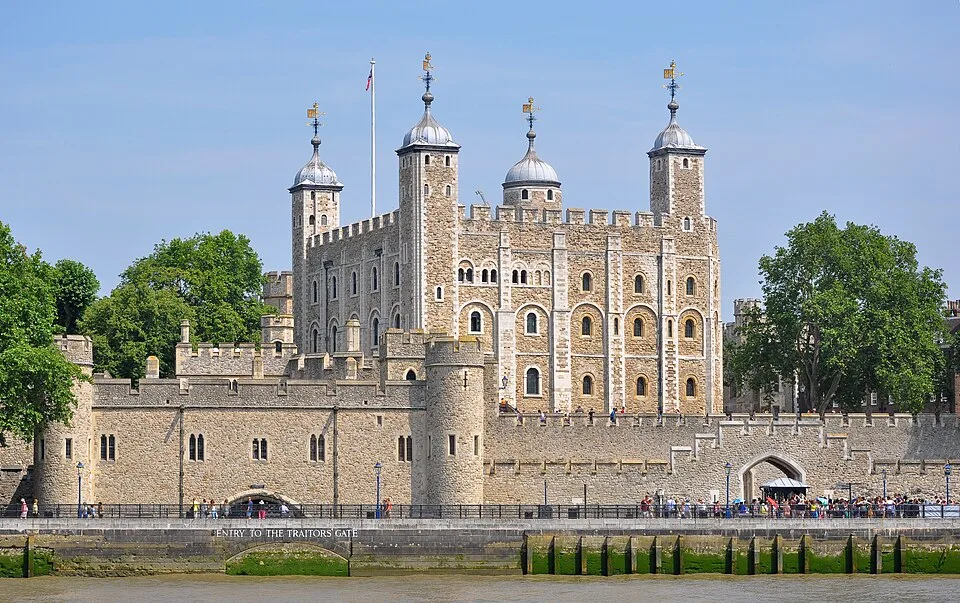
The White Tower and walls of the Tower of London beside the Thames

Wikimedia Commons (CC BY-SA 4.0)

Country Record

Oldest Fortress in United Kingdom

HeritageFortressUNESCOFeatured

Tower of London

1078 CE – 1952 CE

William the Conqueror's White Tower on the Thames — fortress, prison, mint, and home of the Crown Jewels — ranks among the most searched historic sites in English and Chinese Wikipedia and anchors a millennium of British state power.

21
Interest 91

Location

United Kingdom

51.51°N · 0.08°W · Europe

White Tower

Begun c. 1078 for William the Conqueror

Crown Jewels

Displayed in Jewel House since 1967

Ravens

At least six kept; legend guards the kingdom

UNESCO

Tower of London (1988)

The Tower compresses a thousand years of English governance — conquest, treasury, imprisonment, and ceremony in one walled compound.”

Location

Overview

The Tower of London stands on the north bank of the River Thames in the City of London. William I founded the White Tower, the great Norman keep, from 1078 to assert control over his new capital. Successive kings added curtain walls, moat, and towers — the complex served as royal residence, armoury, treasury, menagerie, and prison.

The Crown Jewels displayed in the Jewel House include regalia used at coronations. Ravens kept on the green obey legend that the kingdom falls if they leave. Executions on Tower Green included Anne Boleyn and Lady Jane Grey; the Princes in the Tower disappearance (1483) remains a forensic and historical controversy.

Yeoman Warders (Beefeaters) guide visitors; the Tower remains a working fortress under the Constable's command. UNESCO inscribed the Tower of London in 1988 as a key Norman and medieval monument. Pair with Westminster Abbey for coronation versus fortress narratives.

Why It Matters

The Tower compresses a thousand years of English governance — conquest, treasury, imprisonment, and ceremony in one walled compound. Its Crown Jewels and prison stories drive search interest that connects medieval history to living monarchy.

Stay curious

New stories and sites, once a month. No spam.

Evidence & Interpretation

Distinguishing what is well-established from what remains debated.

Well-Established Facts

2
  • Norman masonry, royal accounts, and archaeological finds date White Tower and curtain phases.
  • Execution and imprisonment records name Tudor-era prisoners including Anne Boleyn (1536).

Debated Interpretations

1
  • Fate of the Princes in the Tower (1483) remains unresolved — Richard III responsibility debated.

More Photos

Museum Artifacts

Community Photos

Share your experience

Have you visited this site? Upload your photos to help others discover it.

How to cite this page

Atlas Anatolia. (1078). Tower of London. Atlas Anatolia. https://atlasanatolia.com/site/tower-of-london

Content licensed CC BY-SA 4.0 — attribution required when reusing.

Sources

  • The Tower of London: The Official Illustrated HistoryImpey, Edward (2000)
  • UNESCO — Tower of LondonLink

Research Papers

Frequently Asked Questions

Where is Tower of London located?

Tower of London is located in United Kingdom.

How old is Tower of London?

Tower of London dates to approximately 1078 CE – 1952 CE.

Which civilizations are associated with Tower of London?

Tower of London is associated with the British.

Why is Tower of London important?

The Tower compresses a thousand years of English governance — conquest, treasury, imprisonment, and ceremony in one walled compound.

Is Tower of London a UNESCO World Heritage Site?

Yes — Tower of London is inscribed as a UNESCO World Heritage Site.