
Skip to content
Atlas Anatolia
News
Classical Antiquity
2,800-year-old agora uncovered at Troy refutes Dark Age abandonment myth
Ice Age teeth in Sulawesi push betel-nut use back as far as 25,000 years
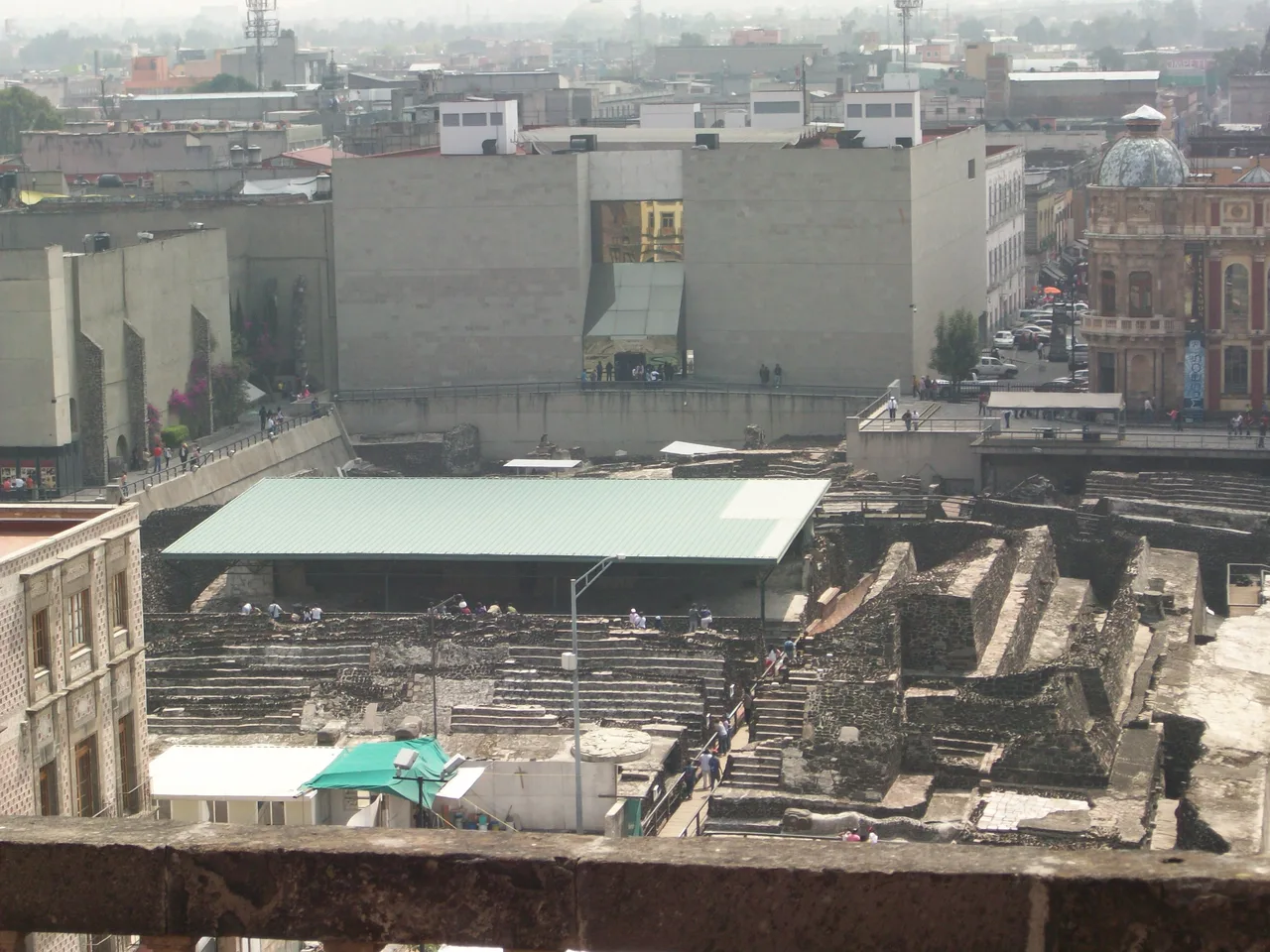
The excavated remains of Templo Mayor in central Mexico City

Wikimedia Commons

Continent Record

Oldest Temple in North America

Temple

Templo Mayor

Seyfi Cem Baskin

1325 CE – 1521 CE

The principal temple of the Aztec capital Tenochtitlan, rebuilt seven times and now excavated beneath Mexico City's historic center — its discovery in 1978 transformed understanding of Aztec religious life.

3
Interest 70

Location

Mexico

19.44°N · 99.13°W · North America

Construction period

c. 1325–1521 CE (rebuilt 7 times)

Coyolxauhqui Stone discovered

25 February 1978

Offerings found

7,000+ objects in 200 offering caches

Depth below Zócalo

2–3 m

Dedication

Twin shrines: Huitzilopochtli (sun/war) and Tlaloc (rain)

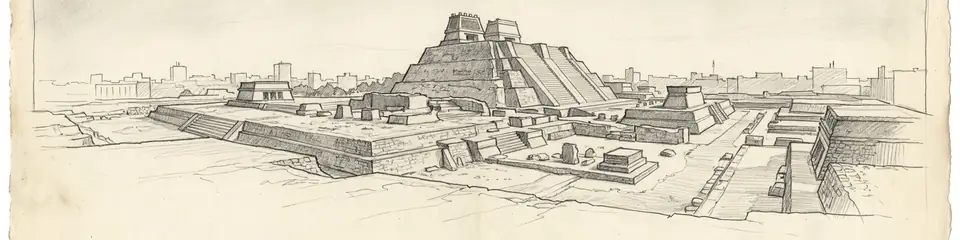
Graphite pencil sketch banner of Templo Mayor

“The Coyolxauhqui Stone is one of the most significant archaeological finds of the twentieth century in the Americas: it transformed Templo Mayor from a historical abstraction into an active excavation site in the center of a living city of 9 million.”

Location

Overview

Templo Mayor (Huey Teocalli, "Great Temple") was the religious and symbolic heart of Tenochtitlan, the Aztec capital founded c. 1325 CE on an island in Lake Texcoco. The city, with a population of 200,000–400,000 at its height in the early sixteenth century, was larger than any contemporary European city. The temple stood at the exact center of the Aztec universe as understood by its builders: oriented precisely to the cardinal directions, its summit level with the horizon when viewed from the lake. The structure was rebuilt at least seven times on top of itself, each new version encasing the previous one — a pattern driven by the Aztec calendrical cycle. Twin staircases rose to twin shrines at the summit: one dedicated to Huitzilopochtli (the sun and war god) and one to Tlaloc (rain and agriculture). The temple was demolished by the Spanish in 1521 and its stones used to build Mexico City's colonial center. Its existence under the Zócalo was suspected but unconfirmed until February 1978, when electrical workers excavating a trench struck the Coyolxauhqui Stone — a 3.25-meter monolithic disc weighing 8.5 tonnes, carved with the dismembered body of the moon goddess. The find triggered a decade of excavations directed by Eduardo Matos Moctezuma, uncovering more than 7,000 offerings deposited in sealed caches.
Why It Matters

The Coyolxauhqui Stone is one of the most significant archaeological finds of the twentieth century in the Americas: it transformed Templo Mayor from a historical abstraction into an active excavation site in the center of a living city of 9 million. The 7,000+ offerings found in the temple's deposits — jaguar skeletons, coral from the Gulf of Mexico, Olmec masks 2,000 years older than the Aztec period, obsidian blades, and copal incense burners — constitute the largest and most varied ritual deposit from pre-Columbian North America. Recent excavations (2021–2023) have uncovered a circular temple directly below the Templo Mayor that may be associated with the mythical island of Aztlan, a find still under analysis. Templo Mayor demonstrates the continuous occupation of the same urban site from the Aztec foundation to the present: the ruins lie 2–3 meters below the Zócalo, the main plaza of modern Mexico City.

Evidence & Interpretation

Distinguishing what is well-established from what remains debated.

Well-Established Facts

3
  • The Coyolxauhqui Stone, found in 1978, weighs 8.5 tonnes and measures 3.25 m in diameter. Iconographic analysis confirms it depicts the dismembered moon goddess Coyolxauhqui at the base of Templo Mayor, consistent with the myth in which Huitzilopochtli kills her.
  • Offering caches have yielded more than 7,000 objects, including Olmec greenstone masks dating to 900–400 BCE — 1,000–1,500 years before the Aztec period — demonstrating deliberate collection of ancient objects as ritual items of prestige.
  • The temple was oriented to true east on its Tlaloc side and slightly off true east on its Huitzilopochtli side, such that the sun rose directly over the stairs of Huitzilopochtli on two equinox-adjacent dates significant to the Aztec ritual calendar.

🏛️Archaeological Documentation & Fieldwork Status

Stratigraphically Documented

Templo Mayor has been systematically surveyed and documented through regional archaeological surveys, architectural mapping, and comparative stratigraphic analyses. Horizons (1325 CE – 1521 CE) are cross-referenced across fieldwork publications and academic citations.

Community Photos

Share your experience

Have you visited this site? Upload your photos to help others discover it.

Related Stories

How to cite this page

Atlas Anatolia. (1325). Templo Mayor. Atlas Anatolia. https://atlasanatolia.com/site/templo-mayor

Content licensed CC BY-SA 4.0 — attribution required when reusing.

Graph

Connections to related sites and stories.

Sources

  • The Great Temple of the Aztecs — Eduardo Matos Moctezuma (1988)
  • Proyecto Templo Mayor — INAHLink

Frequently Asked Questions

Where is Templo Mayor located?

Templo Mayor is located in Mexico.

How old is Templo Mayor?

Templo Mayor dates to approximately 1325 CE – 1521 CE.

Which civilizations are associated with Templo Mayor?

Templo Mayor is associated with the Aztec / Mexica.

Why is Templo Mayor important?

The Coyolxauhqui Stone is one of the most significant archaeological finds of the twentieth century in the Americas: it transformed Templo Mayor from a historical abstraction into an active excavation site in the center of a living city of 9 million.

Is Templo Mayor a UNESCO World Heritage Site?

Templo Mayor is not currently inscribed on the UNESCO World Heritage List.