Overview
Polonnaruwa lies in the north-central plain of Sri Lanka, southeast of the earlier capital of Anuradhapura. After Anuradhapura was repeatedly attacked and finally taken by the South Indian Chola empire around 993 CE, the Cholas ruled the island from Polonnaruwa; when the Sinhalese king Vijayabahu I drove them out in 1070, he kept the city as his capital. Polonnaruwa then served as the royal capital of Sri Lanka for roughly two centuries, reaching its zenith under two great kings: Parakramabahu I (r. 1153–1186) and his successor Nissankamalla.
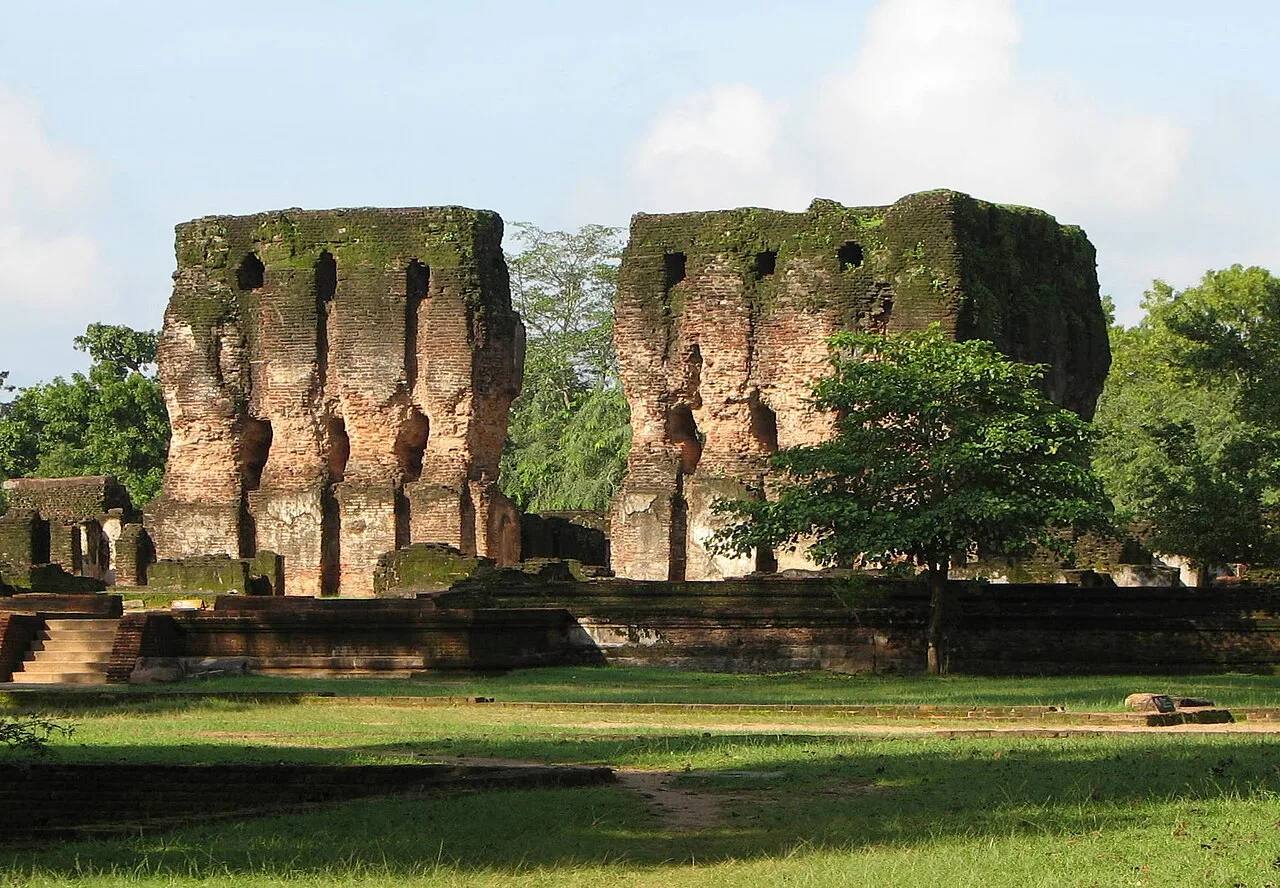
Parakramabahu I transformed Polonnaruwa into a planned and lavishly built city, enclosed by walls and centred on a great royal palace said by the chronicles to have had seven storeys and a thousand chambers. He is most famous, however, for an enormous public-works programme of irrigation. Declaring that "not even a little water that comes from the rain must flow into the ocean without being made useful to man," he had vast reservoirs (tanks) built or restored, the greatest of which, the Parakrama Samudra ("the Sea of Parakrama"), is an artificial inland sea covering some 2,500 hectares that still irrigates the surrounding farmland today.
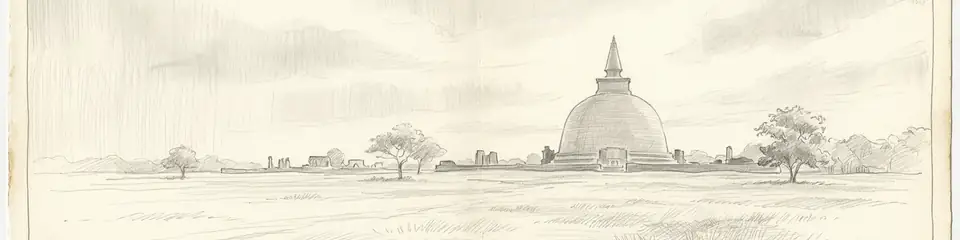
The city is rich in religious monuments reflecting both Buddhism and the Hindu traditions introduced during Chola rule. They include the Vatadage (a circular relic house enclosing a stupa and seated Buddhas), the towering brick image-house of the Lankatilaka, the Rankoth Vehera stupa, and a cluster of Hindu temples (devales) with fine bronze sculpture. The most celebrated monument is the Gal Vihara: four large images of the Buddha — seated, two standing, and a great reclining figure some 14 metres long depicting the Buddha's passing into nirvana — carved from a single long granite outcrop, regarded as among the supreme achievements of Sinhalese sculpture.
After the death of Nissankamalla the kingdom weakened under renewed invasions and dynastic strife, and by the 13th century the capital was abandoned and the centre of Sinhalese power shifted southwest. The city was reclaimed by jungle and later cleared and conserved by archaeologists.