
Skip to content
Atlas AnatoliaAtlas Anatolia
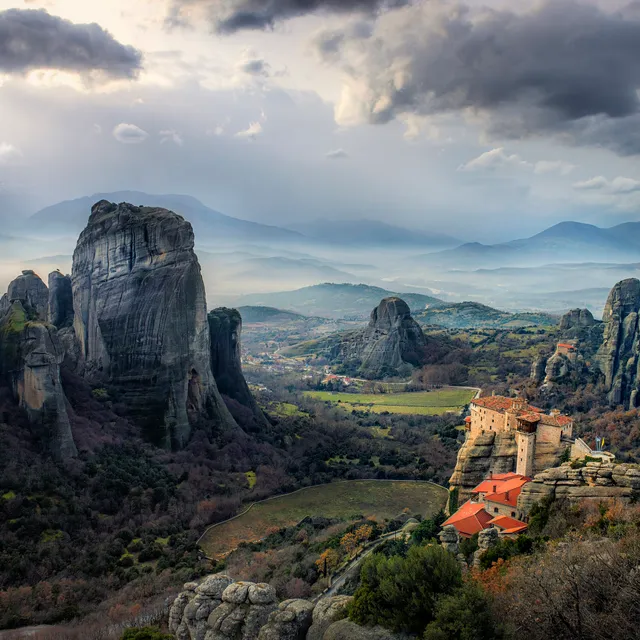
Byzantine monasteries perched on rock pillars at Meteora, Greece

Country Record

Known by the Most Names in Greece

Meteora

Μετέωρα1100 CE – 1900 CE

Geology

Sandstone pinnacles formed by weathering of Thessaly plateau

Monasteries

6 active of 24 historical foundations

Great Meteoron

Founded c. 1340 by Athanasios of Meteora

UNESCO

World Heritage Site (1988)

Meteora is the extreme case of Byzantine monastic adaptation to inaccessible terrain — architecture as spiritual withdrawal elevated literally above the plain.”

Location

Overview

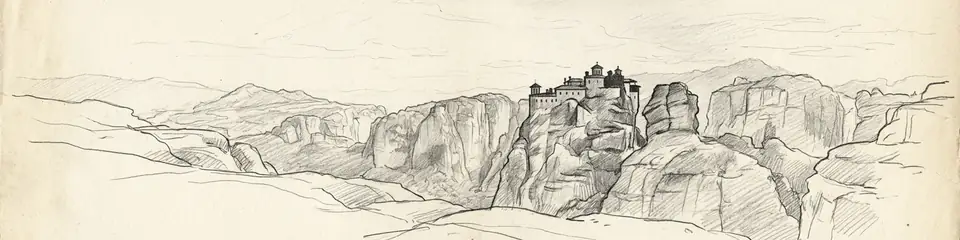
Meteora ("suspended in the air") names a group of immense sandstone pillars and cliffs in central Thessaly, Greece, near the town of Kalabaka (Kalambaka). Hermits occupied caves in the rocks from at least the 11th century; organized monastic communities developed in the 14th century as Athonite monks fled political instability. The Great Meteoron Monastery (Megalo Meteoro), founded by Athanasios of Meteora around 1340, set the model for later foundations.

At the peak of the monastic community in the 16th century, 24 monasteries clung to the pinnacles; six remain active today — Great Meteoron, Varlaam, Rousanou, St. Nicholas Anapausas, St. Stephen, and Holy Trinity — linked by steps, bridges, and (since the 20th century) roads. Fresco cycles inside the katholikon churches preserve post-Byzantine painting of high quality.

UNESCO inscribed Meteora in 1988. The site combines geological wonder with living Orthodox monasticism and appears frequently in travel media as one of Greece's most iconic landscapes outside Athens.
Why It Matters

Meteora is the extreme case of Byzantine monastic adaptation to inaccessible terrain — architecture as spiritual withdrawal elevated literally above the plain. Its frescoes and manuscript traditions connect the Athonite world to mainland Greece during Ottoman rule.

Stay curious

New stories and sites, once a month. No spam.

Evidence & Interpretation

Distinguishing what is well-established from what remains debated.

Well-Established Facts

2
  • Foundation charters, donor inscriptions, and fresco dates document 14th–16th-century monastic building phases.
  • Geological survey confirms pillar formation by erosion of the Thessaly basin sediments after tectonic uplift.

Scholarly Inferences

1
  • Hermit occupation before organized monasteries is attested in hagiography; archaeological evidence in caves is sparse but consistent.

More Photos

Museum Artifacts

Community Photos

Share your experience

Have you visited this site? Upload your photos to help others discover it.

How to cite this page

Atlas Anatolia. (1100). Meteora. Atlas Anatolia. https://atlasanatolia.com/site/meteora

Content licensed CC BY-SA 4.0 — attribution required when reusing.

Knowledge Graph

Connections to related sites and stories.

Sources

  • The Meteora MonasteriesNichols, Richard (2000)
  • UNESCO — MeteoraLink

Research Papers

Frequently Asked Questions

Where is Meteora located?

Meteora is located in Greece.

How old is Meteora?

Meteora dates to approximately 1100 CE – 1900 CE.

Which civilizations are associated with Meteora?

Meteora is associated with the Greek, Byzantine.

Why is Meteora important?

Meteora is the extreme case of Byzantine monastic adaptation to inaccessible terrain — architecture as spiritual withdrawal elevated literally above the plain.

Is Meteora a UNESCO World Heritage Site?

Yes — Meteora is inscribed as a UNESCO World Heritage Site.