

Overview
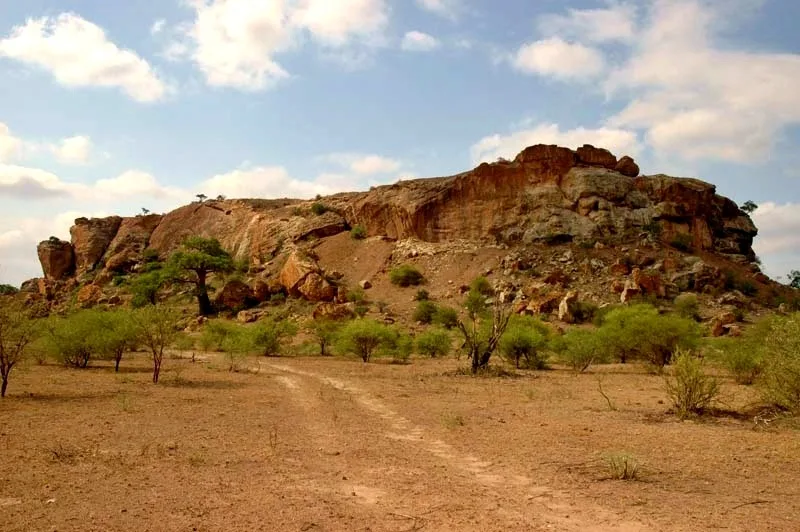
Mapungubwe Hill rises abruptly from the Limpopo floodplain at the point where the borders of modern South Africa, Zimbabwe, and Botswana converge. Between approximately 900 and 1290 CE it was the capital of the first complex state in southern Africa — a kingdom controlling trade in ivory, gold, and copper and connected to the Indian Ocean world through the Swahili coast.
The site is distinguished by the deliberate separation of the ruling elite from the general population. The king and court lived atop the inaccessible sandstone hill (accessible only via a hidden cleft in the rock), while the population occupied the plains below. This spatial segregation of power is the earliest known example of the Zimbabwe Pattern of rulership later elaborated at Great Zimbabwe.
The most spectacular finds from the royal graves atop the hill are gold objects: a gold-foil rhinoceros, bowl, and sceptre, created by wrapping beaten gold over carved wooden cores. The rhinoceros is now South Africa's premier national symbol, displayed at the University of Pretoria. The graves also yielded glass beads from India and China, confirming long-distance trade. Mapungubwe was designated a UNESCO World Heritage Site in 2003.