
Skip to content
Atlas AnatoliaAtlas Anatolia
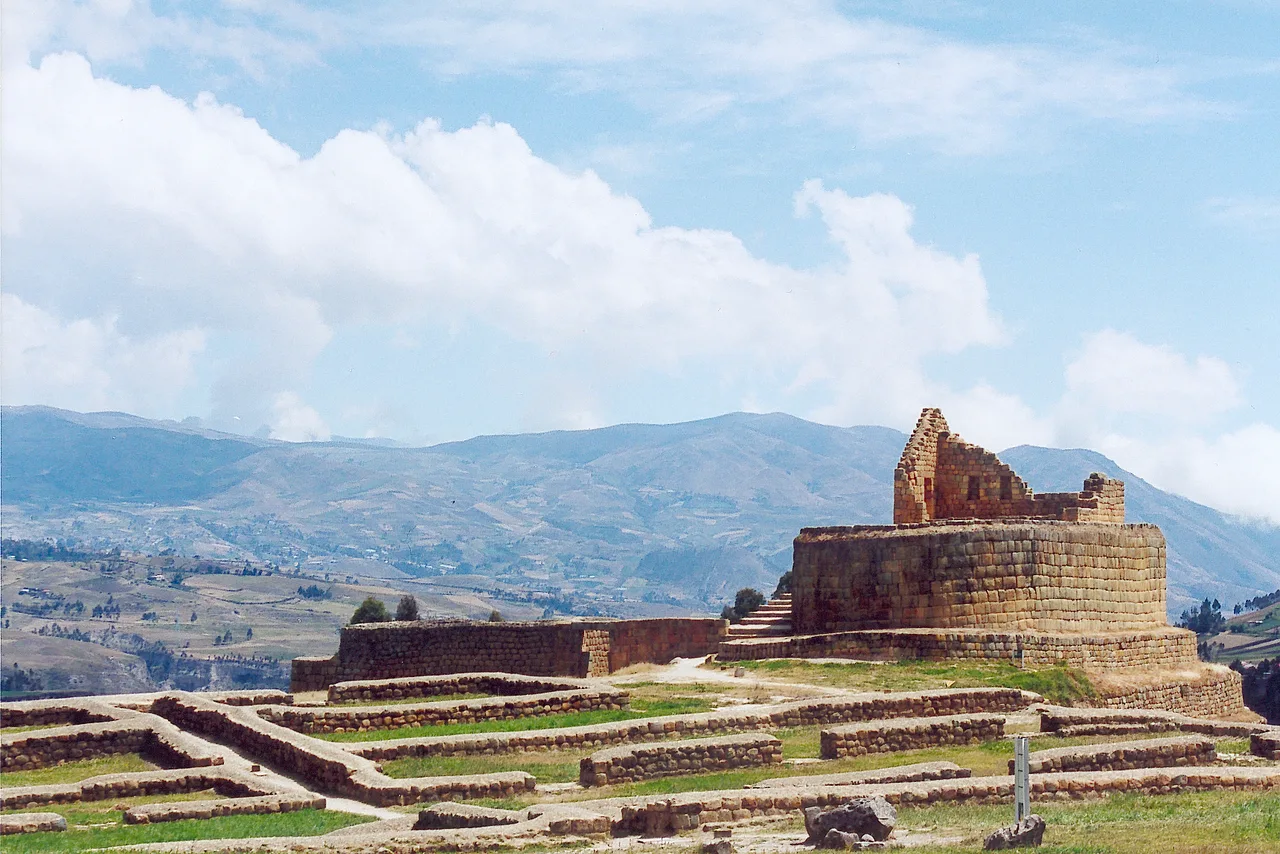
The elliptical Castillo (Temple of the Sun) at Ingapirca, built by the Inca atop an earlier Cañari sacred site, Ecuador

Ingapirca

500 CE – 1532 CE
50

Interest

Pre-ColumbianEarly MedievalMedievalHigh MedievalIncaCañari

Cañari origins

Sacred site from c. 500 CE, dedicated to Cañari moon worship

Inca construction

Castillo (Temple of the Sun) built under Tupac Yupanqui / Huayna Capac, c. 1450–1500 CE

Castillo

Elliptical Inca ashlar platform, astronomically aligned to solstices and equinoxes

Elevation

~3,160 m in the Ecuadorian highlands

Significance

Largest and best-preserved pre-Columbian complex in Ecuador

Ingapirca is a rare place where the archaeological record directly shows imperial absorption rather than replacement.”

Overview

Ingapirca ("Wall of the Inca" in Quechua) sits at approximately 3,160 metres elevation in Cañar Province in the Ecuadorian highlands. It is the largest and best-preserved pre-Columbian archaeological complex in Ecuador, and one of the clearest surviving examples of the layered relationship between the Inca Empire and the cultures it absorbed during its rapid 15th-century expansion.

The site was originally sacred to the Cañari people, an agricultural and moon-worshipping society who occupied the southern Ecuadorian highlands for centuries before Inca contact. When the Inca Empire, under Tupac Yupanqui and later Huayna Capac, extended its control into the region in the late 15th century, they built directly on top of and around the existing Cañari religious centre — a common Inca strategy for absorbing conquered peoples' sacred geography rather than erasing it.

The complex's defining structure is the Castillo, an elliptical platform of finely fitted Inca ashlar masonry that functioned as a Temple of the Sun (Inti). Its curved form is unusual among Inca structures, which typically favour rectilinear designs, and is thought to reflect adaptation to the pre-existing Cañari sacred site beneath it. The temple's walls and openings are astronomically aligned to track solstices and equinoxes, allowing priests to regulate the agricultural and ceremonial calendar.

Surrounding the Castillo are the remains of collca (storage buildings), a possible Cañari-era cemetery, aqueducts and water channels, and a stretch of the Inca road system (Qhapaq Ñan) that once connected Ingapirca to Cusco, over 1,600 kilometres to the south. Excavations have recovered ceramics, tools, and burial goods from both Cañari and Inca occupation phases, allowing archaeologists to document the transition between the two cultures in unusual material detail.

Ingapirca was studied by early travellers including the Spanish naturalist Antonio de Ulloa in the 18th century, and has been the subject of sustained Ecuadorian and international archaeological research since the early 20th century. It remains an active site of both scholarship and Cañari cultural identity, with the nearby Inti Raymi and Cañari solstice festivals still celebrated at the site today.

Why It Matters

Ingapirca is a rare place where the archaeological record directly shows imperial absorption rather than replacement. Most Inca sites obscure what came before them; at Ingapirca, Cañari and Inca construction phases sit side by side, letting archaeologists trace exactly how the Inca incorporated a conquered people's sacred landscape into their own state religion rather than simply destroying it. As the largest and most intact pre-Columbian complex in Ecuador, Ingapirca anchors the country's archaeological record in a period — the final decades before Spanish conquest — that is otherwise thinly documented compared to the heavily studied Peruvian and Bolivian Andes. It demonstrates that Inca imperial architecture, engineering, and astronomy extended far beyond the empire's Peruvian heartland. The elliptical Temple of the Sun also stands as one of the finest surviving examples of Inca dry-stone construction outside Peru — evidence that the empire's renowned masonry techniques, requiring no mortar yet capable of surviving five centuries of seismic activity, were exported and adapted wherever the empire expanded.

Stay curious

New stories and sites, once a month. No spam.

Evidence & Interpretation

Distinguishing what is well-established from what remains debated.

Well-Established Facts

3
  • Stratigraphic excavation has identified distinct Cañari and Inca occupation layers at Ingapirca, with Inca ashlar construction directly overlying earlier Cañari features.
  • Archaeoastronomical survey of the Castillo's window and doorway alignments confirms deliberate orientation toward solstice sunrise and sunset positions.
  • A section of the Inca road system (Qhapaq Ñan) has been traced connecting Ingapirca to the broader Inca road network extending toward Cusco.

Debated Interpretations

1
  • The exact function of the elliptical structure identified as a possible Cañari-era cemetery beneath the Castillo remains debated, with some researchers proposing alternative ceremonial uses.

Discovery & Excavation

1919

Max Uhle survey

Early scientific documentation of Ingapirca by the German-Peruvian archaeologist Max Uhle, a pioneer of Andean archaeology.

1966–1982

Ecuadorian state excavation and restoration

Systematic excavation and site conservation by Ecuador's national cultural heritage authorities established the current understanding of the Cañari-Inca sequence.

More Photos

Museum Artifacts

Community Photos

Share your experience

Have you visited this site? Upload your photos to help others discover it.

Location

Sources

  • Ingapirca: Arqueología y EtnohistoriaFresco, Antonio (1984)
  • Dynamic Display, Propaganda, and the Reinforcement of Provincial Power in the Inca EmpireOgburn, Dennis E. (2004)
  • Instituto Nacional de Patrimonio Cultural — IngapircaLink

Research Papers

Frequently Asked Questions

Where is Ingapirca located?

Ingapirca is located in Cañar Province, Ecuador.

How old is Ingapirca?

Ingapirca dates to approximately 500 CE – 1532 CE.

Which civilizations are associated with Ingapirca?

Ingapirca is associated with the Inca, Cañari.

Why is Ingapirca important?

Ingapirca is a rare place where the archaeological record directly shows imperial absorption rather than replacement.

Is Ingapirca a UNESCO World Heritage Site?

Ingapirca is not currently inscribed on the UNESCO World Heritage List.