
Overview
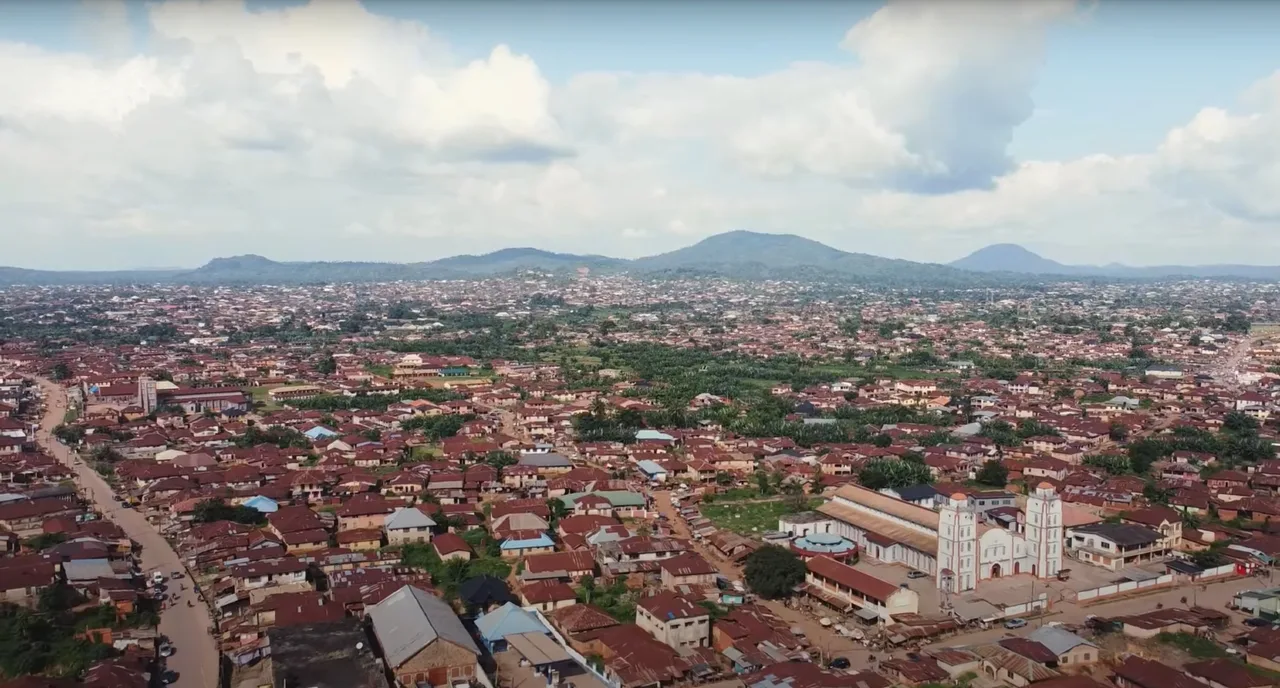
Ile-Ife lies in present-day Osun State, southwestern Nigeria, and holds a foundational place in Yoruba cosmology as Ilé-Ifẹ̀, the site where the deity Oduduwa is said to have descended from the heavens to create dry land and human beings — making it, in Yoruba religious tradition, not merely an ancient city but the literal point of origin of the world. This sacred status has anchored Ife's political and spiritual authority among Yoruba city-states for centuries; its ruler, the Ooni of Ife, continues to hold a paramount position of ritual seniority within Yoruba traditional government today.
Archaeologically, Ile-Ife emerged as a significant urban centre by around 500–800 CE and reached its artistic and political height between approximately 1000 and 1500 CE, a period sometimes referred to as its classical age. The city was encircled by extensive earthen walls, and excavations have revealed sophisticated urban planning, including potsherd-paved courtyards and streets. Ife's economy and craft production, particularly in glass beadmaking, connected it to long-distance trade networks extending across West Africa.
Ife's global art-historical reputation rests overwhelmingly on a remarkable body of sculpture produced during this classical period: life-sized and near-life-sized heads and figures cast in leaded bronze and brass using the lost-wax technique, alongside terracotta heads of comparable sophistication. These works depict individualised human faces — believed to represent kings (Ooni), queens, and other elite figures — with a naturalism, anatomical precision, and formal refinement that was, at the time of their rediscovery, unmatched by anything previously documented from sub-Saharan Africa in Western scholarship.
When German ethnologist Leo Frobenius encountered Ife bronzes during a 1910 expedition, he controversially proposed they were evidence of a lost colony of the mythical sunken civilization of Atlantis, or otherwise the work of ancient Greek settlers — a theory rooted in the racist assumption that West African societies could not have independently developed such technical and artistic sophistication. This claim was thoroughly discredited by subsequent archaeological and art-historical research, which firmly established the bronzes as an indigenous Yoruba achievement, technically and stylistically continuous with, and likely ancestral to, the later, equally celebrated bronze-casting tradition of the neighbouring Benin Kingdom, whose oral traditions credit Ife with sending the first master bronze-caster to Benin.
Major excavations by Frank Willett and other archaeologists from the 1950s onward, along with the chance 1938 discovery of eighteen additional bronze heads during building work (the Wunmonije Compound find), have substantially expanded the known corpus and refined the chronology of Ife art. Many of the finest works are held at the Ife Museum of Antiquities and the National Museum in Lagos, with others dispersed to international collections, some of which remain the subject of restitution discussions.