
Перейти к содержанию
Atlas Anatolia
НовостиЗубы ледникового периода на Сулавеси отодвигают использование бетеля на 25 000 лет назадРимская мозаика и голова Эрота обнаружены в базилике Помпейополиса, Кастамону
Registan square with three madrasas in Samarkand

Wikimedia Commons (CC BY-SA 3.0)

НаследиеГородЮНЕСКОИзбранное

Samarkand

Seyfi Cem Baskin

Самарқанд700 до н. э. – 1700 н. э.

Timur’s capital on the Zeravshan — crowned by the Registan’s three tiled madrasas — was the ceremonial and scholarly heart of a Silk Road empire linking Persia, India, and the steppe.

21
Интерес 81

Местоположение

Узбекистан

39.65°N · 66.98°E · Азия

Ancient name

Maracanda (Sogdian)

Timurid capital

Late 14th century under Timur

Registan

Three madrasas, 15th–17th c.

UNESCO

Historic Town of Samarkand (2001)

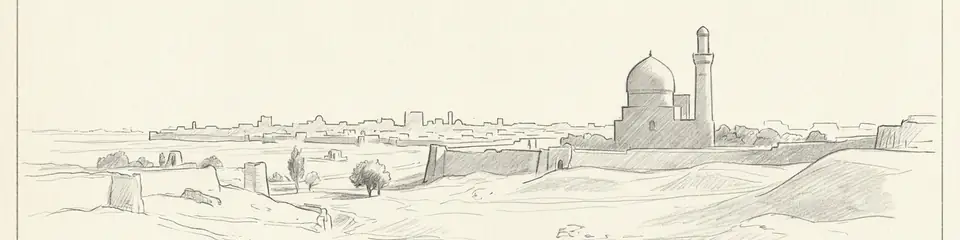
Graphite pencil sketch banner of Samarkand

“Samarkand concentrates Timurid political theology, astronomy, and tile architecture in one walkable historic centre.”

Местоположение

Обзор

Samarkand (ancient Maracanda) sits in the Zeravshan Valley of modern Uzbekistan. An Iron Age and Sogdian centre conquered by Alexander, it later flourished under Sogdian merchants before Mongol destruction in 1220. Timur (Tamerlane) made Samarkand his capital in the late 14th century; his grandson Ulugh Beg built a madrasa and observatory that made the city a scientific as well as dynastic stage. The Registan square — Ulugh Beg Madrasa (1417–21), Sher-Dor (1619–36), and Tilya-Kori (17th century) — forms the postcard ensemble of turquoise domes and pishtaq façades.

Beyond the Registan, the Bibi-Khanym Mosque, Gur-e-Amir mausoleum, and Shah-i-Zinda necropolis preserve Timurid brick and tile craft at imperial scale. UNESCO inscribed the Historic Town of Samarkand in 2001. Pair with Merv and Jiaohe for earlier Silk Road urbanisms further east and west.

Почему это важно

Samarkand concentrates Timurid political theology, astronomy, and tile architecture in one walkable historic centre. It is essential for understanding how post-Mongol Central Asian empires staged legitimacy on the Silk Road.

Свидетельства и интерпретация

Различать, что хорошо установлено, а что остаётся предметом дискуссий.

Хорошо установленные факты

2
  • Timurid building inscriptions, waqf documents, and standing madrasas securely date the Registan ensemble and Gur-e-Amir complex.
  • Archaeology at Afrasiyab (ancient Samarkand) documents Sogdian and earlier occupation beneath and beside the Timurid city.

Научные выводы

1
  • Ulugh Beg’s observatory programme positioned Samarkand as a scientific capital rivaling contemporary Islamic and European courts.

Фотографии сообщества

Поделитесь своими впечатлениями

Вы посещали это место? Загрузите свои фотографии, чтобы помочь другим открыть его для себя.

Как цитировать эту страницу

Atlas Anatolia. (700). Samarkand. Atlas Anatolia. https://atlasanatolia.com/ru/site/samarkand

Материалы распространяются по лицензии CC BY-SA 4.0 — при повторном использовании указание авторства обязательно.

Источники

  • The Rise and Rule of Tamerlane — Manz, Beatrice Forbes (1989)
  • UNESCO — Samarkand – Crossroad of CulturesСсылка

Часто задаваемые вопросы

Где находится Samarkand?

Samarkand находится в Uzbekistan.

Сколько лет Samarkand?

Samarkand датируется приблизительно 700 до н. э. – 1700 н. э..

С какими цивилизациями связано место Samarkand?

Samarkand связано с цивилизацией: Timurid, Sogdian.

Почему Samarkand имеет важное значение?

Samarkand concentrates Timurid political theology, astronomy, and tile architecture in one walkable historic centre.

Входит ли Samarkand в список Всемирного наследия ЮНЕСКО?

Да — Samarkand включено в список Всемирного наследия ЮНЕСКО.