
Перейти к содержанию
Atlas Anatolia
НовостиЗубы ледникового периода на Сулавеси отодвигают использование бетеля на 25 000 лет назадРимская мозаика и голова Эрота обнаружены в базилике Помпейополиса, Кастамону
Roman mosaic of Amphitrite in an underground villa at Bulla Regia, Tunisia

Wikimedia Commons

Country Record

Longest Continuously Occupied Site in Tunisia

Город

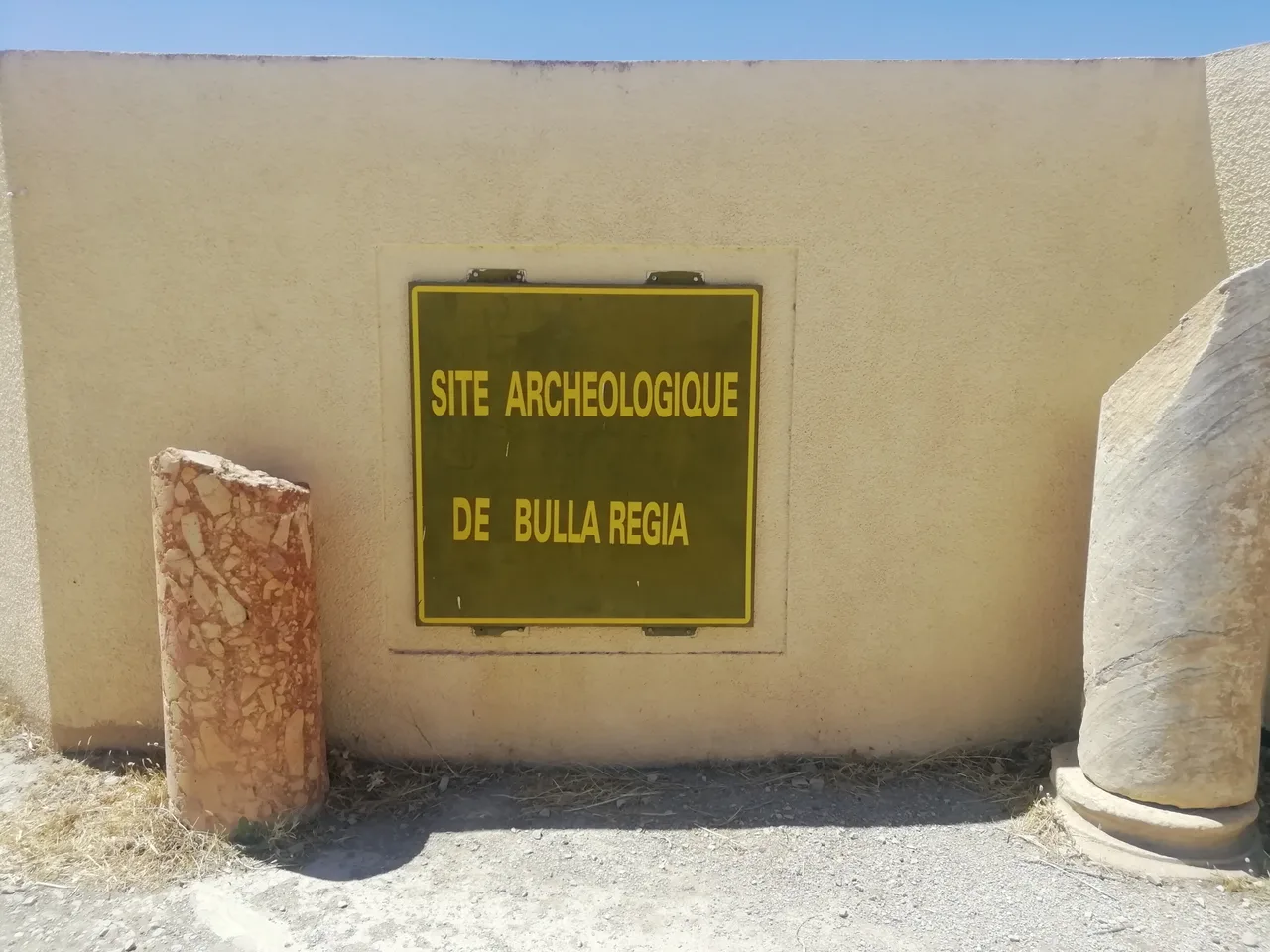
Bulla Regia

Seyfi Cem Baskin

200 до н. э. – 600 н. э.

A Roman city in northern Tunisia uniquely famous for its underground villa complexes — entire domestic floors built below ground level to escape the heat, preserving mosaics in situ that would otherwise have been looted or destroyed. Bulla Regia offers the most complete picture of Roman domestic architecture anywhere in North Africa.

21
Интерес 46

Местоположение

Jendouba Governorate · Northern Tunisia · Тунис

36.57°N · 9.04°E · Африка

Distinctive feature

Underground Roman villa complexes with preserved mosaics

Roman status

Colonia under Emperor Hadrian, early 2nd century CE

Key mosaics

House of the Hunt; House of Amphitrite

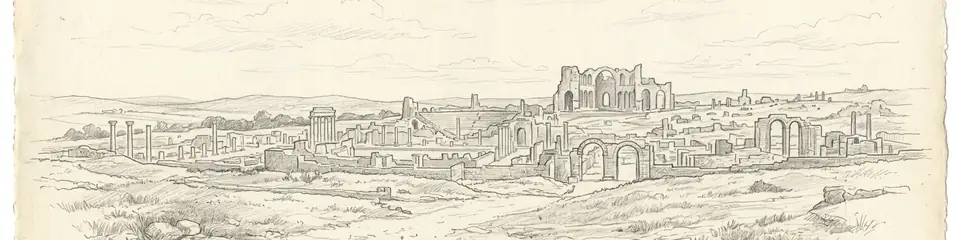
Graphite pencil sketch banner of Bulla Regia

“Bulla Regia's underground villas are unique in the Roman world — a practical response to North African climate that accidentally preserved mosaics and domestic plans better than almost any other site.”

Местоположение

Обзор

Bulla Regia lies in the fertile Medjerda Valley of northern Tunisia, inland from the coast and roughly 160 kilometres southwest of Tunis. The site has deep Punic and Numidian roots before becoming a Roman colonia under Hadrian in the early 2nd century CE.

What makes Bulla Regia exceptional is its underground domestic architecture. Wealthy Roman citizens built villa complexes with entire lower floors sunk below ground — cool in summer, warm in winter — leaving upper structures largely destroyed but preserving mosaic pavements, peristyle courtyards, and bathing suites in remarkable condition. The "House of the Hunt" and "House of Amphitrite" contain mosaics among the finest in Roman Africa, including scenes of Diana hunting and Amphitrite in a chariot drawn by seahorses.
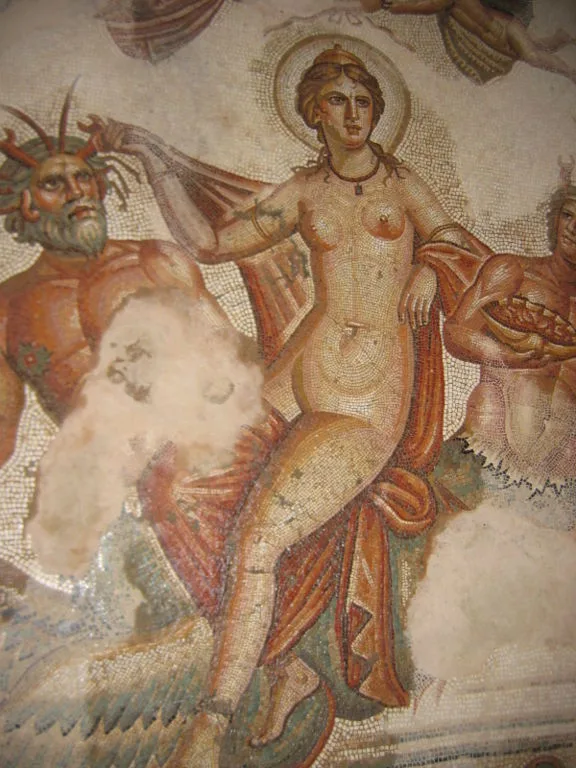
Venus marine dite Amphitrite Bulla Regia
Venus marine dite Amphitrite Bulla Regia | Wikimedia Commons (CC BY-SA 2.5)
"The underground houses of Bulla Regia preserve mosaics in a condition rarely found elsewhere in the Roman world."
— M. Blanchard-Lemée et al., Mosaics of Roman Africa (1996)

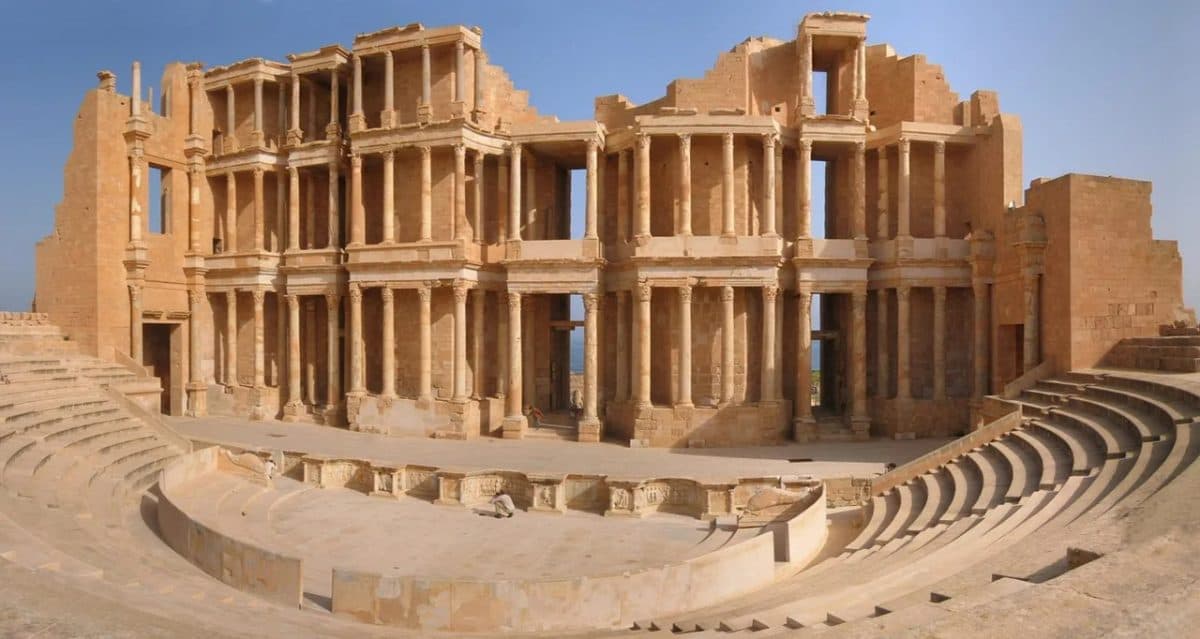
The city also preserves a theatre, Capitolium temple, forum, and public baths above ground. Bulla Regia flourished through the 3rd and 4th centuries CE before declining with Vandal and Byzantine rule. French and Tunisian archaeologists have excavated the site since the early 20th century.
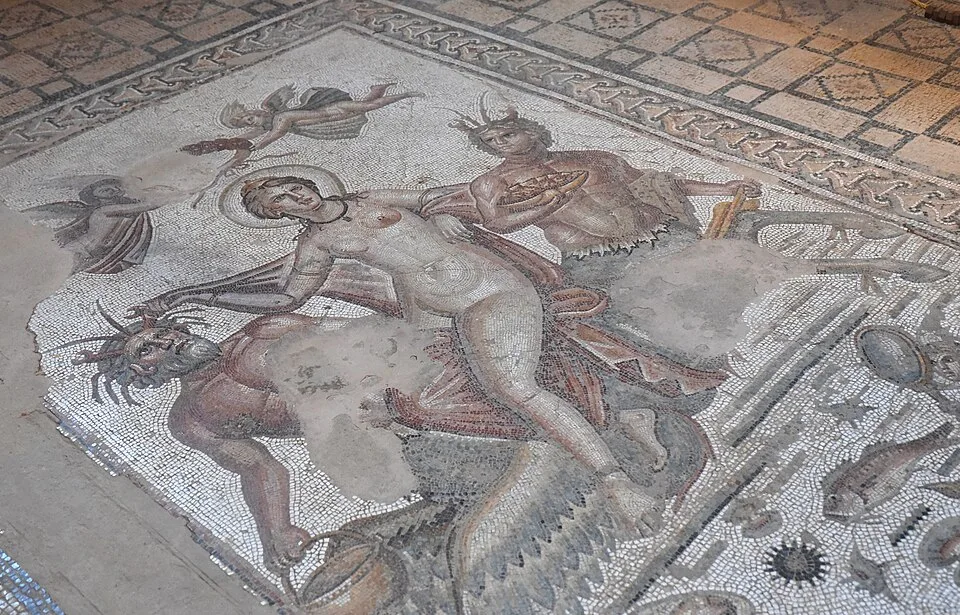
In situ mosaic depicting Venus being carried ashore by a pair of Ichthyocentaurs (fish-tailed centaurs) following her bi
In situ mosaic depicting Venus being carried ashore by a pair of Ichthyocentaurs (fish-tailed centaurs) following her bi | Carole Raddato from FRANKFURT, Germany (CC BY-SA 2.0)

The site is on Tunisia's national heritage list and is frequently cited alongside Carthage and Dougga as among the country's most important Roman ruins.
Почему это важно

Bulla Regia's underground villas are unique in the Roman world — a practical response to North African climate that accidentally preserved mosaics and domestic plans better than almost any other site. The in situ mosaic assemblage ranks among the finest surviving from Roman Africa and is essential for understanding provincial elite culture, iconography, and domestic ritual. The site connects Punic, Numidian, and Roman layers of Tunisian history, showing how Rome absorbed and transformed pre-existing North African settlement patterns.

Свидетельства и интерпретация

Различать, что хорошо установлено, а что остаётся предметом дискуссий.

Хорошо установленные факты

2
  • Multiple underground villa complexes with in situ mosaic floors are documented and open to study.
  • The site was elevated to Roman colonia status under Hadrian, attested epigraphically.

Спорные интерпретации

1
  • The extent of Numidian versus Punic influence on the pre-Roman settlement remains less fully excavated.

Фотографии сообщества

Поделитесь своими впечатлениями

Вы посещали это место? Загрузите свои фотографии, чтобы помочь другим открыть его для себя.

Похожие истории

Как цитировать эту страницу

Atlas Anatolia. (200). Bulla Regia. Atlas Anatolia. https://atlasanatolia.com/ru/site/bulla-regia

Материалы распространяются по лицензии CC BY-SA 4.0 — при повторном использовании указание авторства обязательно.

График

Связи с соответствующими памятниками и историями.

Источники

  • Mosaics of Roman Africa: Floor Mosaics from Tunisia — Blanchard-Lemée, M. et al. (1996)
  • Bulla Regia — guide to the ruins — Foucher, L. (1967)

Часто задаваемые вопросы

Где находится Bulla Regia?

Bulla Regia находится в Jendouba Governorate, Northern Tunisia, Tunisia.

Сколько лет Bulla Regia?

Bulla Regia датируется приблизительно 200 до н. э. – 600 н. э..

С какими цивилизациями связано место Bulla Regia?

Bulla Regia связано с цивилизацией: Carthaginian / Phoenician, Roman.

Почему Bulla Regia имеет важное значение?

Bulla Regia's underground villas are unique in the Roman world — a practical response to North African climate that accidentally preserved mosaics and domestic plans better than almost any other site.

Входит ли Bulla Regia в список Всемирного наследия ЮНЕСКО?

Bulla Regia в настоящее время не включено в список Всемирного наследия ЮНЕСКО.