Pular para o conteúdo
Atlas Anatolia
NotíciasIce Age teeth in Sulawesi push betel-nut use back as far as 25,000 yearsRoman mosaic and Eros head uncovered in the basilica at Pompeiopolis, Kastamonu
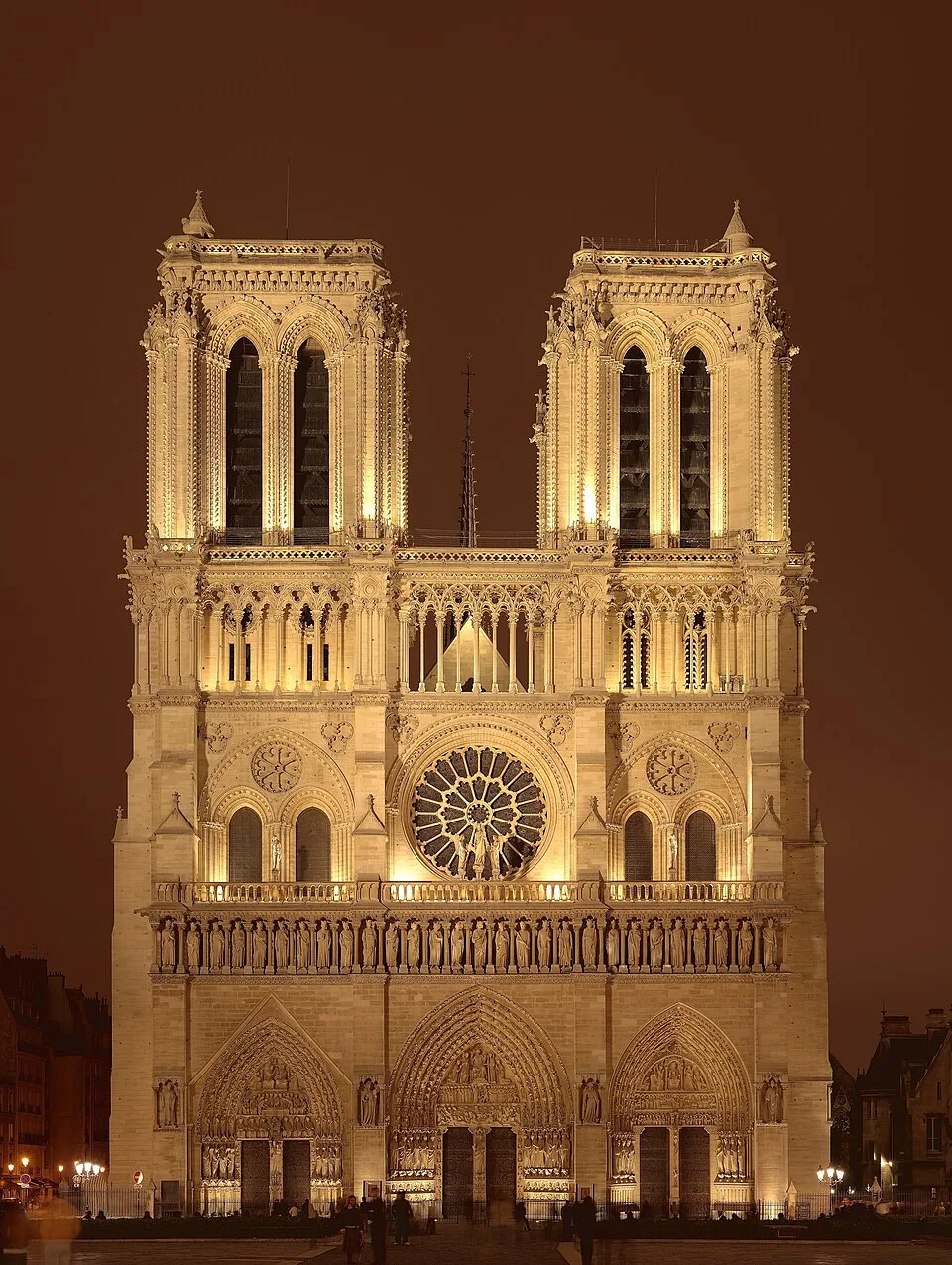
The west façade of Notre-Dame de Paris before the 2019 fire

Wikimedia Commons (CC BY-SA 4.0)

Country Record

Longest Recorded History in France

PatrimônioMonumentoUNESCODestaque

Notre-Dame de Paris

Seyfi Cem Baskin

Cathédrale Notre-Dame de Paris1163 d.C. – 1345 d.C.

The Gothic cathedral on the Île de la Cité — flying buttresses, rose windows, and gargoyles above the Seine — whose 2019 fire shocked the world and whose rebuilding keeps it among the most searched churches in English, Turkish, and Chinese Wikipedia.

3
Interesse 91

Localização

França

48.85°N · 2.35°E · Europa

Begun

c. 1163 under Bishop Maurice de Sully

Fire

15 April 2019 — oak frame and spire lost; vaults survived

Rose windows

North (c. 1250) and south (c. 1260) — largely intact

UNESCO

Paris, Banks of the Seine (1991)

Graphite pencil sketch banner of Notre-Dame de Paris

“Notre-Dame is the reference point for French Gothic architecture and for how a medieval church becomes a secular symbol of national identity.”

Localização

Visão geral

Notre-Dame de Paris stands on the eastern end of the Île de la Cité in the heart of Paris. Bishop Maurice de Sully began the present cathedral around 1163; the choir was consecrated in 1182 and the nave completed by the mid-13th century. Early Gothic innovations — rib vaults, pointed arches, flying buttresses — allowed taller walls pierced by enormous windows including north and south rose windows (13th century).

The west façade's twin towers and Gallery of Kings became symbols of Paris. Victor Hugo's 1831 novel revived public affection when the building faced demolition; Eugène Viollet-le-Duc's 19th-century restoration added the spire later lost in the fire of 15 April 2019. Flames destroyed the oak frame (the "forest") and collapsed the spire; stone vaults largely held. A international restoration aims to reopen the cathedral for worship and tourism.

"Great buildings, like great mountains, are the work of centuries… Time is the architect, the people are the mason."
— Victor Hugo, Notre-Dame de Paris (1831), on the cathedral as living monument
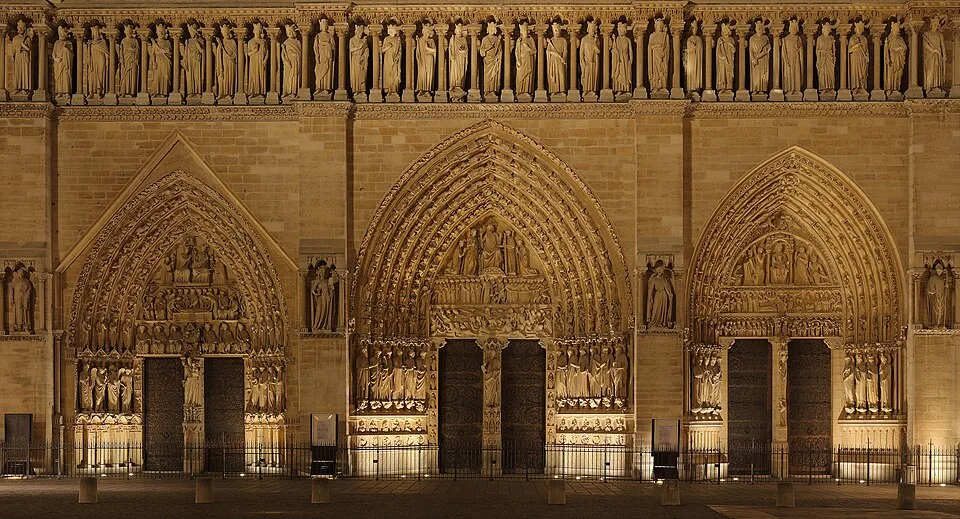
Notre Dame Paris front facade lower
Notre Dame Paris front facade lower | Benh LIEU SONG (CC BY-SA 3.0)
Paris, Notre Dame -- 2014 -- 1458-65
Paris, Notre Dame -- 2014 -- 1458-65 | Dietmar Rabich (CC BY-SA 4.0)
NotreDameDeParis
NotreDameDeParis | Sanchezn (CC BY-SA 3.0)

The crypt preserves Gallo-Roman and medieval archaeological layers beneath the square. UNESCO lists Notre-Dame as part of the Banks of the Seine (1991). Pair with Chartres Cathedral and Mont-Saint-Michel on a French Gothic itinerary.

Por que isso importa

Notre-Dame is the reference point for French Gothic architecture and for how a medieval church becomes a secular symbol of national identity. The 2019 fire and rebuild made it a live case study in heritage conservation, oak framing, and global crowdfunding at cathedral scale.

Evidências e interpretação

Distinguir o que está bem estabelecido do que permanece em debate.

Fatos bem estabelecidos

3
  • Bishopric charters and stylistic analysis date construction phases 1163–1345.
  • 2019–present structural surveys document fire damage and vault stability.
  • Crypt excavations reveal Lutetia Roman structures and early Christian layers.

Fotos da comunidade

Compartilhe sua experiência

Você visitou este sítio? Envie suas fotos para ajudar outros a descobri-lo.

Como citar esta página

Atlas Anatolia. (1163). Notre-Dame de Paris. Atlas Anatolia. https://atlasanatolia.com/pt/site/notre-dame-paris

Conteúdo licenciado sob CC BY-SA 4.0 — atribuição necessária ao reutilizar.

Fontes

  • Notre-Dame, Cathedral of Amiens — Murray, Stephen (1996)
  • UNESCO — Paris, Banks of the SeineLink

Perguntas frequentes

Onde fica Notre-Dame de Paris?

Notre-Dame de Paris está localizado em France.

Qual é a antiguidade de Notre-Dame de Paris?

Notre-Dame de Paris data de aproximadamente 1163 d.C. – 1345 d.C..

Quais civilizações estão associadas a Notre-Dame de Paris?

Notre-Dame de Paris está associado à civilização Medieval French.

Por que Notre-Dame de Paris é importante?

Notre-Dame is the reference point for French Gothic architecture and for how a medieval church becomes a secular symbol of national identity.

Notre-Dame de Paris é um Patrimônio Mundial da UNESCO?

Sim — Notre-Dame de Paris está inscrito na Lista do Patrimônio Mundial da UNESCO.