
Pular para o conteúdo
Atlas Anatolia
NotíciasIce Age teeth in Sulawesi push betel-nut use back as far as 25,000 yearsRoman mosaic and Eros head uncovered in the basilica at Pompeiopolis, Kastamonu
Excavated stone walls and spoil of Tel Megiddo overlooking the Jezreel Valley

Wikimedia Commons (CC BY-SA 3.0)

Country Record

Longest Continuously Occupied Site in Israel

AssentamentoUNESCODestaque

Tel Megiddo

Seyfi Cem Baskin

תל מגידו7000 a.C. – 400 a.C.

The multi-layered tell overlooking the Jezreel Valley — Canaanite city, Egyptian stronghold, and Israelite fortress whose Greek name Armageddon entered apocalyptic tradition — ranks first among missing archaeological sites in our EN/DE/TR/ZH Wikipedia pageview audit.

21
Interesse 68

Localização

Israel

32.59°N · 35.18°E · Ásia

Strata

20+ occupation levels, Neolithic–Persian

Battle of Megiddo

Thutmose III, c. 1457 BCE

UNESCO

Biblical Tels (2005)

Famous find

Water system, six-chambered gate, “stables”

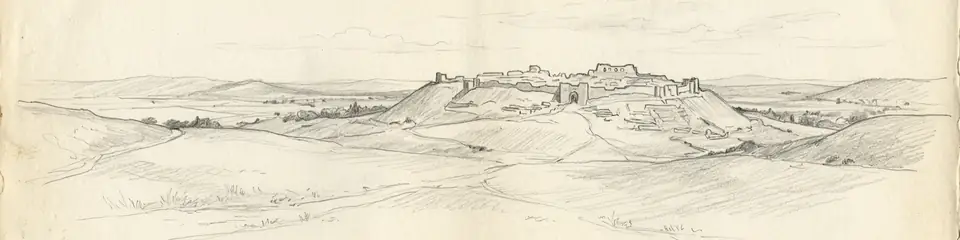
Graphite pencil sketch banner of Tel Megiddo

“Megiddo’s stratigraphy is a laboratory for correlating biblical narratives with Egyptian and Assyrian texts against continuous material layers.”

Localização

Visão geral

Tel Megiddo rises about 60 metres above the western Jezreel Valley in northern Israel, controlling the Via Maris pass that funneled traffic between Egypt and Mesopotamia. Excavations by Gottlieb Schumacher (1903–05), the Oriental Institute of Chicago (1925–39), Yigael Yadin, and the Tel Aviv–Pennsylvania consortium since the 1990s have cut more than twenty occupational strata from the Neolithic into the Persian period.

Middle and Late Bronze layers expose massive Canaanite fortifications, the well-known “Gallery 629” water system, and palace compounds tied to Egyptian overlordship — Megiddo is named in Thutmose III’s year-23 campaign records among the coalition defeated at the Battle of Megiddo (c. 1457 BCE). Iron Age rebuilds include six-chambered gates, stables long debated as Solomonic or Omride, and Assyrian destruction horizons after Tiglath-Pileser III.

The New Testament Greek Harmagedōn (“Mount Megiddo”) fixed the site in Christian apocalyptic geography. UNESCO inscribed the “Biblical Tels — Megiddo, Hazor, Beer Sheba” serial property in 2005. Pair with Jericho and Hattusha for contrasting Levantine and Anatolian bronze-age power centres.
Por que isso importa

Megiddo’s stratigraphy is a laboratory for correlating biblical narratives with Egyptian and Assyrian texts against continuous material layers. Its water system, gates, and destruction deposits remain reference points for Iron Age Levantine chronology and for how geography produces strategic myth.

Evidências e interpretação

Distinguir o que está bem estabelecido do que permanece em debate.

Fatos bem estabelecidos

2
  • Egyptian annals of Thutmose III name Megiddo as the focus of the year-23 Syrian campaign.
  • Ceramic, radiocarbon, and architectural sequences from Chicago and Tel Aviv–Pennsylvania digs fix major Bronze and Iron horizons.

Interpretações debatidas

1
  • Whether the famous stables and six-chambered gate date to Solomon (10th c. BCE) or the Omride dynasty remains contested.

Fotos da comunidade

Compartilhe sua experiência

Você visitou este sítio? Envie suas fotos para ajudar outros a descobri-lo.

Histórias relacionadas

Como citar esta página

Atlas Anatolia. (7000). Tel Megiddo. Atlas Anatolia. https://atlasanatolia.com/pt/site/megiddo

Conteúdo licenciado sob CC BY-SA 4.0 — atribuição necessária ao reutilizar.

Gráfico

Conexões com sítios e histórias relacionados.

Fontes

  • The Battles of Armageddon: Megiddo and the Jezreel Valley from the Bronze Age to the Nuclear Age — Cline, Eric H. (2000)
  • The Bible Unearthed — Finkelstein, Israel; Silberman, Neil Asher (2001)
  • UNESCO — Biblical TelsLink

Perguntas frequentes

Onde fica Tel Megiddo?

Tel Megiddo está localizado em Israel.

Qual é a antiguidade de Tel Megiddo?

Tel Megiddo data de aproximadamente 7000 a.C. – 400 a.C..

Quais civilizações estão associadas a Tel Megiddo?

Tel Megiddo está associado à civilização Ancient Egyptian, Canaanite, Israelite.

Por que Tel Megiddo é importante?

Megiddo’s stratigraphy is a laboratory for correlating biblical narratives with Egyptian and Assyrian texts against continuous material layers.

Tel Megiddo é um Patrimônio Mundial da UNESCO?

Sim — Tel Megiddo está inscrito na Lista do Patrimônio Mundial da UNESCO.