
Pular para o conteúdo
Atlas Anatolia
NotíciasIce Age teeth in Sulawesi push betel-nut use back as far as 25,000 yearsRoman mosaic and Eros head uncovered in the basilica at Pompeiopolis, Kastamonu
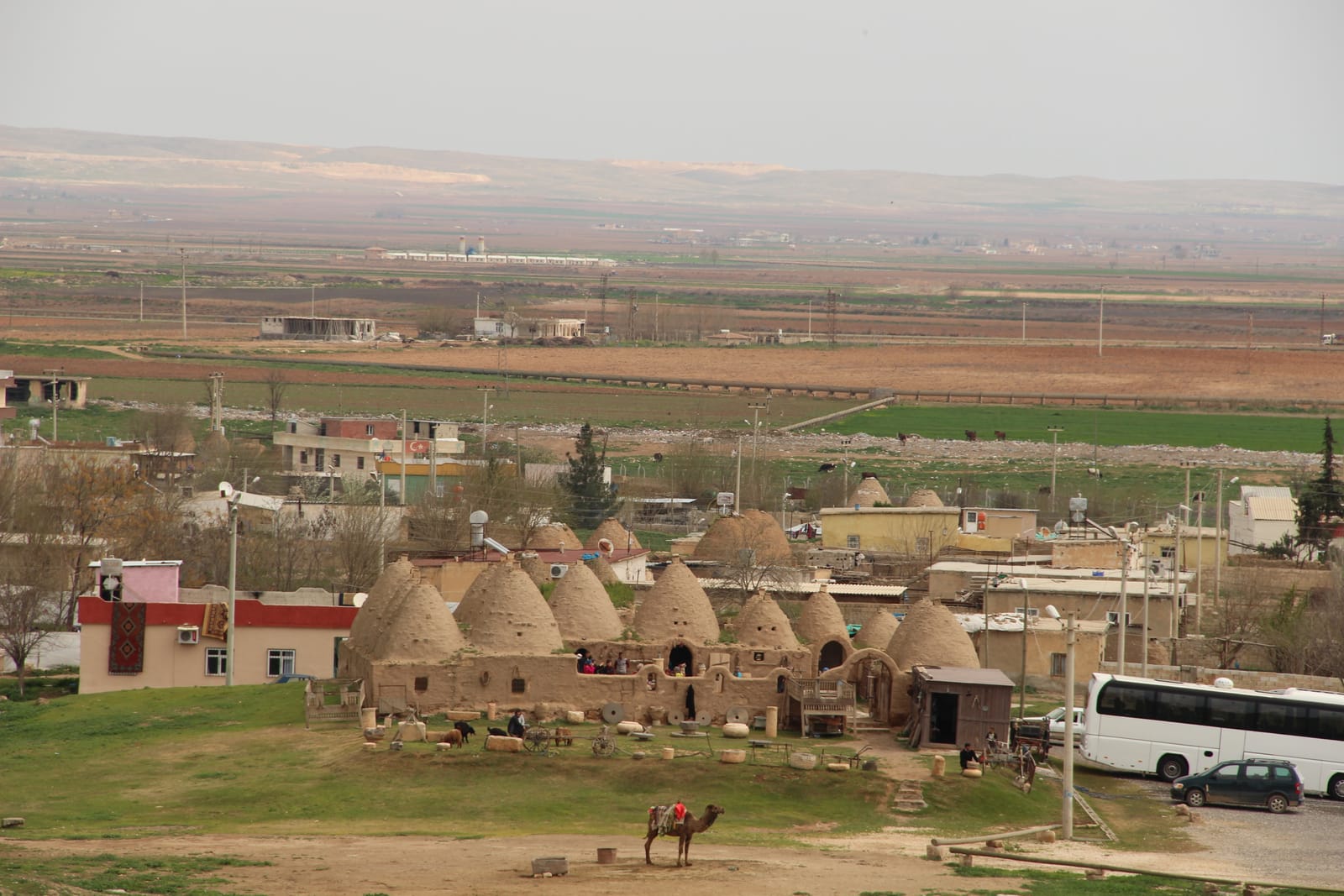
Traditional beehive houses and ruins at Harran, southeastern Turkey

Wikimedia Commons (CC BY-SA)

Country Record

Oldest City in Türkiye

CidadeDestaque

Harran

Seyfi Cem Baskin

3000 a.C. – 2000 d.C.

One of the oldest continuously inhabited places on Earth, where Abraham paused on his journey to Canaan, where the last pagan temple of the Moon God survived into the Islamic era, and where distinctive beehive houses dot the Mesopotamian plain.

411
Interesse 65

Localização

Sanliurfa · Southeastern Anatolia · Turquia

36.86°N · 39.03°E · Ásia

Continuous Habitation

~5,000 years

Biblical Significance

Abraham's residence (Genesis 11-12)

Key Battle

Battle of Carrhae (53 BCE)

Distinctive Architecture

Beehive houses (kubbeli evler)

Major Islamic Period Structure

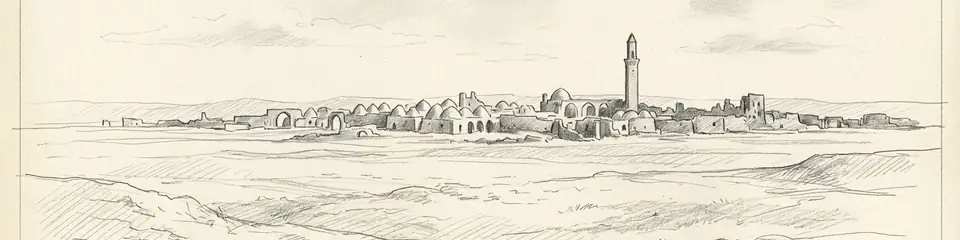
The Great Mosque (Ulu Cami), built by the Umayyad caliph Marwan II in the 740s CE, with a distinctive square minaret.

Archaeological Dating Method

Extensive use of radiocarbon dating and ceramic typology, particularly for the Early Bronze Age and Islamic period strata.

Graphite pencil sketch banner of Harran

“Harran is one of the very few places where continuous human habitation stretches from the Bronze Age to the present day.”

Da Wikipédia

Harran is an ancient city in upper Mesopotamia, one of the oldest continuously inhabited places in the world, known for its beehive houses and as a center of the Moon God cult.

Ler o artigo completo na Wikipédia →

Localização

Visão geral

Harran sits on the upper Mesopotamian plain of southeastern Turkey, a crossroads of civilizations for at least 5,000 years. The city appears in the Hebrew Bible as the place where Abraham resided before continuing to Canaan, and in Assyrian records as a major cult center of Sin, the Moon God.

The Temple of the Moon God at Harran was one of the last functioning pagan temples in the Near East, persisting well into the Islamic period. The Sabians of Harran — a mysterious community of star-worshippers mentioned in the Quran — maintained their astronomical and mathematical traditions here until the 11th century CE, serving as a crucial bridge between Greek philosophical thought and the Islamic Golden Age.

"The city of Harran, where the temple of the Moon is located, is a great city in the desert."
— Ibn Battuta, 14th century CE

In 53 BCE, Harran entered Roman history as the site of the Battle of Carrhae, one of Rome's most devastating defeats, where the Parthian general Surena annihilated seven Roman legions under Marcus Licinius Crassus. The battle demonstrated the lethal effectiveness of Parthian mounted archery and ended Roman expansion eastward for a generation.

The city's most distinctive surviving feature is its beehive houses (kubbeli evler) — conical mudbrick dwellings that have been built in the same style for at least 3,000 years. Their shape provides natural insulation against the extreme Mesopotamian heat. The ruins of the Ulu Cami (Great Mosque) and the citadel with its astronomical observatory evoke Harran's medieval golden age as a center of Islamic scholarship.
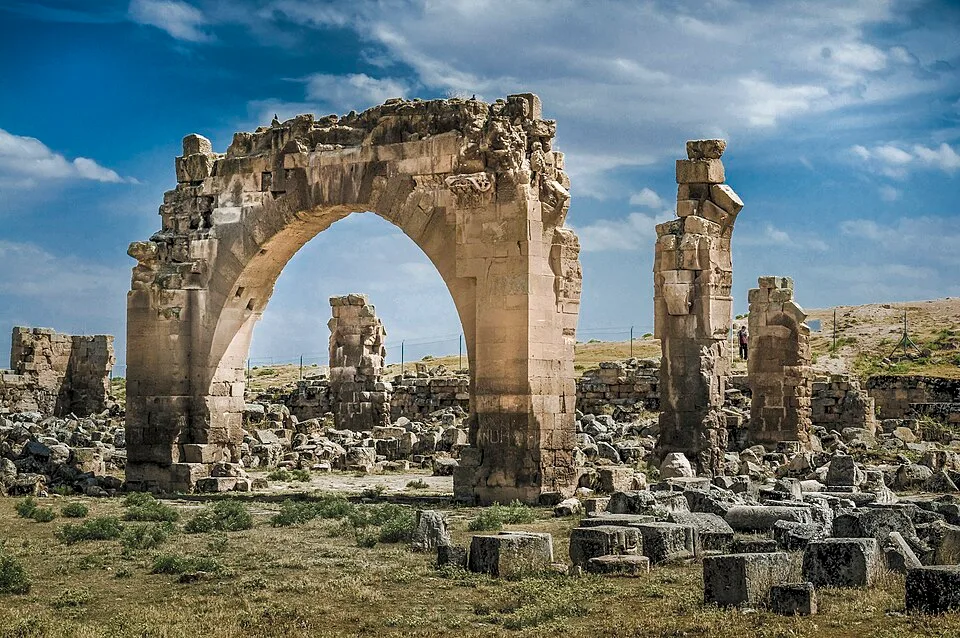
Ancient city of Harran Ruins - Sanliurfa
Ancient city of Harran Ruins - Sanliurfa | Theugursevinc (CC BY-SA 4.0)

The city's urban fabric was dominated by its massive 4th-century CE city walls, whose ruins still define the site's perimeter. Within, excavations have revealed a dense network of streets and domestic structures, indicating a thriving urban center engaged in regional trade. Daily life was sustained by sophisticated water management, including a system of canals and cisterns. Harran's decline as a major center began after its sack by the Mongols in 1259-60 CE, which destroyed its irrigation infrastructure and led to its gradual abandonment in favor of nearby Urfa. The iconic beehive houses, constructed from mud brick without timber, represent a direct architectural lineage from ancient Mesopotamian building techniques, perfectly adapted to the region's extreme climate.

Por que isso importa

Harran is one of the very few places where continuous human habitation stretches from the Bronze Age to the present day. Its role as a bridge between ancient Mesopotamian religion, Hellenistic philosophy, and Islamic science makes it intellectually extraordinary. The Sabians of Harran transmitted Greek astronomical and mathematical knowledge into Arabic, directly contributing to the achievements of the Islamic Golden Age. The Battle of Carrhae reshaped the geopolitics of the ancient world. And the beehive houses demonstrate an architectural tradition of astonishing continuity — the same building form, using the same materials, for thousands of years.

Evidências e interpretação

Distinguir o que está bem estabelecido do que permanece em debate.

Fatos bem estabelecidos

4
  • Cuneiform tablets from the 18th century BCE reference Harran as a major cult center of Sin, the Moon God.
  • The Battle of Carrhae (53 BCE) occurred near Harran, resulting in the death of Crassus and the loss of seven Roman legions, as recorded by Plutarch and Cassius Dio.
  • Beehive-style mudbrick construction at Harran has been documented continuously for at least 3,000 years based on archaeological and ethnographic evidence.
  • Excavations by Dr. Nurettin Yardımcı (2000-present) have uncovered a large, fortified Early Bronze Age (3rd millennium BCE) city wall and gate complex, confirming Harran's urban scale in this period.

Inferências acadêmicas

1
  • The Sabians of Harran served as intermediaries transmitting Greek philosophical and astronomical texts into Arabic during the 8th-10th centuries CE.

Interpretações debatidas

1
  • Whether the biblical Haran where Abraham sojourned is identical to this Harran remains accepted by most but not all scholars.

Descoberta e escavação

1950

Seton Lloyd surveys

Dirigido por Seton Lloyd

British archaeologist Seton Lloyd conducted initial surveys of the mound and surrounding area.

1959–1961

University of London excavations

Dirigido por D.S. Rice

D.S. Rice excavated the Great Mosque and uncovered the astronomical inscriptions.

1983–1990

University of Chicago excavations

Dirigido por University of Chicago

Systematic excavations of the citadel mound and surrounding areas.

2000–2020

Turkish excavations

Ongoing Turkish excavations and restoration, including work on the citadel and beehive house district.

Fotos da comunidade

Compartilhe sua experiência

Você visitou este sítio? Envie suas fotos para ajudar outros a descobri-lo.

Como citar esta página

Atlas Anatolia. (3000). Harran. Atlas Anatolia. https://atlasanatolia.com/pt/site/harran

Conteúdo licenciado sob CC BY-SA 4.0 — atribuição necessária ao reutilizar.

Leia o artigo completo na World History Encyclopedia
World History Encyclopedia · CC BY-NC-SA

Fontes

  • Harran: A Cultural and Historical Guide — Nurettin Yardimci (2004)
  • The Sabians of Harran and the Classical Tradition — Tamara Green (1992)
  • UNESCO Tentative List — HarranLink

Perguntas frequentes

Onde fica Harran?

Harran está localizado em Sanliurfa, Southeastern Anatolia, Türkiye.

Qual é a antiguidade de Harran?

Harran data de aproximadamente 3000 a.C. – 2000 d.C..

Quais civilizações estão associadas a Harran?

Harran está associado à civilização Assyrian, Roman, Byzantine, Ottoman.

Por que Harran é importante?

Harran is one of the very few places where continuous human habitation stretches from the Bronze Age to the present day.

Harran é um Patrimônio Mundial da UNESCO?

Harran não está atualmente inscrito na Lista do Patrimônio Mundial da UNESCO.